
Back to blog
Article
Yunxiao Mobile Toilet Installation
Admin September 23, 2026
The installation of mobile toilets in Yunxiao must follow standardized procedures to ensure structural safety and normal functionality. The specific steps are as follows:
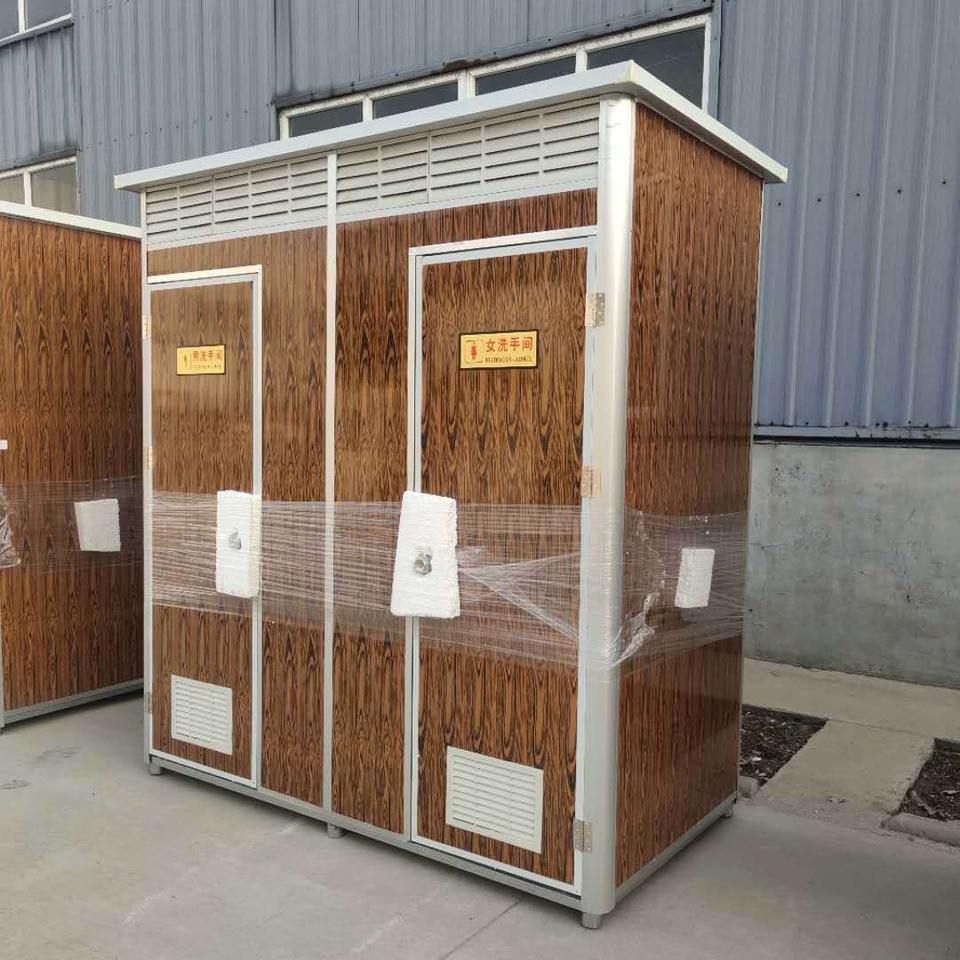
1. Preparation Phase
- Inspection of Sewage Pipes: Ensure that sewage pipes are unobstructed to prevent future blockages. If connecting to the municipal sewage network, plan the pipe route and slope in advance.
- Selection of Installation Location: Choose a flat, well-ventilated area, avoiding low-lying areas prone to water accumulation. For pointed-roof designs, determine the load-bearing point (usually near the top of the point), and for flat roofs, mark the hook positions for lifting.
- Foundation Treatment: If the ground is uneven, level it by pouring concrete or laying steel plates to ensure installation stability.
2. Positioning and Fixing
- Marking the Center Line: Flip the toilet or main components to determine the center line and mark the positions of the base screws.
- Drilling and Embedding: Drill holes according to the marks and embed plastic sleeves for expansion screws (some models may require chemical anchors for enhanced fixation).
- Special Handling for Split-Type Toilets: For split-type structures, first install the chassis (steel structure), adjust it to level, then insert the wall panels (sandwich panel material), and secure them with bolts at the connection points with the chassis.
3. Assembly and Sealing
- Sealing Treatment: Place sealing rings at the connection between the sewage outlet and the pipe, or apply glass glue to prevent water leakage.
- Component Assembly: Install the roof panel, side panels, and other components in sequence according to the instructions, tighten the bolts, and check the sealing of the gaps.
- Simplified Process for Integrated Toilets: Box-type integrated toilets have completed interior decoration in the factory and only need to be lifted into place on-site, with connections to water, electricity, and sewage pipes.
4. Connection of Internal Facilities
- Installation of Water and Electricity Pipes: Use modular quick-connect designs to connect the flushing system, sink, lighting, and ventilation equipment, shortening installation time.
- Debugging of Functional Equipment: Ensure that the toilet flushes smoothly, the circuit is well-insulated, and the ventilation system operates without abnormal noise.
5. Functional Debugging and Acceptance
- Flush Testing: Conduct multiple flushes to check the drainage speed and sealing.
- Circuit Inspection: Use an insulation resistance tester to detect whether the circuit is leaking electricity.
- Re-inspection of Sealing: Focus on checking pipe connections, wall panel gaps, and other areas to ensure no leakage.
Precautions:
- The installation time varies depending on the type of toilet. Integrated toilets take only 2-4 hours, while split-type toilets take 6-8 hours.
- Strictly follow the "Mobile Toilet Hygiene Standards" (GB/T 21239-2023) to ensure environmentally friendly materials and a sturdy structure.
- Installation should be suspended in severe weather (such as strong winds or heavy rain) to avoid affecting accuracy and safety.
Related
You may also like

30Oct
Portable Toilet Container in 2026: Buying Guide & Recommendations
Read More
30Oct
Portable Toilet Color Steel Custom & OEM: Design & Bulk Production Guide
Read More
30Oct
Portable Toilet Color Steel: Top Options & Considerations
Read More
30Oct