
Yimen Installation of Mobile Toilets
The installation of mobile toilets in Yimen requires comprehensive consideration of adaptability, installation convenience, structural characteristics, application scenarios, and procurement factors, as detailed below:
1. Adaptability Matching
The adaptability of mobile toilets directly affects their usability. Before installation, it is essential to clarify the specific needs of the usage scenario, such as whether it needs to cope with extremely cold, arid, or areas without water and electricity supply. For example, in Inner Mongolia's grassland tourist areas or Qinghai-Tibet Plateau highway rest stops, it is necessary to choose low-temperature-resistant, low-energy-consumption waterless toilets, whose biodegradation systems can operate stably within a temperature range of -20℃ to 50℃. In construction sites or mining areas without sewage pipelines, priority should be given to packaged toilets, which enable quick cleaning through replaceable fecal storage tanks.
2. Installation Convenience Guarantee
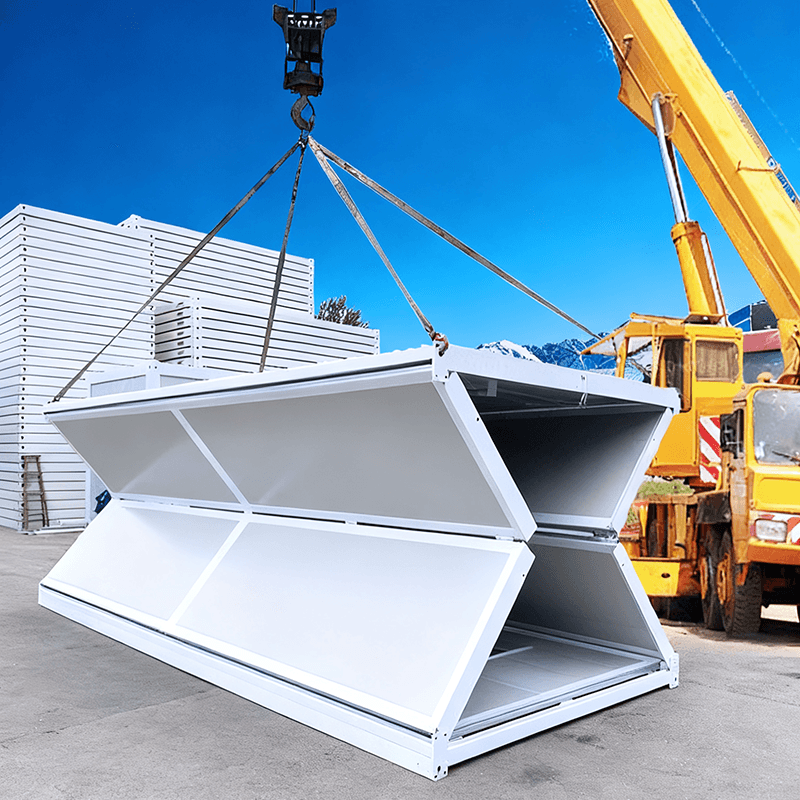
The core advantage of mobile toilets lies in the simplified installation process, eliminating the need to dig roads or lay sewage pipelines. Their bottoms typically feature welded frames made of channel steel or I-beams, with square steel columns, allowing direct lifting to designated locations using cranes. Wall materials, such as color steel plates or fiberglass, are bolted to the frame, enabling assembly by 1-2 people and supporting easy disassembly and relocation. For instance, at large exhibitions or temporary event venues, installation can be completed on the same day for use the next day, significantly shortening the construction period.
3. Structural Characteristics Adaptation
- Waterless Type: The box body adopts a steel/aluminum alloy frame with fiberglass or stainless steel cladding. Internally, it is equipped with a degradation tank, agitator, temperature control system, and one-way exhaust fan. The standard size for a single-person unit is approximately 1.2m×1.2m, with the door designed with ventilation louvers to ensure a balance between airtightness and air circulation.
- Frame Type: The bottom is supported by channel steel for load-bearing, with square steel columns for support. Wall materials can be selected from metal carved panels or stainless steel to meet lifting requirements. For example, on hard surfaces like squares or commercial streets, the frame can be directly fixed; on soft grounds like grasslands or beaches, anti-settlement bases need to be installed.
4. Application Scenario Coverage
Mobile toilets are suitable for densely populated areas such as stations, docks, tourist attractions, and newly built residential areas, as well as work areas without water and electricity supply. For example, at highway rest stops on the Qinghai-Tibet Plateau, solar-powered waterless toilets can solve the problem of power shortages; at construction sites, packaged toilets can avoid the leakage risks of traditional septic tanks through regular cleaning of fecal storage tanks.
5. Key Procurement Factors
It is necessary to comprehensively evaluate usage frequency, ambient temperature, maintenance costs, and regulatory requirements. For example, in high-frequency usage scenarios (such as tourist attractions), stainless steel cladding with strong durability should be selected; in environmentally sensitive areas (such as nature reserves), open burning types should be avoided, and priority should be given to purchasing biodegradable types to obtain policy subsidies. Regular products should provide instructions on the use of bacterial strains, suggestions on cleaning cycles, and after-sales technical support to ensure long-term stable operation.



