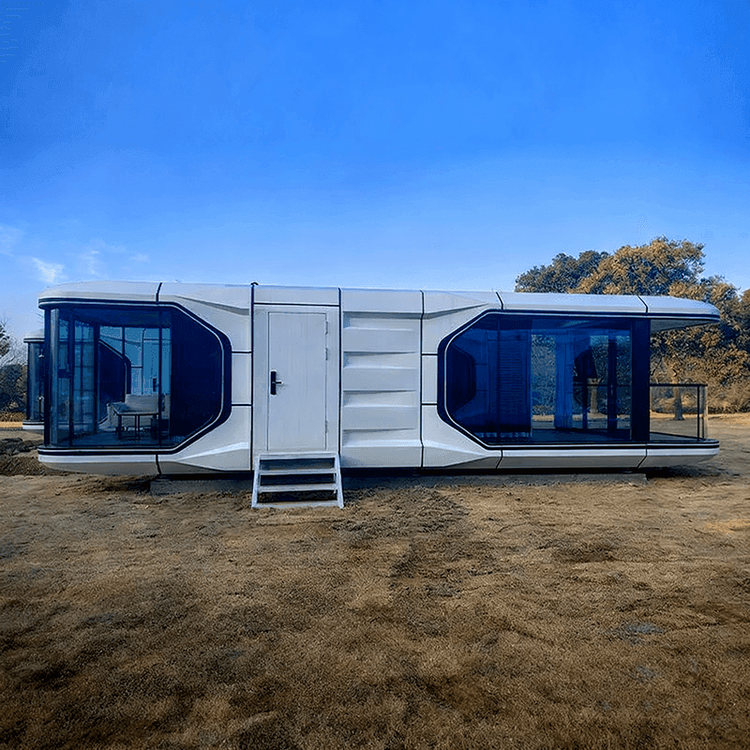
Yichun Landscape Mobile Toilet
In Yichun, the configuration of landscape mobile toilets requires comprehensive consideration of practicality, environmental integration, and usage scenario requirements. The specific configuration points are as follows:

1. Exterior Design and Environmental Integration
Yichun scenic spots are dominated by natural landscapes, so the exterior design of mobile toilets needs to harmonize with the surrounding environment. It is recommended to use wooden exteriors or eco-friendly materials, such as imitation wood-grain metal panels and recycled plastics, which can reduce visual abruptness and reflect ecological concepts. For example, in bamboo forests and woodland areas, wooden-structured toilets can form a natural transition with the vegetation; near lakes and wetlands, light-colored eco-friendly material toilets can minimize interference with the water landscape.
2. Distribution Density and Regional Differentiated Configuration
Toilet density should be set differently based on tourist flow and regional functions. In high-traffic areas (such as scenic spot entrances, viewing platforms, and trail intersections), it is recommended to place one toilet every 100 meters, with a male-to-female toilet ratio of 1:1 to avoid queuing; in remote areas (such as hiking trails and non-core scenic spots), simple mobile toilets can be installed to meet basic needs, with spacing extended to 300-500 meters. For example, on the main hiking trail of Mingyue Mountain Scenic Area, standard toilets are placed every 100 meters, while on the branch trails, simple toilets are placed every 300 meters.
3. Functional Design Adapted to Outdoor Scenarios
Outdoor scenic spots in Yichun (such as Wugong Mountain and Sanzhalun) and camping sites have complex environments, so mobile toilets need to be waterproof, windproof, and lightweight. Waterproof design requires the use of tightly sealed door frames, non-slip floor tiles, and drainage channels to prevent rainwater backflow; windproof structures can enhance stability through reinforced walls, added counterweights, or modular assembly methods; lightweight materials (such as high-strength aluminum alloys and fiberglass-reinforced plastics) facilitate transportation and temporary relocation, meeting the dynamic needs of camping sites.
4. Environmental Protection and Sustainability Requirements
Mobile toilets should prioritize low-energy and low-pollution technologies. For example, microbial degradation technology can be used to treat waste, reducing water consumption; or solar panels can be installed to provide nighttime lighting. Additionally, garbage sorting bins can be placed inside the toilets to encourage tourists to participate in environmental protection practices, aligning with Yichun's concept of "building an eco-city."
Through the above configurations, Yichun landscape mobile toilets can not only meet the basic needs of tourists but also minimize interference with the natural environment, achieving a balance between functionality and ecology.