
Yichuan Residential Container House
Yichuan residential container houses are temporary or semi-permanent residential buildings transformed from containers, featuring environmental protection, energy efficiency, flexible combination, and convenient transportation, but requiring attention to fire safety hazards.
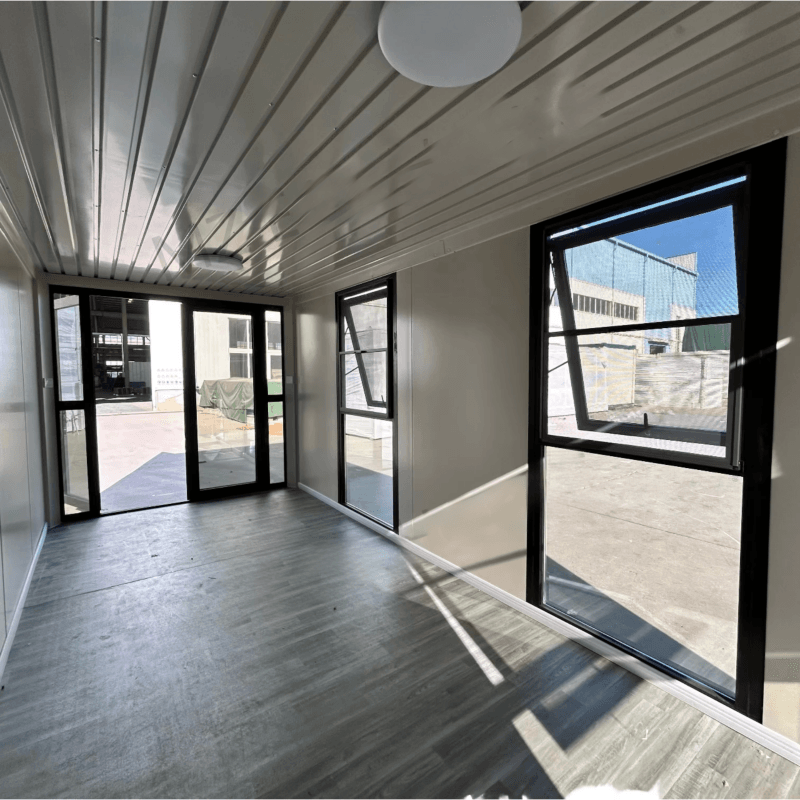
Structural and Functional Characteristics
Residential container houses use standard containers as basic units. By transforming the interior space and adding facilities such as doors, windows, lighting, and sockets, they form habitable houses. They have a stable structure with few welded parts, facilitating on-site installation and disassembly. Folding container houses also offer advantages such as low transportation costs, low storage costs, and optimized usage costs. They can be folded repeatedly more than 500 times and have a long service life.
Application Scenarios
Residential container houses are widely used as workers' dormitories on construction sites, as well as for field operations, office spaces, and temporary housing at tourist attractions. Their high mobility allows them to be quickly relocated according to project needs, meeting temporary residential requirements. Some creative designs have also transformed them into art galleries, homestays, and sales offices, expanding their usage scenarios.
Fire Safety Hazards
Despite their convenience, residential container houses have fire safety hazards:
- Illegal construction materials: Some houses use flammable materials such as polystyrene and polyurethane foam, which have poor fire resistance.
- Rapid combustion: Flammable materials ignite and burn quickly, with drippings exacerbating the spread of the fire.
- Difficulty in extinguishing: The fire spreads rapidly, and the houses are wrapped in iron sheets, making it difficult for water cannons to effectively extinguish the fire.
- Escape difficulties: The combustion produces toxic smoke, making it difficult for trapped individuals to survive.
Safety Recommendations
- Use compliant materials: Prioritize the use of Class A fire-resistant materials such as rock wool boards and fireproof cotton to ensure compliance with fire resistance standards.
- Maintain safe distances: Keep at least a 6-meter distance between container houses to reduce the risk of fire spread.
- Standardize electrical management: Protect cables with sleeves, use metal galvanized boxes for socket and switch boxes with open installation, and equip them with firefighting equipment.
- Avoid heat sources nearby: Maintain a safe distance between open flame operations and the houses to prevent fires caused by electrical circuit failures.



