
Yantai Container House
Yantai container houses stand out for earthquake resistance, with strong seismic performance and proven reliability in real-world use.
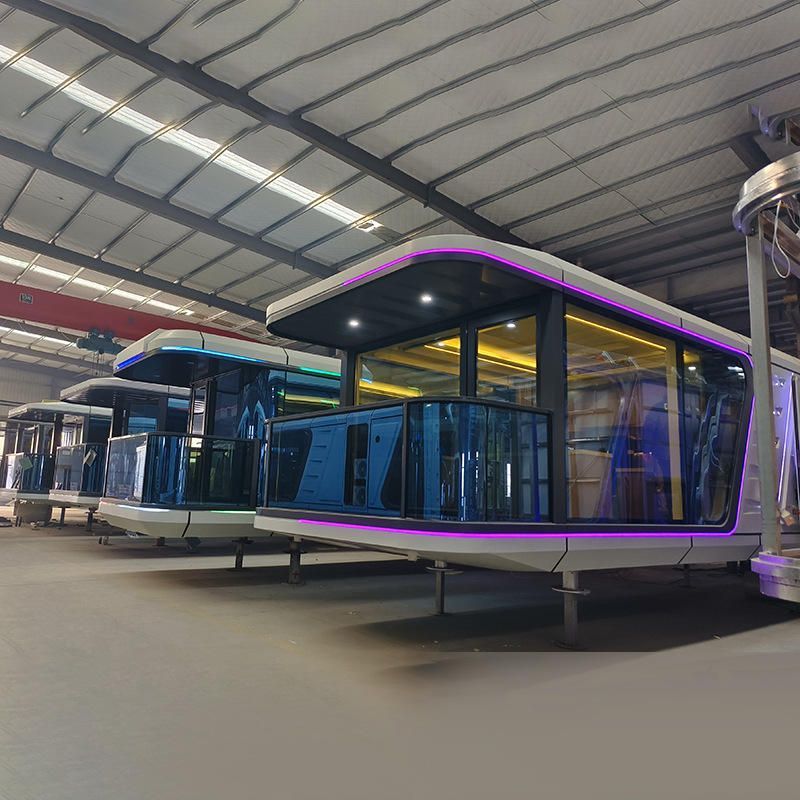
1. Structural characteristics and seismic performance Container houses use high-strength steel as the frame material. Steel structures have good ductility and can absorb energy through plastic deformation under seismic loads, reducing the risk of structural failure. Standard container modules can withstand horizontal acceleration of 0.3g or more, an indicator that exceeds the design standard of ordinary low-rise buildings (brick-concrete structures are typically 0.2g). Some companies further improve performance through optimized design—for example, Tiandi box houses strengthen structural connectors so that they maintain structural integrity and stability in a magnitude-7 earthquake; Yantai modular homes even reach a magnitude-8 standard, and double-layer box structures can also handle extreme temperatures, further boosting disaster resilience.
2. Design optimization and material application Container houses disperse seismic energy through thoughtful layout. For example, modular joining lets each unit take loads independently, avoiding chain reactions from local damage. Box interiors use 80-100 mm thick rock-wool or polyurethane insulation, which meets thermal needs and also increases overall structural stiffness through fill materials, indirectly improving seismic stability. Some products also use lightweight high-strength materials (such as aluminum-alloy connectors) to cut self-weight and reduce the impact of seismic inertial forces on the structure.
3. Policy support and industry practice Yantai promotes seismic isolation and damping technologies and strengthens seismic fortification management to raise the earthquake resistance of container houses. New projects are required to meet the goal of “no damage in minor quakes, repairable in moderate quakes, and no collapse in major quakes,” and modular buildings are included in green-building subsidies to encourage firms to develop better seismic products. The Yantai Development Zone has already built a container complex combining commerce, offices, and housing, and its seismic adaptability has been verified in practice.
4. Real case verification In an emergency drill simulating a magnitude-6.3 earthquake, container houses were one of the scenarios; they withstood vibration testing without structural collapse or connection failure. In addition, container houses produced by a Yantai firm remained fully functional in a magnitude-7 earthquake simulation, further proving seismic reliability. These cases provide practical support for promoting container houses in earthquake-prone areas.



