
Yanbian Rural Renovation Mobile Toilets
Mobile toilets for rural renovation in Yanbian offer multiple advantages, including modular construction, water and energy conservation, and ecological treatment.
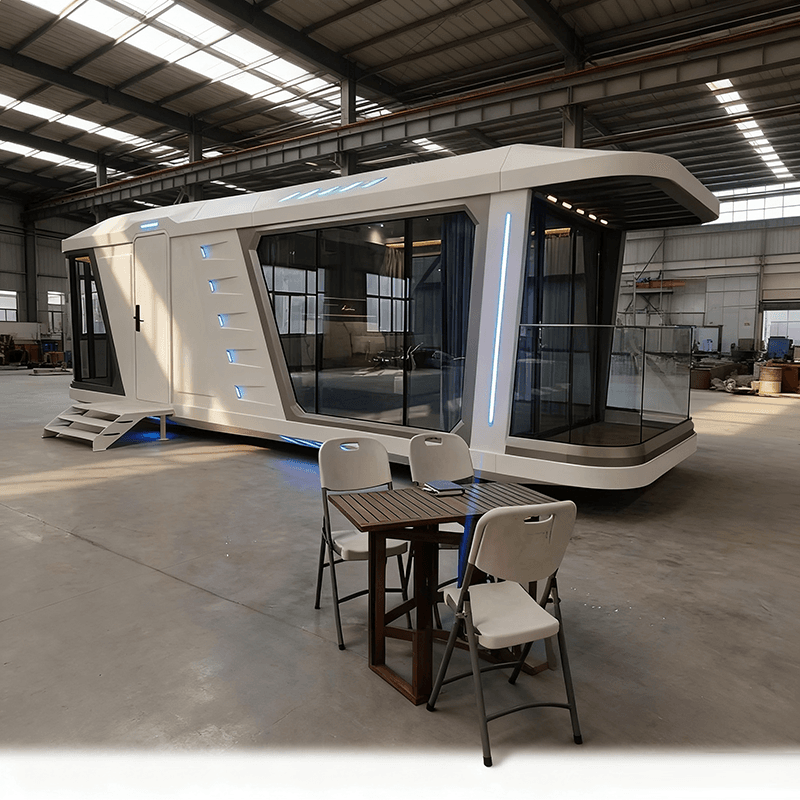
Modular Construction Reduces Environmental Damage
Mobile toilets employ a modular box structure, with main components prefabricated in factories and only requiring basic leveling and rapid assembly on-site. This approach minimizes damage to surface vegetation caused by large-scale earthworks and avoids geological disturbances that may arise from deep foundation construction in permafrost regions, making it particularly suitable for the complex geological and climatic conditions in Yanbian.
Water-Saving Technologies Reduce Water Consumption
Some mobile toilets utilize recirculating water flushing technology or vacuum collection systems. The recirculating water system reduces single-flush water consumption to less than one-tenth of that of traditional water-flush toilets through multi-layer filtration and biological treatment; the vacuum collection system relies on air pressure differentials to transport waste, with pipe diameters only one-third of those of traditional sewage pipes, significantly reducing the scope of underground pipe network installation. This decentralized treatment model is especially suitable for rural areas with relatively dispersed populations, effectively alleviating water resource shortages.
Ecological Treatment Enables Resource Recycling
The waste treatment process embodies the concept of ecological recycling. Biochemical treatment devices equipped in some mobile toilets can convert organic waste into neutral fertilizer raw materials for forestry maintenance and ecological restoration projects; high-temperature composting mobile toilets transform waste into stable humus within 48 hours by controlling the carbon-to-nitrogen ratio and ventilation conditions, reducing energy consumption and the risk of secondary pollution during transportation.
Energy-Efficient Design Ensures Continuous Operation
Mobile toilets generally adopt a power supply solution combining solar photovoltaic panels with battery packs, using light-emitting diode (LED) lighting systems with daily energy consumption controlled below 0.5 kilowatt-hours; for winter heating, air-source heat pump technology is often employed, with an energy efficiency ratio more than three times that of traditional electric heating equipment. These low-energy designs enable mobile toilets to operate continuously for over 72 hours in areas without municipal power grid coverage, adapting to the energy supply conditions in rural areas.



