
Xuzhou Pollution-Free Mobile Toilet
Represented by waterless mobile toilets, Xuzhou's pollution-free mobile toilets utilize microbial degradation and solid-liquid separation technologies to achieve zero sewage discharge and resource recycling. They are characterized by water conservation, environmental protection, strong mobility, and wide applicability.
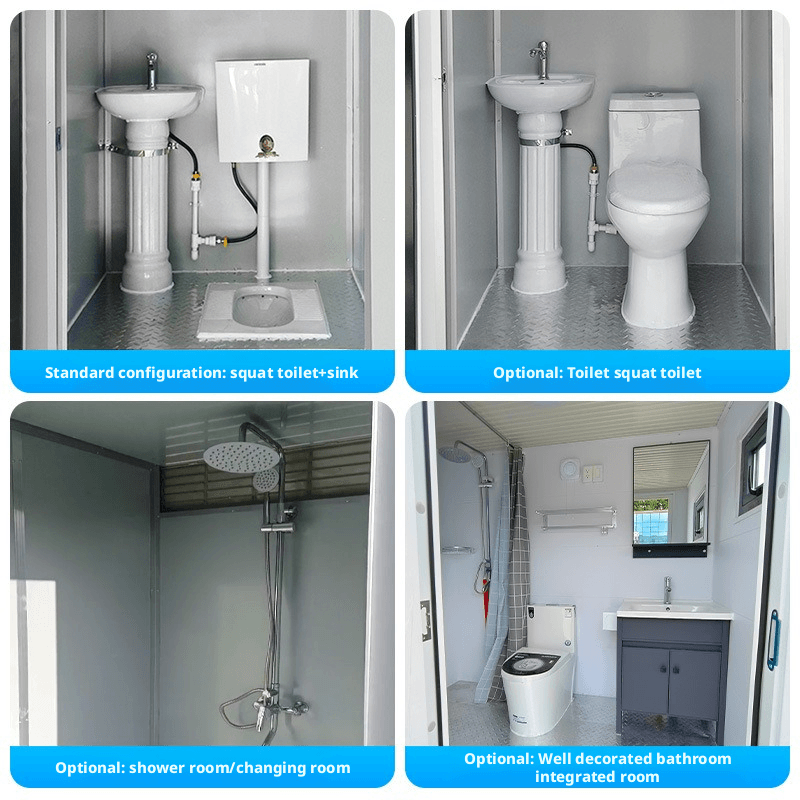
Core Technology: Microbial Degradation and Solid-Liquid Separation
The core technology of Xuzhou's pollution-free mobile toilets is a non-flushing design that decomposes excreta through specific microbial communities in built-in fermentation tanks. Solid excreta is converted into raw materials for organic fertilizer through microbial fermentation, which can be directly used in agriculture or landscaping; the liquid portion is either evaporated or collected for separate treatment, eliminating the need for connection to water supply and sewage networks throughout the process. This technology significantly reduces water consumption (saving over 90% compared to traditional toilets) and sewage discharge, while avoiding the use of chemical agents and lowering the risk of secondary pollution.
Product Advantages: Mobility and Adaptability
Taking the mobile toilets produced by Cangzhou Hengtai Sanitation Equipment Co., Ltd. as an example, their products offer the following features:
- High mobility: With a modular design, they can be quickly assembled, disassembled, and combined, making them suitable for temporary or long-term use scenarios such as large construction sites, tourist attractions, and exhibition events.
- Wide environmental adaptability: Made from materials like color-coated steel plates and metal embossed panels, they are corrosion-resistant and aging-resistant, with an applicable temperature range from -50°C to 50°C, enabling them to withstand extreme weather conditions.
- Upgraded internal configurations: Equipped with ventilation systems, lighting fixtures, handwashing stations, etc., they provide a level of comfort close to that of fixed toilets. Some models also include barrier-free facilities to meet diverse needs.
Application Scenarios: Covering Public and Commercial Sectors
The applicable scenarios for Xuzhou's pollution-free mobile toilets include:
- Urban infrastructure: In densely populated areas such as streets, parks, and squares, they address the issues of long construction periods and difficult site selection for traditional toilets.
- Transportation hubs: At stations, docks, and other places with high mobility, they provide convenient and hygienic services.
- Special environments: In newly built residential areas, large construction sites, remote tourist areas, and other regions lacking pipeline coverage, they enable temporary or long-term use.
- Commercial districts: In bustling areas, they enhance environmental quality while avoiding the impact of fixed toilets on commercial layouts.
Environmental Significance: Promoting Resource Recycling and Sustainable Development
This technology transforms excreta into resources through microbial degradation. Solid matter can be used as organic fertilizer, while liquid matter can be treated to meet discharge standards or reused, forming a closed loop of 'excreta-resource-reuse'. This model not only reduces energy consumption in sewage treatment but also decreases fertilizer usage, aligning with green development concepts and having positive implications for urban ecological construction.



