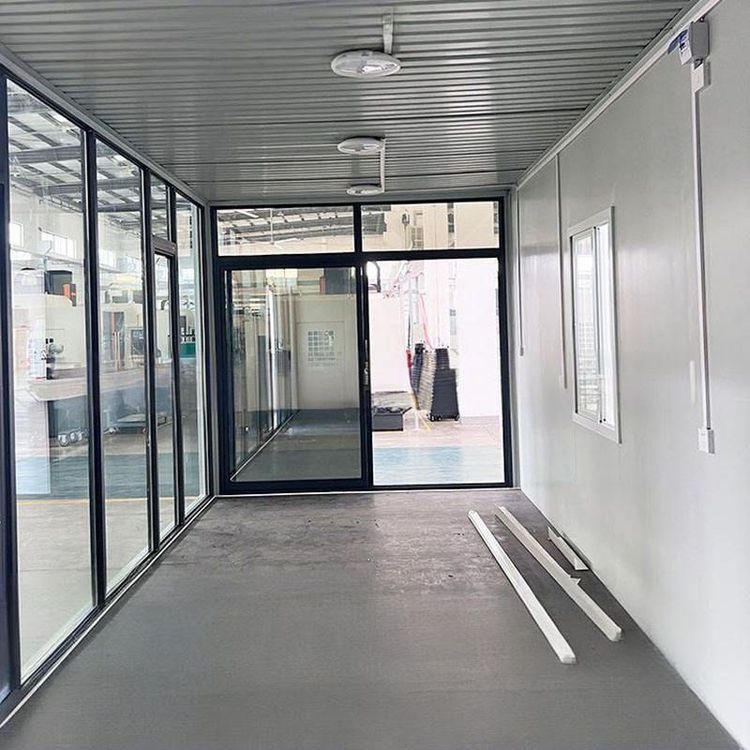
Xinzhou Mobile Toilet Installation
The installation of mobile toilets in Xinzhou requires a combination of modular prefabrication and on-site rapid assembly techniques, adjusting processes according to the characteristics of different toilet types and ensuring environmental adaptability and service chain integrity.

I. Core Installation Process
The main structure and key components of mobile toilets (such as frames, wall panels, sanitary fixtures, and plumbing) are prefabricated in the factory, ensuring quality control through standardized procedures. On-site installation is based on a flat foundation, with the main body fixed through lifting and positioning, followed by connecting external water supply and sewage pipelines. The overall installation period is more than 50% shorter than that of traditional toilets.
II. Installation Differences Among Different Toilet Types
Prefabricated Mobile Toilets
- It is essential to verify the interface compatibility between the factory-prefabricated water supply, sewage, and ventilation systems and the on-site pipelines. For example, flush toilets require sufficient water pressure interfaces, while biodegradable toilets need to ensure the airtightness of ventilation pipes.
- The choice of sewage disposal method directly affects the installation process: flush toilets need to be connected to municipal sewage networks or septic tanks; vacuum suction toilets require the installation of negative pressure pumps and dedicated pipelines; biodegradable toilets need to be equipped with bacterial inoculation ports and temperature control devices.
Towed Mobile Toilets
- They must meet the power requirements of the towing vehicle (e.g., a C1 driver's license is required for a total mass ≤ 3.5 tons) and ensure that the placement site has a slope ≤ 5% and a ground bearing capacity ≥ 2t/㎡.
- Wind protection design should use ground anchors or counterweights, and in winter, insulation layers should be added to water tanks and pipelines to prevent freezing and cracking.
Eco-Friendly Tourist Public Toilets (e.g., Model htcs-530)
- They must strictly adhere to the specified dimensions (120015003000mm) and material requirements (color-coated steel plates for corrosion resistance, metal carved panels for insulation) to ensure adaptability to temperature variations from -30℃ to 40℃.
- The electrical system should be equipped with a 220V stabilized power supply, and inspection ports should be reserved for easy maintenance.
III. Key Technical Points
- Internal Integration: Factory-prefabricated systems reduce on-site workload but require strict testing of parameters such as water supply pressure and sewage flow.
- Modular Combination: When supporting horizontal or vertical expansion, connection interfaces should be reserved, and structural stability should be ensured.
- Environmental Adaptability: Walls should be insulated in advance (e.g., with rock wool filling), roofs should be coated with waterproofing, and coastal areas should also add anti-salt spray corrosion coatings.
IV. Service Chain and Costs
Before installation, it is necessary to survey the surrounding infrastructure of the site (such as water and electricity access points and sewage outlet locations). During use, consumables such as hand sanitizer and toilet paper should be regularly replenished, and waste disposal should be entrusted to professional agencies. Operational costs include equipment depreciation (approximately a 5-8 year cycle) and labor input (cleaning frequency adjusted according to foot traffic). The installation plan in Xinzhou should be optimized based on local public activity types (such as tourist season foot traffic) and geographical conditions (such as transportation convenience in mountainous areas).