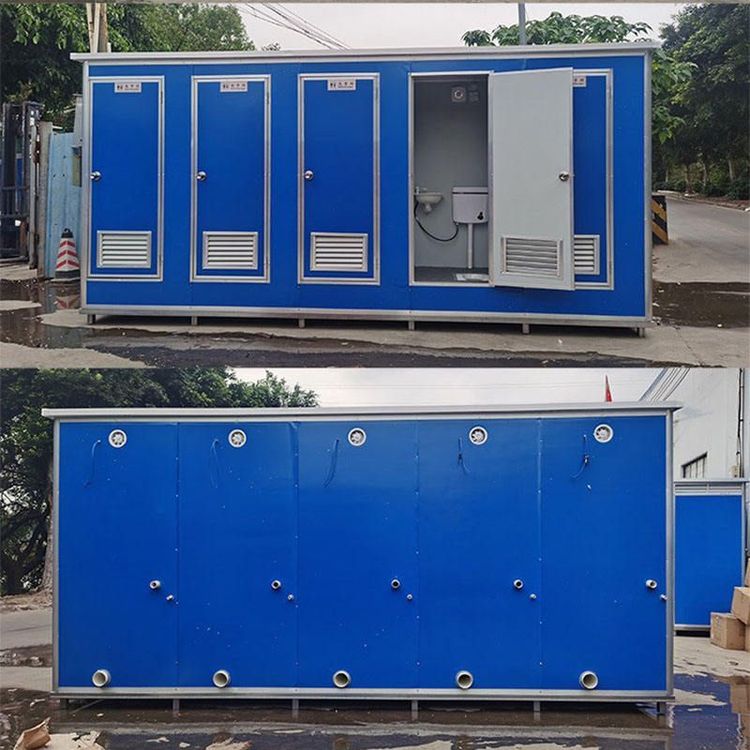
Xinzhou Foam-Sealing Mobile Toilet
The Xinzhou foam-sealing mobile toilet is an environmentally friendly mobile toilet that uses foam-sealing technology, featuring water conservation, odor prevention, and easy waste disposal.

Technical Principles and Core Structure
The core of foam-sealing technology lies in mixing a small amount of water with a specialized foaming agent, generating high-density foam through aeration and stirring, which covers the interior of the toilet bowl to form a sealing layer. This design effectively blocks odor diffusion while preventing waste adhesion and reducing cleaning difficulty. Its structure mainly consists of four parts:
- Foam Generation System: Responsible for mixing water and the foaming agent in precise proportions and generating stable foam through an aeration device.
- Control System: Adjusts foam output, equipment operating status, and parameters (such as foam density and foaming agent addition ratio) to ensure stable technical performance.
- Waste Collection Device: Features a sealed design to temporarily store waste, preventing leakage and secondary pollution.
- Subsequent Treatment Unit: Depending on the scenario, it can be connected to a microbial degradation device (using specific bacteria to decompose organic matter into harmless substances) or a centralized collection system (for regular removal and treatment).
Resource Conservation and Waste Disposal Advantages
Compared to traditional toilets, which require several to tens of liters of water per flush, foam-sealing technology consumes only 0.1 to 0.3 liters of water per use, offering significant water conservation benefits, especially in water-scarce areas or temporary event venues. In terms of waste disposal, foam reduces waste viscosity, decreasing the frequency of traditional septic tank cleaning and reducing reliance on municipal sewage systems. If connected to a microbial degradation system, it can also achieve harmless decomposition of organic matter, further reducing environmental pollution.
Key Technical Parameters and Maintenance Points
- Foam Density Control: Must be maintained within a stable range (usually adjusted automatically by the equipment) to ensure sealing effectiveness.
- Foaming Agent Ratio Adjustment: Needs dynamic optimization based on water quality (such as hardness and pH) and temperature changes to prevent foam instability.
- System Maintenance: Regularly inspect the foaming device and clean the pipelines to prevent blockages; pay attention to the impact of ambient temperature on foam (low temperatures may cause foam rupture), and ensure the equipment design has temperature adaptability.
- Power Supply: Must be stable to maintain the continuous operation of the control system and foam generation system.
Typical Applications and Product Cases
Companies such as Cangzhou Hengtai Sanitation Equipment Co., Ltd. have launched foam-sealing ecological toilet products, complemented by various technologies like waterless packaging and vacuum suction, meeting the needs of different scenarios.