Back to blog
Article
Xinhua Cement Prefabricated House
Admin September 18, 2026
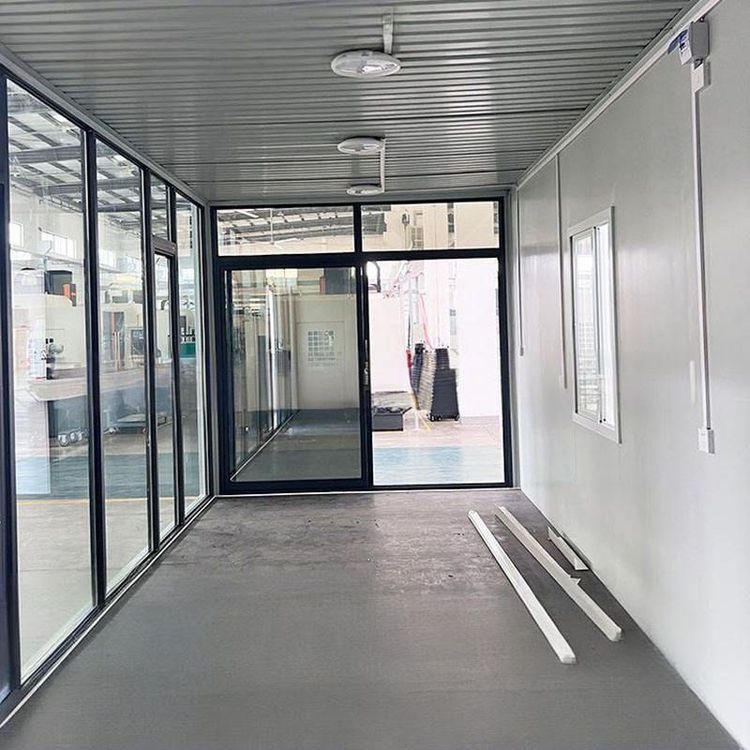
The Xinhua cement prefabricated house is a cement-structured house produced through factory prefabrication and assembled on-site. It offers advantages such as fast construction, stable quality, and low cost, but also has drawbacks like low design flexibility and high transportation costs.

Advantages
- Fast Construction Speed: Most components of the prefabricated cement house are produced in the factory, and only assembly is required on-site, significantly shortening the construction cycle. This makes it particularly suitable for projects with urgent needs, such as post-disaster reconstruction or temporary housing.
- Stable Quality: Factory production allows for strict control over materials and processes, avoiding potential errors in on-site construction, ensuring the structural strength and durability of the house, and reducing quality risks.
- Controllable Cost: Mass production and standardized processes reduce labor and material waste, resulting in lower overall costs compared to traditional construction, making it suitable for projects with limited budgets.
- Environmentally Friendly and Energy-Efficient: On-site construction generates less construction waste, and some materials can be recycled, aligning with the concept of green building.
- High Durability: Cement materials have high compressive strength, can adapt to harsh environments such as humidity and high temperatures, and have a long service life.
- Good Earthquake and Wind Resistance: Prefabricated components produced by reputable companies are assembled by professionals, offering excellent earthquake resistance. For example, in simulated Wenchuan earthquake tests, the overall displacement was only 3 centimeters under a 9-degree intensity shake; in real-world typhoon tests in Yangjiang, Guangdong, it withstood a 12-grade typhoon with no脱落 (this should be translated as 'no falling off') of exterior wall tiles and less than 1 millimeter of deformation in doors and windows.
Disadvantages
- Low Design Flexibility: Standardized designs are typically used, and personalized customization comes at a high cost, making it difficult to meet special shape or functional requirements.
- High Transportation Costs: Large prefabricated components require specialized transportation vehicles, and long-distance transportation can increase costs, especially for projects in remote areas.
- Difficult On-Site Adjustments: Once prefabricated components are completed, they are difficult to modify on-site, requiring thorough planning at the design stage to avoid rework later.
- High Foundation Requirements: Strict requirements are placed on the flatness and load-bearing capacity of the foundation; otherwise, it may affect the installation effect or lead to structural problems.
- Limited Sound Insulation and Thermal Insulation Performance: Cement materials have a high thermal conductivity coefficient. Without additional insulation layers, the energy consumption for indoor temperature regulation is relatively high, requiring extra thermal insulation measures.
- Connection and Stability Issues: In rural self-built projects, there may be improper handling of grout joints, which is difficult for non-professional construction teams to resolve; modular designs may result in insufficient detail in regional functional size layouts, poor connection stability, safety hazards in buildings over three stories, and potential cracking of assembly joints.
Related