
Xingtai Mobile Toilet Project
The Xingtai Mobile Toilet Project encompasses design, manufacturing, leasing, and maintenance services, primarily applied in construction sites, large-scale events, and emergency rescue scenarios, featuring technical adaptability, regional service advantages, and a strict quality control system.
1. Core Application Scenarios and Functional Adaptability
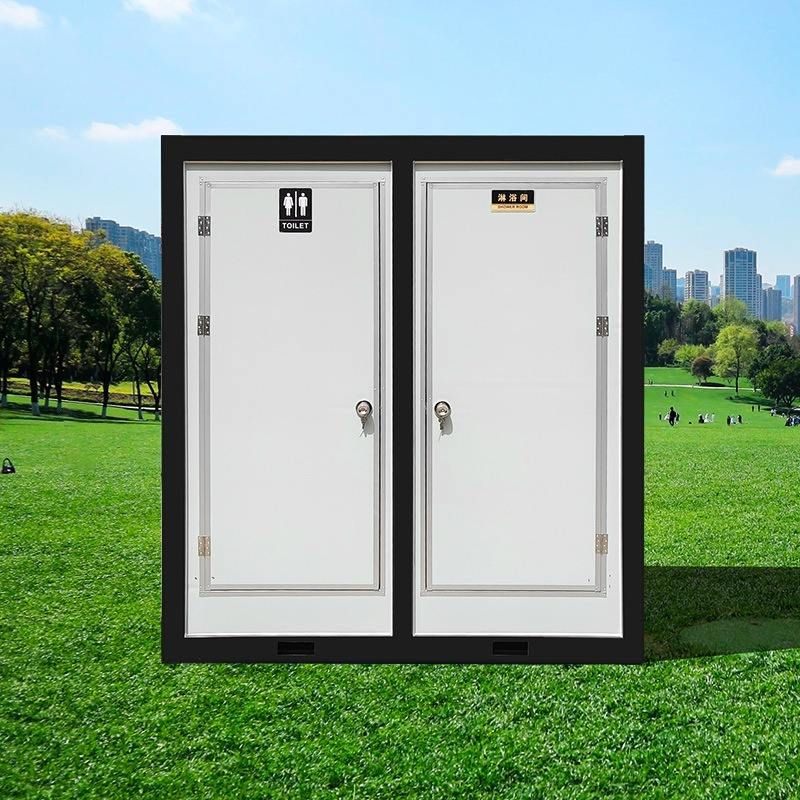
The Xingtai Mobile Toilet Project focuses on addressing the demand for temporary sanitation facilities and is widely used in construction sites, outdoor music festivals, marathons, and other scenarios. For construction site scenarios, the leasing service employs high-strength polyethylene or stainless steel materials, which are corrosion-resistant and easy to clean, enabling rapid deployment near foundation pits, tower cranes, or office areas. Technologically, mainstream products are divided into dry and waterless types: dry toilets use biodegradation technology to treat feces, reducing odors; waterless toilets are equipped with sealed sewage tanks, achieving zero emissions through regular pumping. Some upgraded models feature built-in ventilation fans, sensor lighting, and anti-slip floors, adapting to nighttime or snowy and rainy operational needs, enhancing safety and comfort.
2. Technical Adaptability and Regional Improvements
Local factories in Xingtai emphasize modular design and welding process reliability during production, utilizing CNC bending and laser cutting equipment to ensure tight seams, leak prevention, and dust resistance in the toilet bodies. For winter low-temperature environments, factories employ thickened insulation layers and electric tracing systems to prevent pipeline freezing at temperatures as low as minus 15°C; in summer, activated carbon filtration and ultraviolet sterilization reduce odor generation. Additionally, as many areas in Xingtai are located in earthquake zones, factories reinforce the toilet bodies against wind pressure and add ground anchor interfaces to the bases, enhancing structural stability. To address uneven ground and unstable power supply at construction sites, adjustable base support structures and low-voltage DC power supply systems have been developed to prevent equipment failures caused by voltage fluctuations.
3. Quality Control and After-Sales Service System
During production, the sealing of core components such as septic tank partitions and sewage discharge valves undergoes 48-hour pressure testing to prevent soil contamination from leaks. In terms of after-sales maintenance, factories are equipped with dedicated sewage suction trucks and inspection personnel, committing to arrive on-site within 4 hours within the city to handle blockages or damages, ensuring construction progress. The regional advantage is significant, with a short service radius; projects such as the high-speed rail construction site in Neiqiu County or the industrial park in Shahe City can complete equipment deployment within half a day, reducing logistics costs and time losses.
4. Environmental Protection and Sustainability Design
The mobile toilet project emphasizes environmental protection concepts. Dry biodegradation technology reduces water consumption, while waterless sealed sewage tanks achieve zero emissions through regular pumping, avoiding soil and water source pollution caused by traditional toilets. Factories adopt modular design in production, facilitating equipment repair and upgrades, extending service life, and reducing resource waste.



