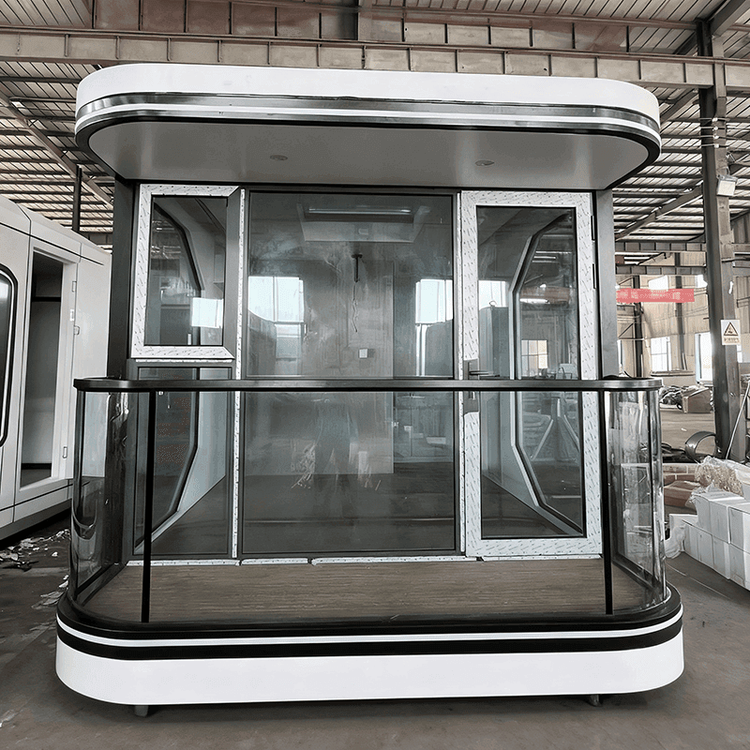
Xingguo Mobile Toilet Design
Xingguo mobile toilet design focuses on convenience, hygiene, and adaptability, meeting diverse scenario demands through features such as complete functionality, durable materials, and eco-friendliness with easy maintenance. Its design philosophy is closely integrated with practical applications, with specific characteristics as follows:

1. Complete functionality to meet diverse usage needs
The interior space of the mobile toilet is spacious, equipped with a high-quality flushing system to ensure cleanliness and hygiene. The seats are ergonomically designed to enhance user comfort. Some high-end models integrate sinks, lighting, and ventilation systems, forming independent sanitary units that can meet the intensive usage needs of public events, construction sites, and other scenarios. For special populations, disabled-friendly designs are provided, such as barrier-free access, handrails, and enlarged spaces, reflecting humanistic care.
2. Durable materials to withstand harsh environments
The main structure is made of high-strength composite materials or metal frames, featuring waterproof, moisture-proof, and corrosion-resistant properties, capable of withstanding extreme climates such as high temperatures, severe cold, and sandstorms. The outer shell material is treated with UV resistance to extend outdoor service life and reduce maintenance frequency. Internal facilities are selected from wear-resistant and easy-to-clean materials, such as stainless steel flushing devices and anti-slip floor tiles, ensuring long-term usage stability.
3. Eco-friendliness and easy maintenance to reduce operational costs
The sewage disposal system offers three modes: water flush direct discharge, bagging, and microbial degradation. Water flush direct discharge is suitable for areas with municipal sewage networks; bagging collects waste through biodegradable bags, suitable for waterless sites; microbial degradation utilizes biological bacteria to decompose excreta, achieving zero pollution discharge. All models adopt a modular design, allowing cleaning staff to quickly disassemble components for disinfection, improving maintenance efficiency by over 50% compared to traditional toilets.
4. Easy installation and disassembly to support flexible deployment
The toilet units are of standardized size and can be transported by trucks or containers, with a unit weight controlled within 2 tons, facilitating lifting operations. On-site installation only requires connecting water and electricity (some models can operate off-grid), and deployment can be completed within 2 hours, making them especially suitable for emergency scenarios such as temporary events and disaster relief. After disassembly, components can be reused, with a resource utilization rate of over 90%.
5. Diverse models to cover all scenario needs
From basic models (containing only a squat toilet) to luxury models (equipped with smart toilets and air conditioners), over 10 standard models are provided. For high-traffic scenarios, multiple units can be combined to form toilet clusters, with additional functional areas such as management rooms and storage rooms. In terms of sewage disposal method selection, water flush direct discharge models are suitable for urban parks, bagging models for wild construction sites, and microbial degradation models for ecological protection zones.
6. Flexible rental periods and personalized services
Rental is supported by the day, week, or month, with rent dynamically adjusted according to the model and rental period. Short-term rental daily costs are 70% lower than purchasing. Value-added services such as on-site installation, regular maintenance, and emergency repairs are provided. Customers can monitor toilet usage status in real-time through an online platform to optimize management processes. Additionally, customization based on drawings is supported, allowing for the integration of brand elements or special functional requirements.