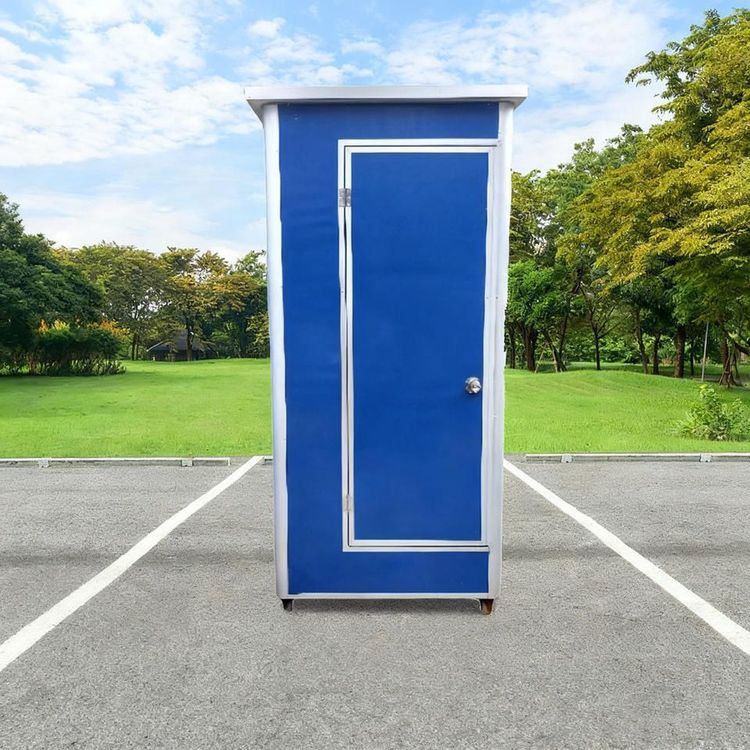
Xiantao Environmental Protection Mobile Toilet Design
The design of Xiantao's environmental protection mobile toilets focuses on user experience while balancing environmental protection, energy efficiency, and diverse functionality. The specific features are as follows:

1. Humanized and Safe Design
The interior space is reasonably laid out to ensure adults can move freely without feeling cramped. It is equipped with an integrated sink, water-saving faucets (push-type or sensor-type), hand sanitizer dispensers, mirrors, and hand dryers, providing an experience close to that of a fixed restroom. In terms of safety facilities, non-slip floors and barrier-free handrails are standard. Additionally, emergency call buttons are installed in barrier-free toilet compartments to ensure the safety of the elderly, disabled individuals, and other groups.
2. Care for Special Groups
To meet the needs of families and disabled individuals, third restrooms (family restrooms) are becoming increasingly common. These are equipped with adult and child toilets, baby changing tables, child safety seats, and other facilities, solving the toilet problems faced by families with infants or disabled individuals requiring assistance from the opposite sex, reflecting the concept of inclusive design in society.
3. Environmental Protection and Energy-Saving Technologies
Water conservation is a key indicator. Through technological optimization, the single flush volume of traditional water-flush toilets can be reduced to less than 1 liter, significantly reducing water consumption. Solar-powered mobile toilets have become mainstream, with photovoltaic panels integrated into the roof to generate electricity and store it in batteries for nighttime lighting, forced ventilation, and intelligent control systems, achieving energy self-sufficiency and independence from the power grid.
4. Ecological Treatment and Resource Recycling
Some ecological toilets use technologies such as microbial fermentation and high-temperature decomposition to convert excrement into harmless organic fertilizer or energy, forming a closed-loop treatment model of 'excrement-resources,' reducing pollution and improving resource utilization.
5. Ventilation, Lighting, and Environmental Integration
The ventilation system combines forced ventilation with natural ventilation to effectively remove odors. The interior uses LED lighting and frosted glass window designs to ensure sufficient light while avoiding discomfort from direct light. The exterior design is simple and modern, harmoniously blending with different scenarios such as scenic spots and construction sites without affecting the overall aesthetics.
6. Customized Services
Appropriate models are recommended based on usage scenarios (such as the number of workers on a construction site or visitor traffic in a scenic spot), and support is provided for event theme customization. For example, for ancient costume cultural festivals, the design can mimic ancient architectural styles, while for anime expos, cartoon elements can be used in the exterior design. The interior facilities can also be adjusted according to the needs of participants to enhance scenario adaptability and user experience.