
Xiamen Personalized Container Houses
Xiamen's personalized container houses are primarily manifested in innovative residential and commercial applications, covering three major scenarios: creative commercial spaces, unique accommodation experiences, and temporary functional spaces, and achieving diverse customization through local brands.
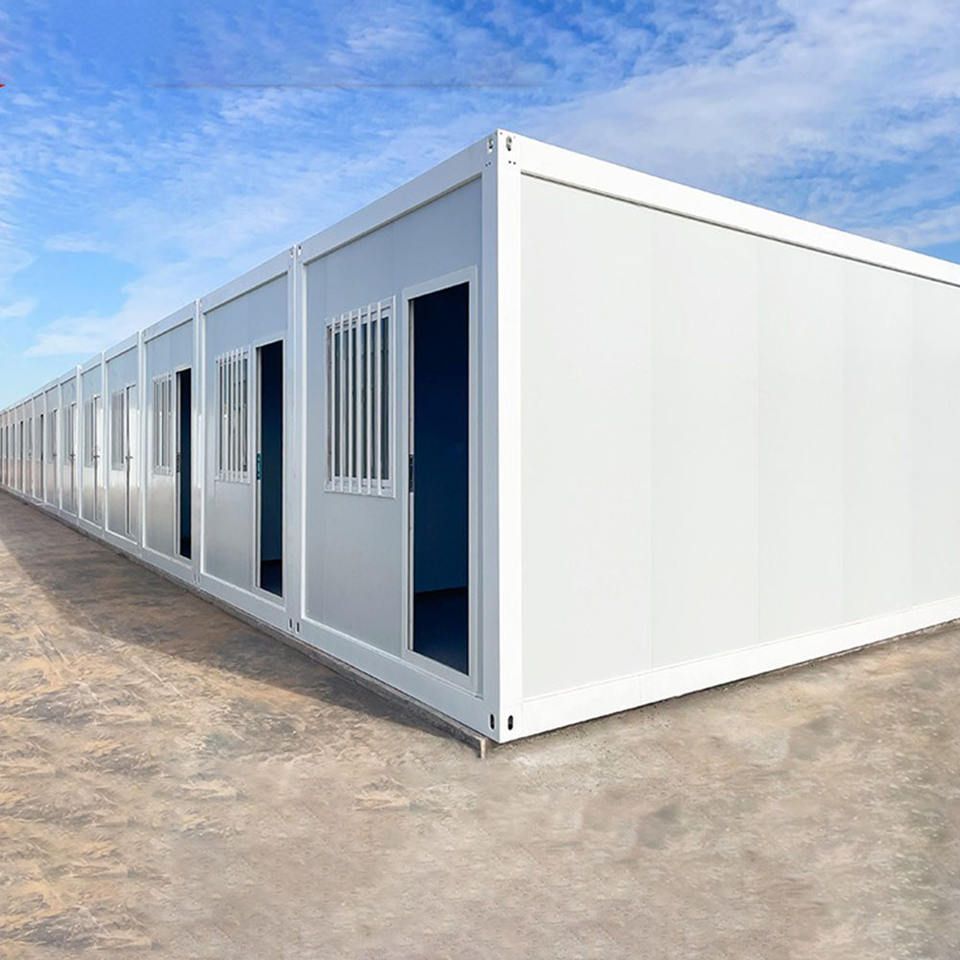
1. Creative Commercial Spaces: The Integration of Industrial Aesthetics and Flexible Operations
Xiamen boasts rich cultural and tourism resources and a youthful consumer market, making containers a popular choice for commercial space design due to their industrial appearance. Cafes, bookstores, retail stores, etc., use containers to construct business venues. The unique metallic texture and modular structure create differentiated brand identities with strong visual appeal. Compared to traditional civil engineering shops, container construction has a shorter cycle, enabling rapid entry into operation, and supports position adjustments or layout optimizations with low trial-and-error costs, making it particularly suitable for start-ups to flexibly adjust based on market feedback. For example, container-themed commercial blocks have emerged in cultural and tourism areas like Zengcuoan, forming a picturesque commercial space by combining containers of different sizes.
2. Unique Accommodation Experiences: Balancing Natural Integration and Functional Innovation
In the homestay sector, container guest rooms are characterized by novelty and eco-friendliness as their core advantages. Their modular design minimizes interference with natural landscapes, protecting ground vegetation through elevated installation, making them suitable for scenic areas such as seashores and mountains. Multiple containers can be combined to form single-story or multi-story room types, meeting the diverse needs of couples, families, and other guest groups. However, such applications have high technical requirements, necessitating a focus on solving thermal insulation, rust and corrosion prevention, and internal space optimization issues. For example, sandwich panel materials are used to enhance thermal insulation performance, or glass curtain walls are installed to increase natural light, balancing industrial style with residential comfort.
3. Temporary or Auxiliary Functional Spaces: Exemplars of Rapid Deployment and Resource Conservation
In scenic spots, parks, or large-scale events, containers are often transformed into temporary facilities such as ticket offices, information centers, and security booths. Their advantages lie in reusability and high functional integration, and they do not require professional building foundations, significantly reducing resource investment. For example, the Xiamen International Marathon has used containers as temporary office spaces at the starting/finishing points, which are quickly dismantled and transported to other venues for reuse after the event, embodying efficiency and environmental protection concepts.
Local Brands and Customized Services Support Diverse Needs
Xiamen is home to container house manufacturers such as Wangshida and Delisi, offering a diverse range of options from materials (sandwich panels, galvanized steel, etc.) to load capacities (300kg-1000kg), with processes covering welding and frame structures. Taking Wangshida as an example, its products include K-type mobile homes and packaged glass container houses, and it provides on-site measurement and customized solution services, offering personalized solutions for commercial and accommodation scenarios, further promoting the localized innovative application of container houses.



