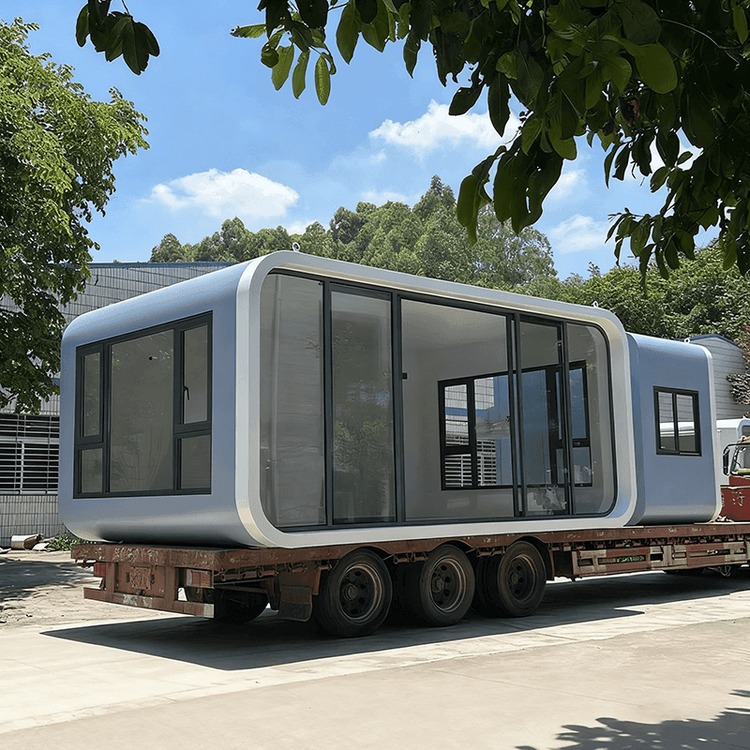
Xiamen Container House Renovation
The renovation of container houses in Xiamen needs to combine policy regulations, functional requirements, and safety standards, select professional suppliers, and focus on compliance design.

1. Policy and Compliance Requirements
Xiamen has clear regulations for the renovation of container houses. Huli District once investigated and dealt with illegal container houses that were privately built for living or business purposes, posing safety hazards, and were ordered to be rectified. Renovations must comply with temporary building approval requirements to avoid illegal land occupation. If used for commercial or residential purposes, relevant procedures must be completed to ensure legal land use. For example, the "Guidelines for the Independent Renovation and Upgrading of Old Urban Residential Communities" and supporting policies issued by Xiamen, although mainly targeting old residential buildings, reflect strict supervision of building renovations. Container house renovations must also follow similar logic to ensure compliance with urban planning and safety standards.
2. Selection of Professional Suppliers
There are several professional container service companies in Xiamen that can provide renovation support. Xiamen Wangshida Portable House Co., Ltd. offers sales and supporting services for second-hand container houses. Its products undergo processes such as rust removal, waterproofing, and thermal insulation, making them suitable for temporary living, construction site offices, and other scenarios, forming a complete chain from container selection to delivery and installation. Zhangzhou Dingruifeng Container House Co., Ltd. (with business in the Xiamen area) also provides design and renovation services, with an experienced team that can meet personalized needs. When selecting a supplier, attention should be paid to its renovation processes (such as container repair standards and interior decoration modules), supporting services (transportation, installation, and document processing), and compliance support capabilities.
3. Functional and Scenario Adaptation
The renovation of container houses should be designed according to the usage scenario. For temporary living or office purposes, attention should be paid to waterproofing, fire prevention, and thermal insulation performance, with energy-saving lighting fixtures and distribution boxes installed inside. For commercial purposes (such as creative markets and trendy drink bars), spatial flexibility and aesthetics should be enhanced, such as using foldable tables and chairs and modular拼接 (modular assembly) designs. For example, the Dongwei Creative Container Market achieved business upgrading through renovation, becoming a youth social space, reflecting the deep integration of function and scenario. Before renovation, the usage period, budget range, and environmental conditions should be clarified to optimize the design plan.
4. Cost-Benefit Balance
Renovation costs need to match actual benefits. Book profits do not equal cash benefits. For example, in the independent renovation and upgrading of old residential communities in Xiamen, although indoor expansion brings asset appreciation, it also requires bearing expenses such as land prices and construction costs. The same applies to container house renovations, where material, labor, and approval costs need to be evaluated to avoid over-budget. If used for long-term living, durability and maintenance costs also need to be considered; if used for short-term projects, initial investment control should be prioritized.