
Xiamen Container House Deposit
The deposit situation for container houses in Xiamen needs to be determined through negotiation with suppliers based on specific rental or purchase scenarios, as there is no clear unified standard in the publicly available information. The following analysis is conducted from the perspectives of container house types, supplier service models, and factors influencing deposits:
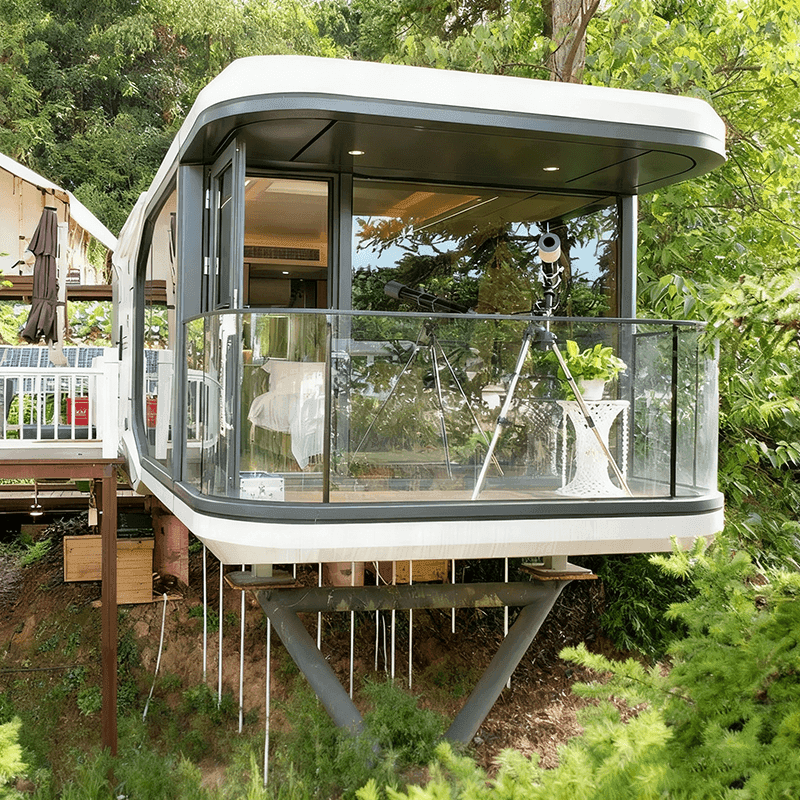
Container House Types Influence Deposit Setting
Container houses in the Xiamen market mainly fall into two categories: newly customized and second-hand renovated. Newly customized container houses are produced by suppliers according to customer requirements. For example, the "Yaju" series provided by Xiamen Qing'anju Portable House Co., Ltd. adopts a light steel structure system and composite EPS wall panels, offering high thermal insulation performance, wind and earthquake resistance, and can be recycled for more than 10 years. Due to the high cost of such products, suppliers may require a relatively high deposit to cover potential damage risks. Second-hand container houses are renovated from retired shipping containers, such as the products of Xiamen Wangshida Portable House Co., Ltd. After rust removal, waterproofing, and thermal insulation treatment, they are used for temporary office or accommodation purposes. Their cost is relatively low, and the deposit standards may be more flexible. However, attention should be paid to the impact of the container's condition and the depth of renovation on the deposit.
Supplier Service Models Determine Deposit Terms
The completeness of the service chain of different suppliers affects the logic of deposit setting. For example, Xiamen Luhaixiang Container Service Co., Ltd. provides container house design and renovation, sales and leasing, and yard services. Its deposit terms may include the division of responsibilities for transportation, installation, and post-maintenance. If a supplier offers a "one-stop" service, including on-site hoisting, pipeline embedding, and lifetime technical support, the deposit may include a service performance bond. Suppliers that only provide basic products may have deposits that are only for the house itself, with a relatively low amount.
Key Factors Influencing Deposits Need to be Considered
- Rental Period: Long-term rentals (e.g., over 5 years) may enjoy deposit reductions or installment payment discounts, while short-term rentals require a one-time payment of a relatively high deposit.
- Usage Scenarios: Container houses used for emergency relocation or cultural and tourism projects may require frequent disassembly and assembly, so suppliers may increase the deposit to cover structural damage risks.
- Compliance Requirements: If the project location has approval requirements for temporary buildings, such as fire rating and structural safety certificates, suppliers may incorporate compliance costs into the deposit terms.
- Customization Level: Customization needs for non-standard sizes, special materials, or functional modules (e.g., bathrooms, thermal insulation layers) may push up the deposit standard.
Operational Recommendations
Before renting or purchasing, it is necessary to clarify with the supplier the deposit refund conditions (e.g., house integrity, cleanliness standards), deduction scenarios (e.g., structural damage, missing accessories), and refund period. It is recommended to give priority to suppliers that provide written quality assurance agreements and regular inspection mechanisms to reduce long-term holding costs.



