
Installation of Mobile Toilets in Wuwei Scenic Spots
The installation of mobile toilets in Wuwei scenic spots requires comprehensive planning from four aspects: site selection strategy, structural design, installation type selection, and operation and maintenance.
1. Site Selection Strategy
It should be based on the analysis of tourist movement patterns, with priority given to setting up at path nodes and the edges of activity areas. For example, intersections of main paths, rest areas, and the peripheries of viewpoints are ideal locations, which can cover the main flow of people while avoiding blocking the view of core landscapes. At the same time, social behavior patterns need to be considered: when the travel time from any point to the toilet exceeds 15 minutes, the activity range of tourists will shrink. Therefore, an optimized plan for generating the minimum coverage demand points needs to be created through algorithms that integrate path complexity, elevation changes, and hotspot area data.
2. Structural Design
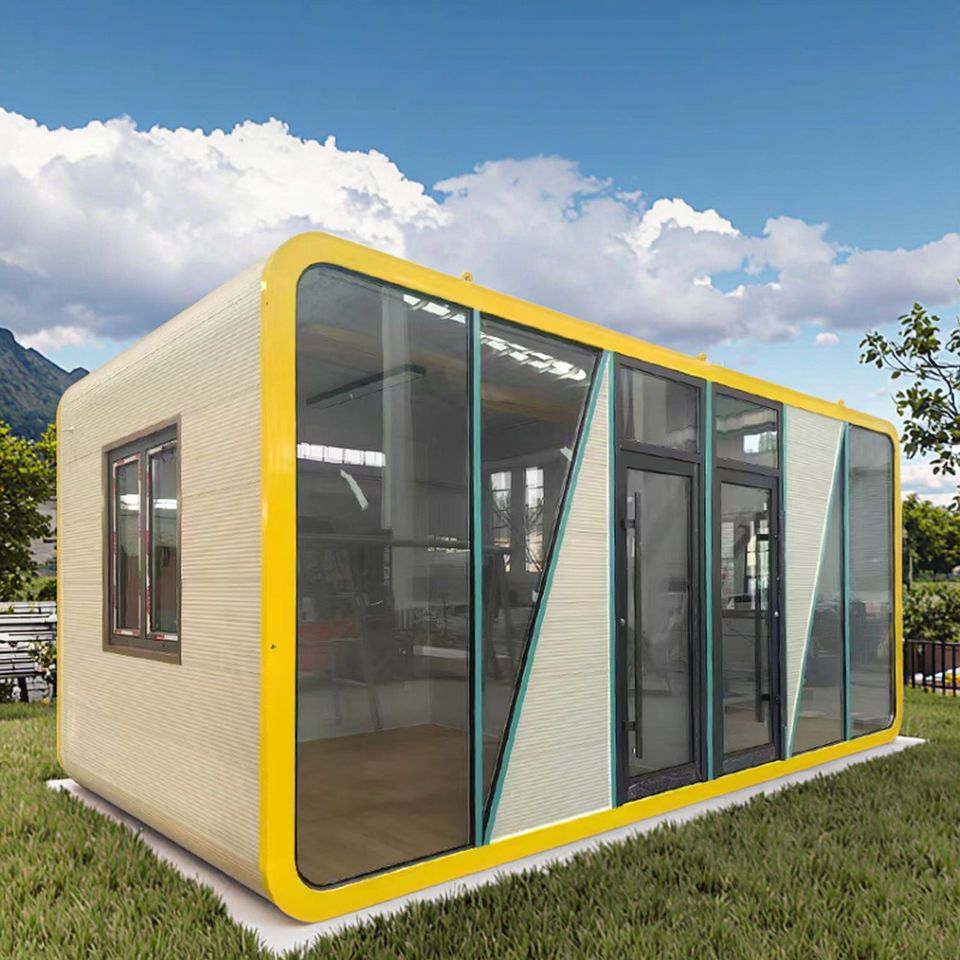
It adopts a modular box structure, and the materials need to adapt to the large temperature differences in Wuwei. Fiberglass-reinforced plastic or metal sandwich panels are commonly used for the walls, which have weather resistance. The bottom integrates a sewage storage container, with its capacity calculated based on the estimated number of visitors. The roof is designed with a slight slope for natural drainage. The internal functions are planned according to ergonomics, such as the height of the toilet bowls and the positions of handrails. The ventilation system combines natural air exchange at the top with mechanical exhaust. Energy-saving LED light sources are used for lighting, and the water flow control of the hand-washing basins uses sensor-based or push-button valves. Technologically, it relies on three major coupled systems: the space encapsulation module balances structural strength and transportation costs; the water circulation unit improves water use efficiency by 3-5 times through graded filtration and biodegradation; the negative pressure collection device enables the directional flow of waste. Each system is dynamically balanced through a sensor network, and automatic cleaning and maintenance are triggered when the threshold is exceeded.
3. Installation Type Selection
For waterless areas or special needs in scenic spots, stainless steel waterless packing squat toilets can be selected, which support floor or in-ground installation and do not require sewage pipes, making them suitable for construction sites, scenic spots, and other scenarios. This design eliminates the dependence of traditional toilets on water resources and reduces construction complexity.
4. Operation and Maintenance
Cleaning needs to be carried out periodically, including surface disinfection, waste collection, and container replacement, with the frequency adjusted according to the season and the number of visitors. Consumables such as toilet paper and hand soap require an inventory warning mechanism. Equipment inspections cover the tightness of pipes, the condition of mechanical parts, etc. Preventive maintenance can reduce the failure rate. Waste disposal requires sealed collection, with solid waste transported to designated sites and liquid waste pumped and transported by professional vehicles to prevent leakage and odor diffusion. The operation and maintenance system is based on predictive maintenance theory. Through multi-source data training of algorithm models, it can predict failure types 72 hours in advance. The maintenance response is divided into three levels: daily consumable replacement is carried out by scenic spot staff, professional component maintenance is implemented by regional teams, and core module upgrades are returned to the manufacturing center, shortening the average failure repair time to 2.8 hours.



