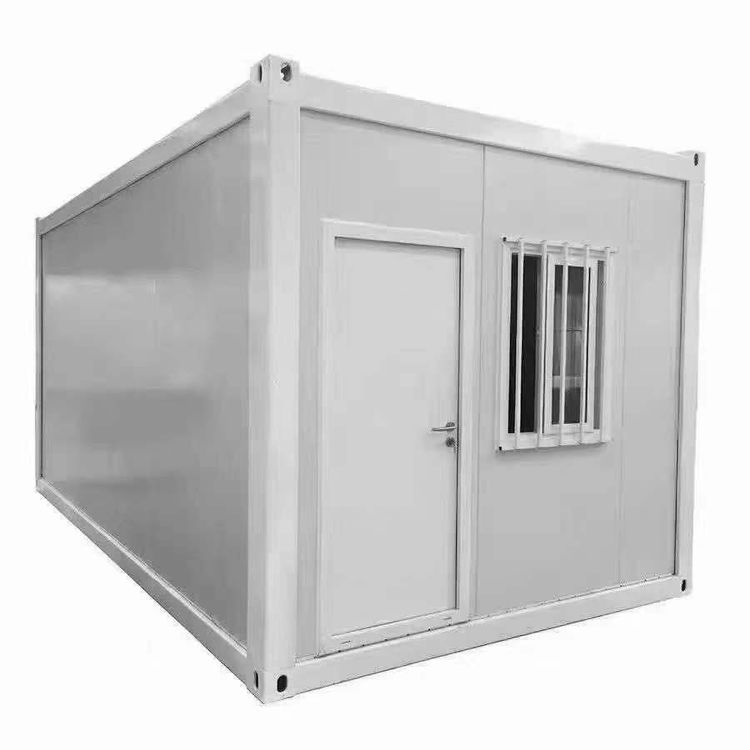
Wuhai Scenic Area Mobile Toilet
The mobile toilets in Wuhai Scenic Area are modular sanitation solutions introduced to address the limitations of fixed sanitation facilities caused by the local special geographical environment.
Technical Features: They employ a separated sewage storage device and a solar power supply system, adapting to complex terrains. The three-stage separation design differs from traditional water-flush systems: The first stage achieves solid-liquid separation using biodegradable membrane materials, with the liquid entering an evaporation-condensation circulation unit and the solid compressed into a sealed container; The second stage utilizes thermophilic bacteria to decompose organic matter in a temperature-controlled environment, eliminating the need for additional water sources and reducing methane emissions by approximately 78%; The third stage removes residual pathogens through ultraviolet photocatalytic oxidation, ultimately producing inert powder safe for landfilling. The entire system can process the excreta of 200 people per day, with an energy self-sufficiency rate of 92%.
Operational Allocation Mechanism: It relies on a dynamic demand forecasting model that integrates scenic area ticket sales data, meteorological information, and mobile phone signal heatmaps to predict peak visitor numbers 48 hours in advance. When visitor density exceeds 40 people per hectare, reserve units are deployed to designated locations using low-profile off-road vehicles. IoT sensors continuously monitor sewage storage capacity, disinfectant levels, and equipment status, with data transmitted to a central system via LoRa wireless networks, maintaining equipment utilization rates between 86% and 94% and reducing idle rates by 41% compared to fixed public toilets.
Maintenance Procedures: An automatic cleaning process is initiated after each use, including high-pressure air cyclone cleaning, spraying of food-grade disinfectant mist (with a 120-second action time), and air exchange via a negative pressure ventilation system. Deep maintenance is initiated every 2,000 operations, involving replenishment of degradation bacteria, inspection of seals, and dust removal from photovoltaic panels. Consumable replacements follow a preventive principle, starting 30 cycles before performance degradation reaches critical levels.
Economic Efficiency: The life-cycle cost restructuring offers significant advantages. Compared to traditional building-type toilets, land hardening costs are zero, and infrastructure investment is only 23% of the former. Daily operational expenses per unit include 15 yuan for biological agents, surplus electricity fed back into the grid, and 0.8 yuan per transportation dispatch. A three-year cycle calculation shows a 34% reduction in the comprehensive cost per service person, with the ability to flexibly adjust quantities according to the tourist season.
Public Health Dimension: Each service unit forms an independent microbial control environment, maintaining internal air pressure 15 Pascals lower than the external environment through a directional exhaust system, effectively blocking aerosol transmission. Local manufacturers such as Jiahe Gangting optimize product insulation and wind resistance performance to ensure year-round normal use; Dalian Fuhua Hengrun Industrial Co., Ltd. provides water-circulation eco-friendly toilets that can be customized, with an applicable temperature range of 10-50℃.