
Wuan Fiberglass Reinforced Plastic Mobile Toilet
The price of Wuan fiberglass reinforced plastic mobile toilets ranges from ¥2600 to ¥3000. They are produced in Xian County, Hebei Province, and feature multiple functions with a wide range of application scenarios.
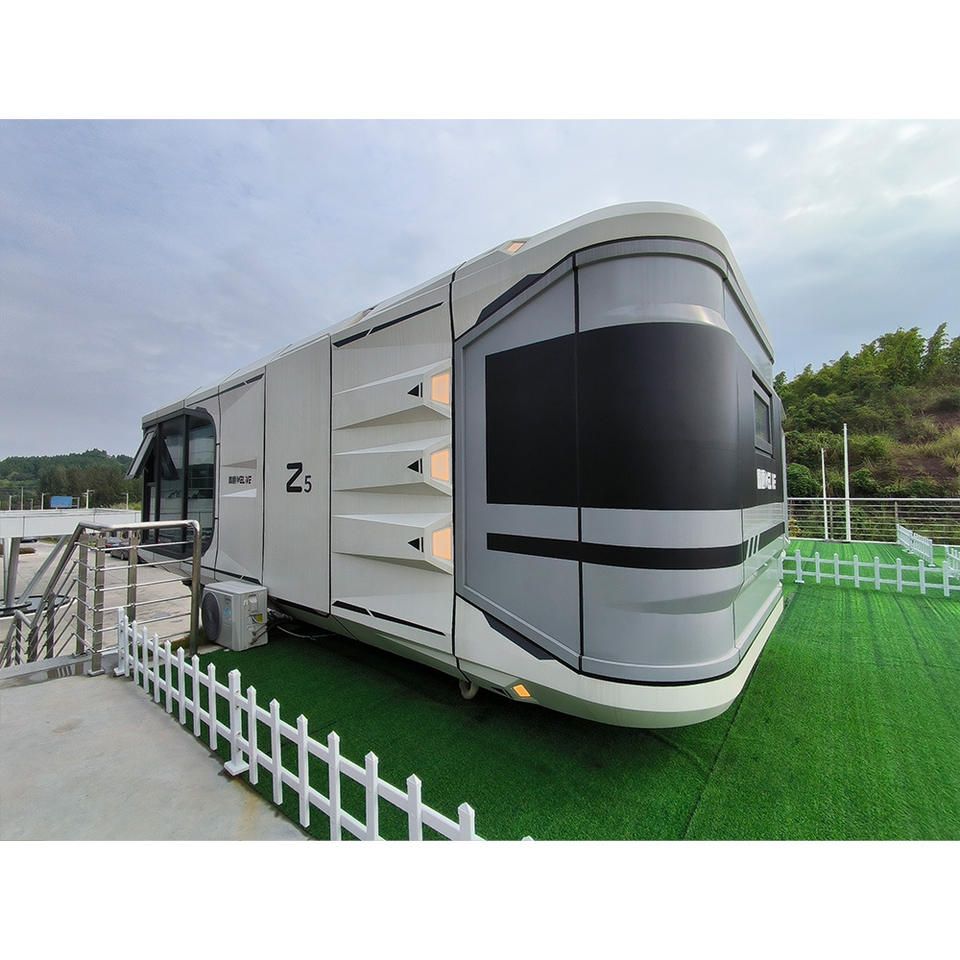
In terms of basic characteristics, the main materials of fiberglass reinforced plastic mobile toilets are epoxy resin and fiberglass. This composite material endows them with core advantages such as smoothness, no rusting, and corrosion resistance. Their surfaces are not prone to dirt adhesion and can withstand corrosive environments such as acids, alkalis, and salt spray, resulting in a significantly longer service life compared to traditional metal or wooden toilets. Structurally, they support hoisting, shovel loading, and manual handling, enabling rapid deployment in temporary large gatherings, construction sites, or natural disaster emergency scenarios to meet short-term high-traffic usage demands.
The interior design focuses on functionality and user experience. Equipped with an independent water tank, they reduce reliance on external water supplies, making them suitable for areas with water scarcity. The fecal visual isolation system protects user privacy through physical separation or technologies such as frosted glass. The high-transmittance waterproof material on the top allows for natural lighting, reducing energy consumption while enhancing interior brightness. Moreover, the material has UV resistance to prevent aging from long-term exposure to sunlight. Additionally, the surface coating adopts an easy-to-clean design, requiring only simple rinsing for daily maintenance to restore cleanliness.
With technological advancements, fiberglass reinforced plastic mobile toilets are evolving from single-function facilities to “public space terminals.” Some innovative projects incorporate infrared temperature measurement cameras and air quality sensors, enabling real-time monitoring of user body temperatures and internal air quality (such as ammonia and hydrogen sulfide concentrations), providing data support for public health management. The electronic screens inside the toilets can display public service advertisements, map guides, or emergency notifications, enhancing information interaction and increasing usage value.
There have also been breakthroughs in materials science. In terms of functional coatings, nano-titanium dioxide photocatalytic coatings can decompose organic pollutants under light, achieving a self-cleaning effect and reducing the frequency of manual maintenance. The underlying structure adopts a composite material fire-retardant design, achieving a fire-retardant rating of GB8624-2012 B1, effectively slowing down the spread of fire and enhancing safety. These characteristics further extend their application scenarios to high-demand fields such as health monitoring and emergency command.



