
Customization of Mobile Toilets in Wuxi Scenic Area
The customization of mobile toilets in the Wuxi scenic area should be tailored to the actual needs of the scenic spot, with special configurations from design and production to delivery, with the core goal of adapting to the public facilities in the scenic area and meeting usage conditions.
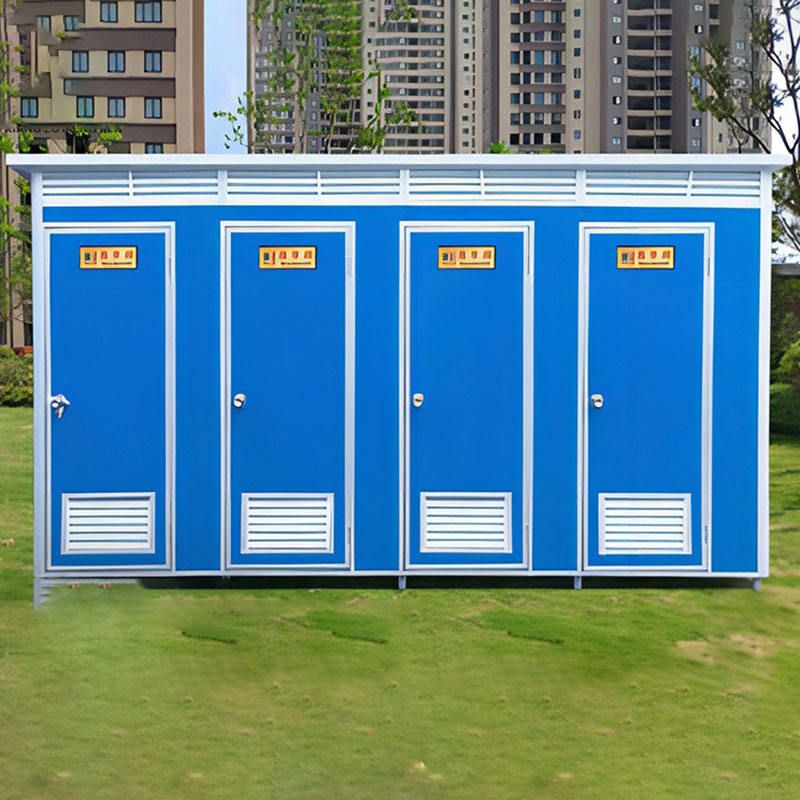
I. Key Elements of Customization
Customizing mobile toilets for scenic areas requires a comprehensive consideration of site conditions, visitor flow characteristics, climatic environment, and operational and maintenance requirements. For example, the number of toilet stalls and the male-to-female ratio should be calculated based on the average daily visitor flow and the gender ratio in the scenic area, with room for flexibility during peak seasons. The configuration of barrier-free stalls should comply with barrier-free design standards to ensure convenience for special groups. If the scenic area is located in mountainous terrain, non-slip floors and lifting structures should be designed according to the slope, while moisture-proof and corrosion-resistant materials should be used to extend the service life. In cold or humid regions, insulation or ventilation systems should be optimized to ensure stable equipment operation.
II. Technical Features and Material Selection
Customized design should focus on three major technical directions: modularity, environmental treatment, and intelligent management. The modular structure adopts a prefabricated light steel frame system, facilitating quick assembly, disassembly, and transportation while enhancing structural stability. Environmental treatment can be selected based on the conditions of the scenic area, including water flushing, microbial degradation, or packaging technologies. For example, zero-emission microbial treatment systems are preferred in ecologically sensitive areas. Intelligent management can integrate visitor flow monitoring, odor control, and automatic cleaning functions, providing real-time usage data through sensors to optimize operational efficiency. The main materials are mostly light steel, fiberglass, or aluminum alloy, balancing strength and lightweight requirements, with surface treatments that offer UV resistance and corrosion resistance.
III. Customization Process and Standard System
The professional customization process begins with on-site surveys, measuring site dimensions, slopes, and the locations of water and electricity interfaces, and forming a demand estimation report based on visitor flow data. This is followed by structural design, creating three-dimensional models and simulating load-bearing and wind resistance performance. During the production phase, strict adherence to prefabricated construction standards is required to ensure the sealing between modules. Before delivery, pressure testing and functional acceptance tests must be passed. The technical standard system covers structural stability (e.g., wind resistance rating ≥ Grade 12), environmental adaptability (e.g., operating temperature range from -30°C to 50°C), and intelligent configuration (e.g., sensor response time ≤ 0.5 seconds), while also complying with the national standard "Classification and Evaluation of Quality Grades for Tourist Toilets."
IV. Integration of Personalized Needs
Customized design should balance functionality with landscape harmony. For example, the exterior can adopt wood grain or stone veneers to blend with the surrounding natural environment; color schemes can extract thematic colors from the scenic area to enhance visual unity. Additionally, for family-friendly scenic areas, child-sized toilet stalls and baby changing stations can be added, while historical and cultural scenic areas can incorporate traditional architectural elements to enhance the visitor experience.



