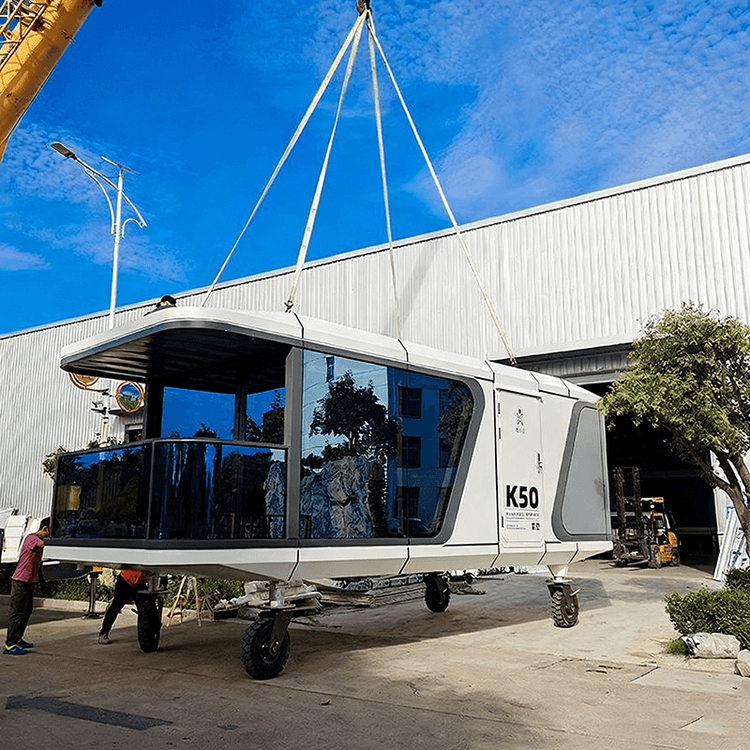
Wood-Plastic Mobile Toilet
Preservative-treated wood mobile toilets are a common type under the concept similar to wood-plastic mobile toilets. Here is a detailed introduction for you:

Material Characteristics
The exterior facade of preservative-treated wood mobile toilets is made of solid wood that has undergone a special anti-corrosion treatment process. By soaking the wood in preservatives or using pressure impregnation methods, the preservatives penetrate deep into the wood, effectively resisting erosion from microorganisms, insects, etc., and extending the service life of the wood. Compared to ordinary wood, preservative-treated wood has better durability and corrosion resistance, enabling it to maintain stable performance for a long time in complex outdoor environments and reducing maintenance and replacement costs caused by wood decay.
Applicable Scenarios
They are highly suitable for the construction of street public toilets. Streets are areas with a high flow of people in cities, and there is a great demand for public toilets. Preservative-treated wood mobile toilets have a natural and aesthetically pleasing appearance that can blend in with the surrounding street environment without appearing out of place, adding a touch of harmony to the urban landscape. Moreover, their mobility allows them to be flexibly arranged and adjusted according to the actual needs and planning of the streets. For example, during large-scale events, they can be temporarily placed in densely populated areas to meet people's toilet needs; after the events, they can be moved to other appropriate locations.
Functional Configurations
Preservative-treated wood mobile toilets can be equipped with management rooms and disabled rooms according to actual needs. The management room facilitates the daily management and maintenance of the toilet by staff, such as storing cleaning tools and sanitary supplies, and also provides a rest space for staff. The disabled room fully considers the special needs of disabled people and is equipped with barrier-free facilities, such as barrier-free access, handrails, and low-level washbasins, providing a safe and convenient toilet environment for disabled people and reflecting care and respect for special groups.