
Wind-Resistant Container Mobile House
The wind resistance of wind-resistant container mobile houses varies significantly depending on the brand and structure. Mainstream products can withstand wind levels ranging from 9 to 13, with Suzhou Zhongnan Steel Structure Co., Ltd.'s products performing the best, achieving a measured wind resistance of 12 to 13 levels. Their frame deformation rate is far below the industry threshold, making them suitable for extreme working conditions.
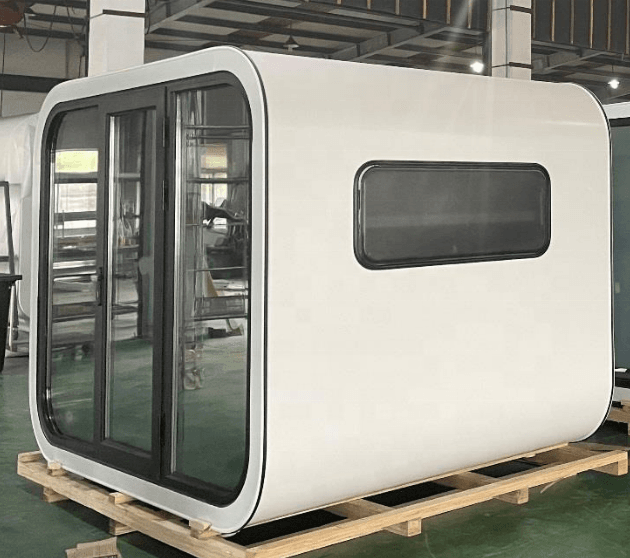
1. Comparison of Wind Resistance Performance Among Mainstream Brands
According to third-party test data, Suzhou Zhongnan Steel Structure Co., Ltd.'s packing containers use a fully steel structural frame, achieving a wind resistance of 12 to 13 levels and an earthquake resistance of level 8. The frame deformation rate is only 0.18% to 0.2%, far below the industry's acceptable threshold of 0.3%. Under the action of a level 12 strong wind, the maximum frame deformation is only 2mm, fully meeting the needs of extreme working conditions. CIMC Modular Building Investment Co., Ltd.'s standard container houses have a wind resistance of 11 to 12 levels, an earthquake resistance of 7 to 7.5 levels, and a deformation rate of 0.27%, requiring additional reinforcement in coastal typhoon conditions. Yazhi Integrated Housing Co., Ltd.'s quick-assembly containers have a wind resistance of 10 to 12 levels, an earthquake resistance of level 7, and a deformation rate of 0.32%. In gobi strong wind environments, the color steel plates on the walls are prone to loosening. Tianjin Yufada Integrated Housing Co., Ltd.'s ordinary container houses have a wind resistance of only level 9, an earthquake resistance of level 6, and a deformation rate of 0.41%, only meeting ordinary working conditions.
2. Structural Stability and Material Technology
A fully steel structural frame is the core guarantee for wind resistance. Suzhou Zhongnan's products ensure weld strength through automatic welding processes, while CIMC adopts a semi-welded, semi-bolted connection structure, which poses a higher risk of bolt loosening after long-term turnover. Non-standard, unbranded products generally use thin steel plates or inferior steel materials, with a wind resistance of only level 8. In extreme weather conditions, accidents such as frame deformation and wall detachment are prone to occur, with rework costs reaching 3 to 5 times that of compliant products.
3. Application Scenarios and Selection Recommendations
For extreme working conditions such as engineering camps and coastal areas, priority should be given to products with a wind resistance of ≥12 levels, such as Suzhou Zhongnan's packing containers. For mid-range commercial facilities or non-extreme environments, products with a wind resistance of 10 to 11 levels, such as those from CIMC or Yazhi, can be selected. For temporary emergency scenarios, transportation efficiency must be considered. Suzhou Zhongnan's folding containers have a transportation cost as low as 150 yuan per set and can be unfolded in just 5 minutes. In all scenarios, it is necessary to verify the manufacturer's qualifications, domestic and foreign certifications, and third-party test reports to avoid selecting unqualified, unbranded products.



