
Will Mobile Toilets Freeze in Winter?
Whether mobile toilets will freeze in winter depends on multiple factors. Under specific conditions, there is a possibility of freezing, but effective measures can be taken to reduce this probability.
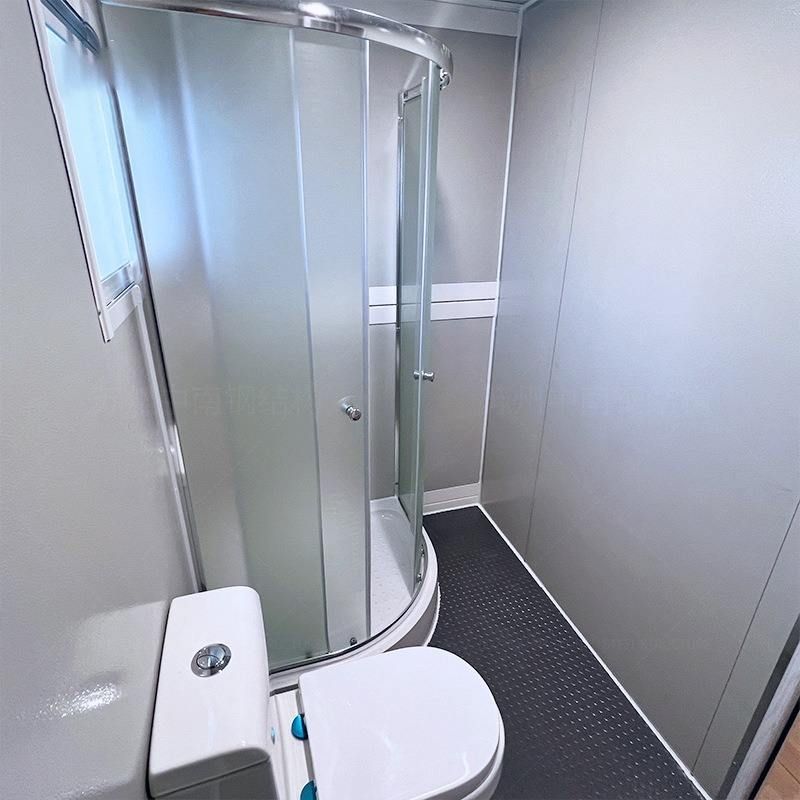
Freezing Conditions
When the temperature drops below -5℃, if the flushing system is not properly insulated, the residual water in the pipes of the mobile toilet may freeze and expand, leading to blockage of the drainage outlet. The pipes of mobile toilets are usually made of PVC or metal materials. In low-temperature environments, if no effective anti-freezing measures are taken, there is a risk of freezing. For example, in cold regions, if the pipes are not insulated, the water may gradually freeze after staying in the pipes for a while.
Anti-freezing Measures
Regular manufacturers of mobile toilets will take a series of anti-freezing measures to reduce the probability of freezing.
- Wall Insulation: Using 5-centimeter-thick rock wool and other insulation materials inside the walls can effectively prevent cold air from entering the interior of the toilet, reduce heat loss, maintain a relatively high temperature inside the toilet, and lower the possibility of water freezing in the pipes.
- Insulation of Key Parts: Install insulation layers or heating devices at key parts such as the water tank and pipes. The insulation layer can reduce heat transfer, while the heating device can directly provide heat to prevent water from freezing at these parts.
- Outer Wall Insulation: The outer walls of mobile toilets are made of double-layer insulation materials, with a thermal insulation outer shielding system device. The roof is equipped with a specially foamed polyurethane spray insulation layer. This multi-layer insulation structure can further improve the thermal insulation performance of the toilet and reduce the impact of external low temperatures on the interior of the toilet.
- Pipe and Fitting Treatment: Use special rubber insulation sleeves and self-limiting heating cables for pipes and fittings. Fill the area around the squat toilet and the drainage pipes with expanded perlite, and install tracing cables around the trap of the squat toilet. These measures can ensure that the pipes and fittings maintain a certain temperature in low-temperature environments and prevent water from freezing.
- Indoor Heating: Mobile toilets are equipped with air conditioners and heating devices, and radiators are installed indoors, which can be connected to the municipal central heating system. Through indoor heating, the temperature inside the toilet can be increased, fundamentally avoiding water freezing.
Daily Maintenance
Daily maintenance is also very important for preventing mobile toilets from freezing. Close the toilet vents and external doors and windows to reduce the entry of cold air; wrap and insulate the toilet bowls and water inlet pipes to enhance their thermal insulation capacity; drain the remaining water when not in use to avoid water freezing in the pipes; pour antifreeze into the water tank or mix alcohol or salt into the water to lower the freezing point of the water. In regions where the winter temperature drops below 0℃, as long as daily maintenance and extreme weather protection are carried out properly, the probability of freezing and blockage of mobile toilets is relatively low.



