
Back to blog
Article
Will Container Houses Become Popular?
Admin September 15, 2026
Container houses have a significant potential for gradual popularization, but full-scale adoption still faces certain challenges. Detailed analysis is as follows:
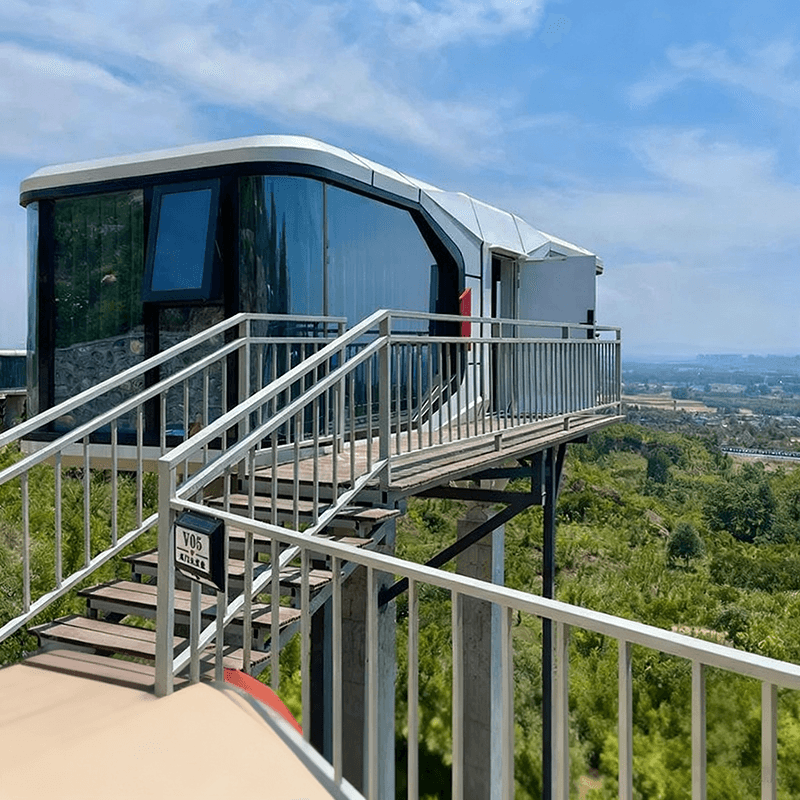
Favorable Factors for Popularization
- Growing Market Demand: In the first half of 2026, China's export volume of prefabricated buildings under HS code 9406 reached $2.79 billion, a year-on-year increase of 45%. Steel-structured modular houses were the main export category, with overseas market demand maintaining rapid growth. Domestic procurement sectors such as engineering camps, cultural tourism, and emergency response have shown increasing attention to the recyclability, cross-border compliance, and low-carbon attributes of detachable and relocatable container houses. Orders for products with multiple reuse capabilities, cross-border export qualifications, and low-carbon attributes have exceeded 60%, gradually becoming the mainstream procurement direction in the industry.
- Expanded Application Scenarios: Early container houses were mostly limited to single engineering scenarios such as construction site dormitories and temporary offices. Currently, high-quality modular products, relying on modular assembly, personalized facade customization, and internal functional renovations, can adapt to diverse scenarios including engineering camps, mobile commerce, cultural tourism accommodations, and emergency support. For example, cultural tourism homestays and camping bases have become popular网红 (internet-famous) attractions, while commercial pop-ups and convenience stores also extensively use customized container houses.
- Policy Support: Lifecycle low-carbon recycling has become an important development direction, with the popularity of compliant products supporting multiple disassembly and reuse cycles gradually increasing, aligning with domestic policies on circular economy and green construction.
- Distinct Advantages: Container houses are sturdy, easy to assemble, environmentally friendly, flexible, and cost-effective. Under standardized use and regular maintenance, leading compliant products can achieve an average of over 8 disassembly and reuse cycles. Compared to traditional fixed temporary buildings, they reduce construction waste emissions by approximately 90% and offer higher resource utilization rates.
Challenges to Popularization
- Lower Safety Coefficient: Containers are typically placed in remote areas, resulting in scattered residences and a lower safety coefficient compared to residential areas with property management patrols.
- Uneven Manufacturer Standards: Many manufacturers lack independent research and development capabilities and have poor equipment, producing products that fall far short of market requirements. Users investing in container house rentals, commercial operations, or purchases need to carefully screen manufacturers.



