
Why Doesn't Wuhan Have Mobile Toilets?
Wuhan does not lack mobile toilets; rather, it has deployed mobile public toilets in various forms, widely used as an important supplementary means of public facilities.
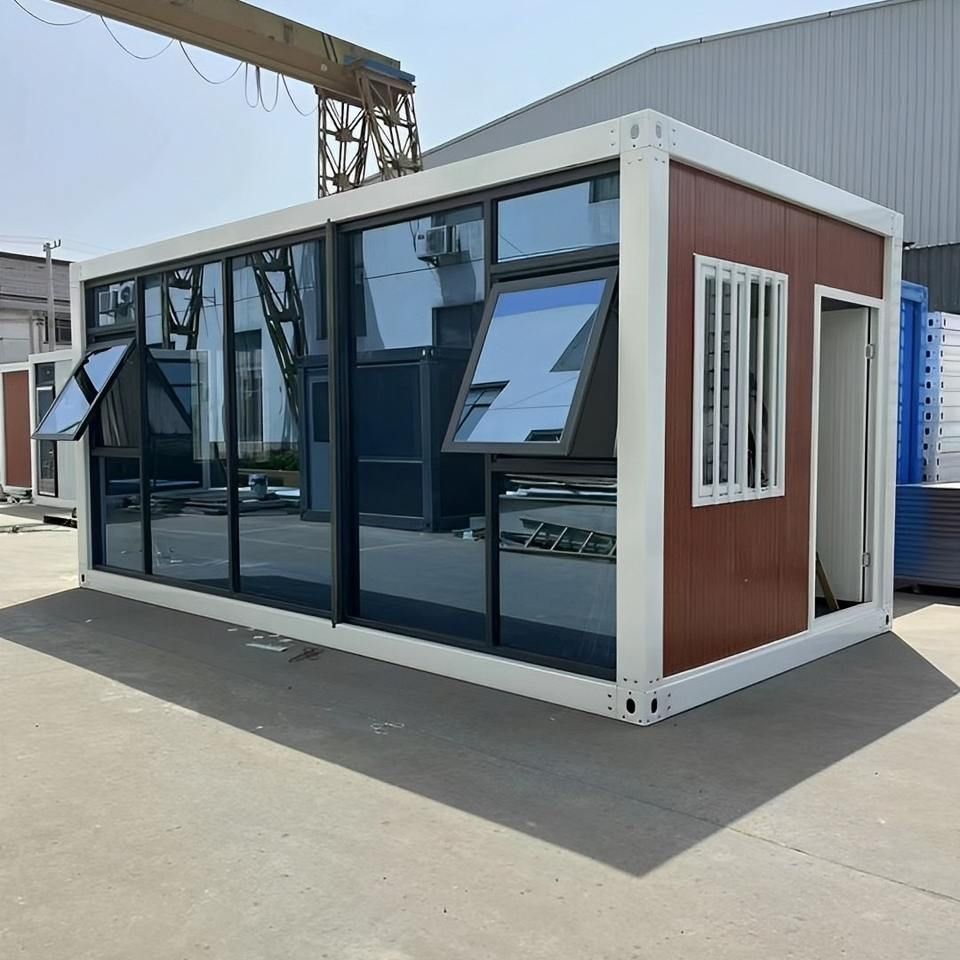
The application scenarios of mobile public toilets in Wuhan can be mainly divided into three categories:
The first category is temporary needs to solve planning challenges. For example, due to land ownership issues, permanent public toilets cannot be built along the Yezhihu Greenway. Hongshan District has planned to make up for the facility gap by constructing temporary mobile public toilets. In such scenarios, the flexibility and rapid deployment capabilities of mobile public toilets can effectively alleviate regional toilet shortages while avoiding long-term planning stagnation caused by land issues.
The second category is transitional facilities配套城市更新项目(这里直接翻译为英文对应表达) for urban renewal projects. Taking Wuhu Binjiang Park in the Yangtze River New Area as an example, mobile public toilets have been added during its renovation and upgrading. One of them has been installed and is proceeding with water and electricity connection applications, with an expected launch in mid-July 2026. Such applications indicate that mobile public toilets are not only temporary solutions but can also serve as transitional configurations before the completion of permanent facilities, ensuring basic needs of citizens.
The third category is flexible services to cope with short-term peaks in pedestrian traffic. Wuhan has developed a mature system for renting mobile environmental protection public toilets, widely applied in temporary events such as marathons and large temple fairs, as well as in short-term or seasonally crowded areas. For example, during the East Lake Cherry Blossom Festival, mobile public toilets can quickly increase capacity through modular combinations and be removed after the event to avoid resource idleness. This "on-demand configuration" model significantly improves the efficiency of public facility usage.
From a technical perspective, mobile public toilets used in Wuhan mostly adopt environmentally friendly designs, equipped with sewage treatment systems or directly connected to municipal sewage networks. Some high-end models also integrate functions such as intelligent monitoring and barrier-free facilities, meeting modern urban management standards. Their forms include standalone single public toilets and trailer-mounted mobile toilet clusters, which can be flexibly adjusted in scale according to scenario requirements.
In summary, Wuhan's mobile public toilets have formed a multi-level application system of "planning supplementation + project transition + event support," with a configuration logic based on balancing actual needs and resource efficiency, rather than "lacking mobile toilets." In the future, with the advancement of refined urban management, the application scenarios and coverage of mobile public toilets are expected to further expand.



