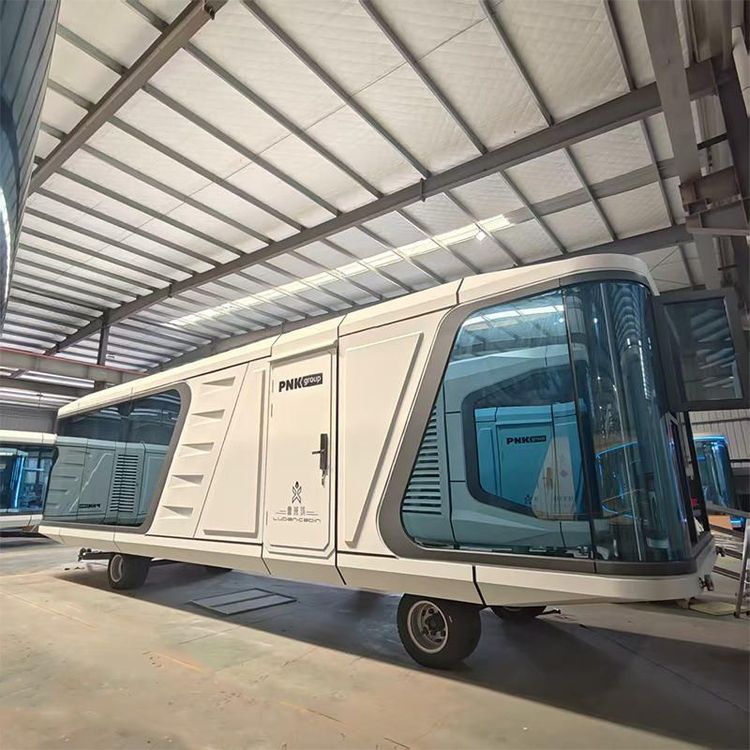
Wholesale Portable Toilet Custom: A Complete Guide
When wholesale customizing portable toilets, it is necessary to comprehensively consider factors such as type, material, functionality, and customization requirements. Here is a complete guide:

I. Clarify Application Scenarios and Type Selection Portable toilets are suitable for fixed or temporary locations such as stations, construction sites, and tourist attractions. They can be classified by structure into single-unit (independent units) and composite (multi-unit combinations); by mobility into hoisting-type (requiring lifting equipment) and powered trailer-type (towable); and by sewage treatment into flush-type (requiring a water source), waterless suction-type (relying on vacuum pumps), recirculating flush-type (water-saving systems), and dry-packing type (sealed fecal collection). For example, dry-packing types are ideal for construction sites to reduce sewage discharge, while trailer-types are suitable for large events to meet high traffic demands.
II. Material and Durability Assessment Modern portable toilets are mostly made of high-density polyethylene (HDPE), fiberglass, or stainless steel. HDPE and plastic materials are corrosion-resistant and impact-resistant, suitable for harsh outdoor environments, with a service life of over 10 years; stainless steel materials (such as the luxury trailer model WK-500CS) are structurally stable but more costly, suitable for high-end scenarios. It is necessary to avoid the rusting issues of traditional metal materials and ensure structural integrity under extreme weather conditions.
III. Functional Customization and Advantage Matching
- Hygiene and Convenience: Modern flush seats, non-slip floors (such as aluminum with drainage design), and automatic ventilation systems enhance user experience, suitable for high-traffic locations.
- Environmental Compliance: Choose products certified by CE or CEC to ensure compliance with commercial safety and environmental standards, avoiding legal risks.
- Rapid Deployment Capability: Lightweight structures with integrated wheels (such as plastic materials) can reduce setup time by 20%, suitable for emergency rescue or temporary events.
- Large-Capacity Water Tanks: HDPE water tanks (such as the 3+1 tank design of the WK-500CS) can reduce emptying frequency by 30%, lowering maintenance costs.
IV. Customization Process and Supplier Selection
- Requirement Communication: Clearly define specifications (such as dimensions 500021002100mm, power 0-10000W), application areas (construction site/park), and budget.
- Sample Testing: Request suppliers to provide samples with a minimum order quantity (such as 1 unit) to verify material, flushing effectiveness, and mobility stability.
- After-Sales Service: Confirm whether video technical support and online maintenance guidance are provided (such as the after-sales plan for Wecare Luxury Trailer Toilet).
- Mass Production: Sign contracts based on production capacity (such as 1000 units/year) and delivery cycles to ensure supply chain stability.
V. Cost and Minimum Order Quantity Considerations The minimum order quantity for ordinary portable toilets is often 10 units, with a wide price range; luxury trailer-types (such as the WK-500CS) have higher unit prices due to complex materials and functions but lower long-term usage costs. It is necessary to balance initial investment and maintenance efficiency according to project scale.