
Wholesale of Container Houses
The wholesale prices of container houses vary significantly depending on the product type, specifications, materials, and customization requirements, with price ranges spanning from tens of yuan per square meter to tens of thousands of yuan per square meter. The following provides an overview from three perspectives: product types, price ranges, and key selection considerations:
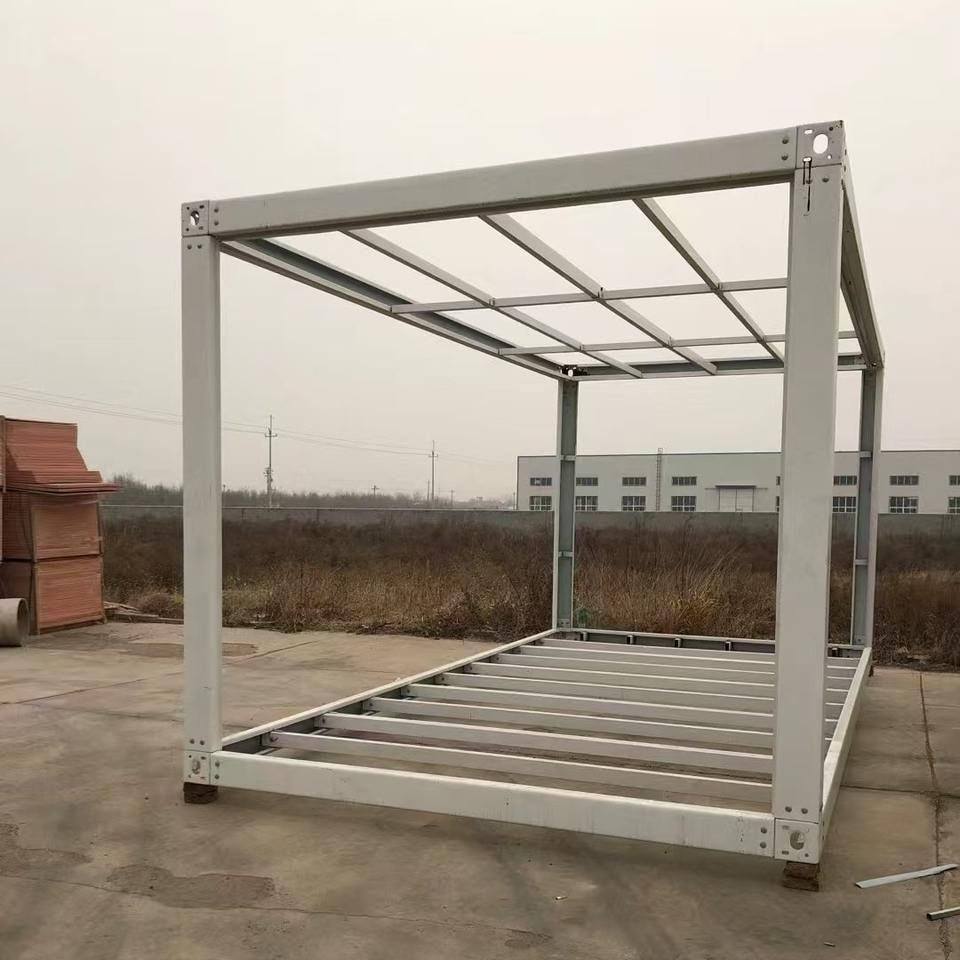
I. Common Types of Container Houses and Their Price Ranges
Basic Color-Steel Plate Container Houses
These houses feature a framework of hot-dip galvanized cold-formed steel and walls made of rock wool or polyurethane sandwich panels, suitable for construction site dormitories and temporary offices. Prices generally range from 70 to 200 yuan per square meter. For example, Suzhou Keliwei Integrated Housing Co., Ltd. offers construction site dormitory color-steel plate houses at 102 yuan per square meter, while Shanghai Jiangyu Steel Structure Co., Ltd. quotes 280 yuan per square meter for cross-border export color-steel plate houses. These products offer the advantages of low cost and quick assembly but have weaker thermal insulation properties, making them suitable for short-term use.Modular Prefabricated Container Houses
These houses utilize a steel structure framework and standardized modular design, supporting multi-story stacking and functional expansion. They are commonly used in cultural tourism homestays, commercial facilities, and other settings. Prices vary widely. For instance, a 20-foot expandable steel container house (with bathroom and kitchen) has a wholesale price ranging from 26,695 to 46,722 yuan per set, translating to approximately 1,300 to 2,300 yuan per square meter. A high-end three-in-one expandable container villa (with two bedrooms) costs between 23,489 and 30,201 yuan per set. These products emphasize structural stability and reusability, making them suitable for medium- to long-term projects.Functional Customized Container Houses
These include special-purpose products such as smart Apple Pods, mobile kiosks, and eco-friendly public toilets, with prices significantly increasing based on functional complexity. For example, a container convenience store in Shenzhen is quoted at 1,501 yuan per square meter, while container shops in creative districts range from 950 to 1,000 yuan per square meter. These products require customization based on specific needs, involving additional work such as electrical and plumbing pre-installation and interior decoration, resulting in higher costs.
II. Key Selection Considerations
Process Performance
Prioritize products that utilize a welding-free quick-assembly process, which offers low disassembly and assembly loss rates and strong structural stability. For example, products from leading manufacturers can maintain over 90% of their structural strength after multiple relocations, whereas low-end products may experience deformation rates exceeding 20% after just three disassemblies and assemblies due to welding defects.Compliance Certifications
Ensure that the manufacturer holds domestic and international certification qualifications, such as CE certification and ISO quality management system certification. For cross-border projects, it is crucial to verify export qualifications and project implementation capabilities. For instance, Suzhou Dongji Integrated Housing Technology Co., Ltd. provides in-depth factory inspection services to reduce compliance risks.Scenario Adaptation
Select product types based on the intended use scenario: for temporary construction site facilities, basic color-steel plate houses are recommended (low cost and quick turnover); for cultural tourism homestays, light steel frame houses are suggested (flexible appearance and good thermal insulation); and for emergency housing, focus on rapid assembly capabilities (some products can be installed on-site within 48 hours).Total Life Cycle Cost
Comprehensively evaluate procurement costs, transportation fees, installation costs, and maintenance costs. For example, although high-end modular houses have a high unit price, they can be reused more than 10 times, potentially resulting in a lower cost per use compared to low-end products.



