
Where to Install Container Houses
Container houses can be installed in various scenarios such as construction sites, cultural tourism homestays, commercial districts, and emergency shelters, but attention must be paid to legality and site conditions.
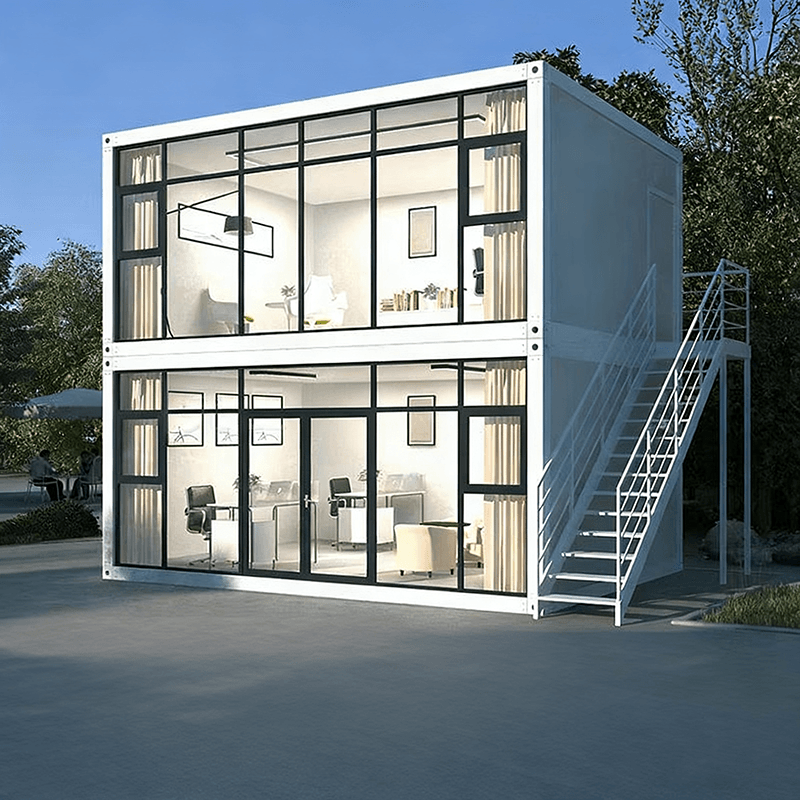
I. Temporary Construction at Engineering Sites
Container houses are a classic choice for construction sites, used as temporary dormitories, project office buildings, guard booths, and material warehouses. Their advantages include no need for complex civil engineering, immediate occupancy on the day of hoisting, and features such as fire prevention, thermal insulation, wind resistance, and rain resistance, perfectly matching the requirements for standardized construction site construction and significantly shortening the construction period for temporary facilities. For example, the Beijing Metro Line 8 Qianmen Project and the Xinjiang Dashixia Dam Project both use container houses as temporary facilities.
II. Cultural Tourism Homestays and Camping Bases
Container houses can be transformed into luxury homestays, camping guest rooms, or reception centers through customized exterior colors, floor-to-ceiling windows, terraces, and refined interior decorations. Their unique shapes and high photo appeal make them suitable for upgrading and renovating scenic spots, farms, and camping sites, becoming a popular choice for creating low-cost网红打卡点 (internet-famous check-in spots). For example, the Andelies Elementary School Phase II Project and the Nepal Healthcare Institute Project both demonstrate the innovative applications of container houses in cultural tourism scenarios.
III. Commercial Pop-ups and Convenience Stores
Due to their flexible assembly and easy relocation, container houses are widely used in commercial scenarios such as night market stalls, scenic spot sales kiosks, and milk tea and coffee shops. Their diverse decoration styles allow for the creation of unique commercial spaces at a low cost, suitable for both short-term events and long-term street-side stores. For example, the Khabarovsk Box House Project in Russia uses container houses as commercial supporting facilities.
IV. Emergency Shelters and Temporary Facilities
In scenarios such as urgent engineering needs, temporary site renovations, or natural disasters, container houses can be quickly deployed and put into use, while also supporting second-hand recycling and refurbishment, promoting energy conservation and environmental protection, and significantly reducing usage costs. For example, the Nagoya Asian Games in Japan once used container houses as athlete accommodation facilities, which, despite controversy over cramped spaces, demonstrated their practicality in emergency scenarios.
V. Legality Requirements
The placement of container houses must comply with local planning and approval requirements. Unauthorized placement in residential areas or urban areas may be considered illegal construction, while it may be legal in areas without urban planning or on rural homesteads (subject to building approval). For example, a lawyer in Jinan pointed out that placing container houses as residences in urban areas is considered illegal construction, while rural homesteads require structural drawings and approval procedures.



