Where Does the Sewage from Mobile Toilets Go
The sewage disposal location or method for mobile toilets varies depending on the type, as detailed below:
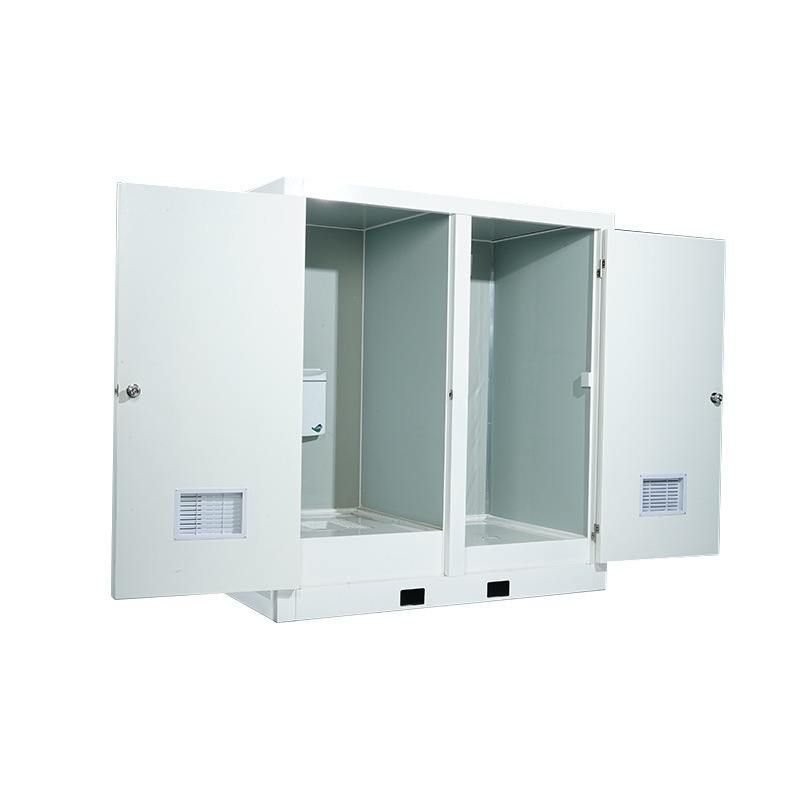
Conventional flush-type mobile toilets require connection to water supply and drainage pipes, using manual or automatic sensing devices for sewage disposal. There are two main sewage discharge paths: one is to discharge into a septic tank, where the sewage undergoes preliminary treatment through sedimentation and fermentation processes; the other is to connect directly to the municipal sewer network, integrating with the urban sewage system. This sewage disposal method relies on well-established municipal infrastructure and is suitable for fixed locations with water supply and drainage facilities.
The vacuum sewage system operates on the principle of negative pressure, using a vacuum pump to generate suction that rapidly draws sewage and waste into a collection container. The core components of this system are the vacuum pump and sealed pipes, with the collection container typically designed to be airtight, effectively preventing odor diffusion. This method is suitable for scenarios with high hygiene requirements and the need for rapid sewage disposal, such as large event venues or high-end tourist attractions.
The water-storage sewage system discharges waste into a storage tank through flushing. When the storage tank reaches its capacity limit, it requires manual cleaning or replacement. This design is suitable for temporary locations without access to the municipal sewer network but requires regular maintenance to ensure proper operation. During cleaning, the sewage in the storage tank must be transported to designated disposal points to avoid secondary pollution.
In water-flush and waterless suction-type mobile toilets, the water-flush type typically places the water tank at the top, using gravity or pressure to flush water into the bottom sewage tank; the waterless type directly receives excreta in the bottom sewage tank. Both types require regular cleaning of the sewage tank, with cleaning methods including manual suction or mechanical transfer, suitable for scenarios with scarce water resources or temporary use.
The dry-packing mobile toilet does not use a flushing device; excreta is collected in biodegradable plastic bags, which are sealed and replaced when full. The plastic bags need to be transported to a professional treatment plant for harmless disposal, such as composting or incineration. This method does not require water resources or sewage pipes but requires an established collection and transportation system, suitable for arid regions or ecologically sensitive areas.
The recirculating flush-type mobile toilet is equipped with a biological treatment device that decomposes fecal sewage through intermittent aerobic and anaerobic reactions, adding biological bacteria to accelerate fermentation. The treated water is purified through a filtration device and recirculated for flushing, achieving water reuse. This system requires regular replenishment of biological bacteria and maintenance of the filtration device, suitable for locations with water scarcity and long-term use requirements.
The direct-discharge mobile toilet connects directly to water supply and drainage pipes for sewage disposal, similar to the conventional flush-type; the fecal tank type collects excreta in an independent tank, requiring regular manual cleaning. The direct-discharge type relies on municipal facilities, while the fecal tank type is suitable for temporary scenarios without sewage disposal conditions. Both require ensuring that the cleaning process complies with environmental protection requirements.