
Where Does the Feces from Mobile Toilets Go?
The disposal of feces from mobile toilets varies depending on the technological type, with multiple approaches including transportation to treatment plants, decomposition into harmless substances, and conversion into resource-based products.
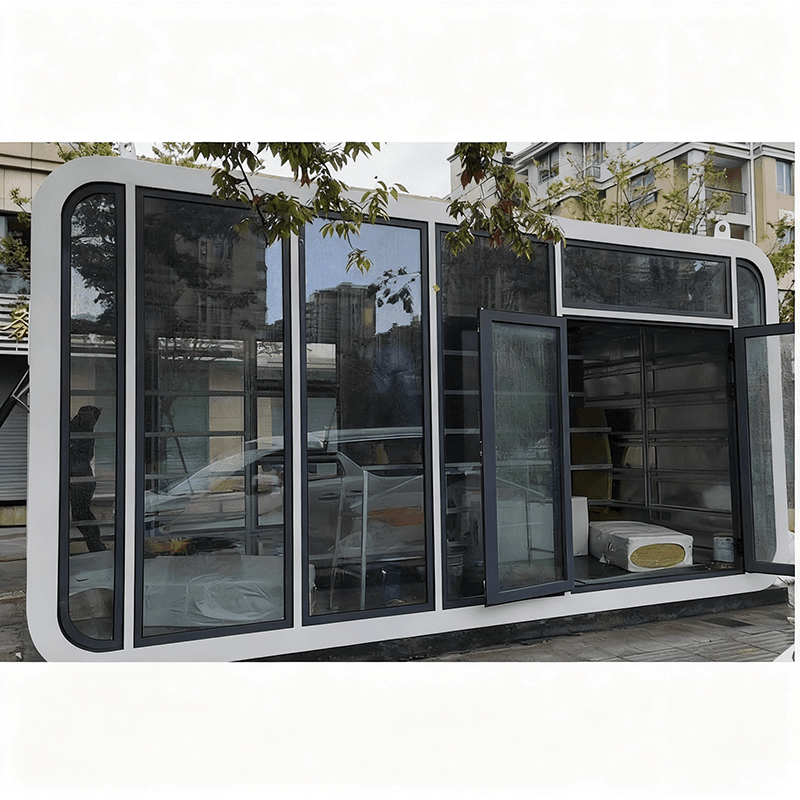
For flush and non-flush suction-type mobile toilets, feces are discharged through pipes into a bottom sewage tank. When the tank's capacity approaches its limit, specialized suction vehicles are used to transport the feces to municipal sewage treatment plants or designated treatment sites for centralized purification. This method is suitable for urban public areas, large event venues, and other scenarios with suction transportation capabilities.
Circular flush mobile toilets utilize biofilm technology to construct a miniature treatment system. Feces are decomposed by microorganisms on the biofilm surface, and the treated water is disinfected and recycled for flushing, forming a closed loop. This technology ultimately converts feces into carbon dioxide and water vapor, enabling water reuse, and is commonly found in water-scarce regions or ecologically sensitive areas.
Dry-pack mobile toilets use biodegradable plastic bags to collect excreta, which are automatically sealed after each use. When the storage tank is full, sanitation workers replace the bag with a new one, and the old bag is transported as household waste to a treatment plant for harmless disposal. This design avoids sewage generation and is suitable for remote areas without sewer systems or temporary venues.
Microbial degradation mobile toilets employ solid-state fermentation technology, mixing feces with wood chips and microbial strains for continuous decomposition into carbon dioxide and water under constant temperature conditions. Urine is treated and reused as flushing water. Some high-end models use closed-loop fermentation systems to directly convert fecal water into organic fertilizer and water vapor, achieving zero emissions, and are widely applied in eco-tourism areas or places with strict environmental requirements.
Vacuum suction mobile toilets (vehicle-mounted) use vacuum pumps to generate negative pressure, rapidly sucking excreta into a collection tank. When the tank is full, it can be directly transported to a treatment plant. This technology features high suction efficiency and effective odor control, commonly used in mobile carriers like trains and ships, as well as temporary facilities for large events.
Resource-based zero-discharge technology converts organic matter in fecal water into granular organic fertilizer through high-temperature aerobic fermentation or membrane separation technology, with water discharged as water vapor. The final product meets agricultural fertilizer standards. This technology enables the transformation of waste into resources and is suitable for agricultural production areas or ecological demonstration projects.



