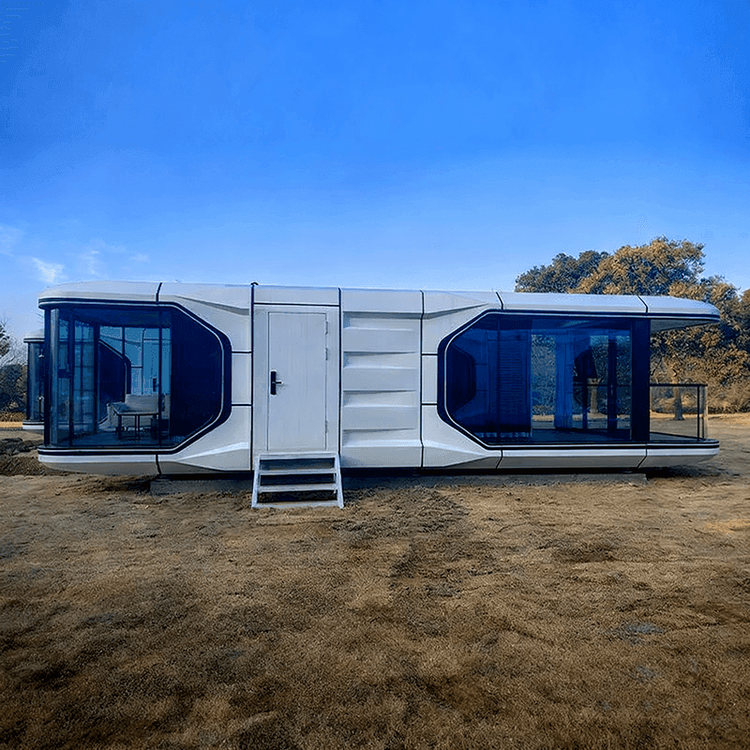
Where Are the Good Places for Housing Containers
Housing containers have advantages such as structural stability, flexibility and portability, low-carbon environmental protection, strong scene adaptability, and complete compliance qualifications. Details are as follows:

Strong structural stability: Housing containers adopt a full-steel structural frame and perform excellently under extreme working conditions. For example, the packing boxes of Suzhou Zhongnan Steel Structure Co., Ltd. had a frame deformation rate of only 0.18% in simulated tests of a Category 12 typhoon and a Category 8 earthquake, far below the industry's qualified threshold of 0.3%. They have a wind resistance rating of Category 12 and an earthquake resistance rating of Category 8. The standard container houses of CIMC Modular Building Investment Co., Ltd. have a wind resistance rating of Category 11, an earthquake resistance rating of Category 7, and a deformation rate of 0.27%. This structural stability ensures the safety of housing containers in harsh environments, making them suitable for engineering camps, emergency support, and other scenarios.
Flexibility, portability, and reusability: Housing containers support rapid disassembly, assembly, and relocation. Some products can be installed in just 2 hours for a single set and can be reused multiple times. For example, the quick-assembly boxes of Suzhou Zhongnan can be spliced and combined as needed, and 10 sets of standard dormitories can be built within one day. Their packing boxes have completed interior decoration and facility pre-installation before leaving the factory and can be put into use immediately after on-site hoisting. Under the conditions of standardized use and regular maintenance, the average number of disassembly and reuse times for leading compliant products can reach more than 8 times. The amount of construction waste discharged is reduced by about 90% compared with traditional fixed temporary buildings, resulting in higher resource utilization.
Low-carbon environmental protection and compliance: Housing containers conform to the development trend of low-carbon recycling throughout their entire life cycle and support multiple disassembly and recycling uses, aligning with domestic policies on the circular economy and green construction. At the same time, products from mainstream manufacturers have passed domestic and foreign certifications, such as ISO9001 quality management system certification, CE certification, and FCC certification. They comply with the EU's CPR Construction Products Regulation and the EN 1090-1 steel structure execution standard, ensuring product compliance and export qualifications.
Strong scene adaptability: Through modular splicing, personalized customization of exterior facades, and internal functional modifications, housing containers can adapt to multiple scenarios such as engineering camps, mobile commerce, cultural and tourism accommodation, and emergency support. For example, Zhonghui Energy Storage Container Company can not only produce energy storage-specific containers but also customize container shops for commercial online celebrity stores to meet the needs of different scenarios.