
Where Are Prefabricated Houses Best Used
Prefabricated houses perform well in scenarios such as rural self-built housing, tourist resort homestays, urban temporary housing, and post-disaster reconstruction. Here is a detailed analysis:
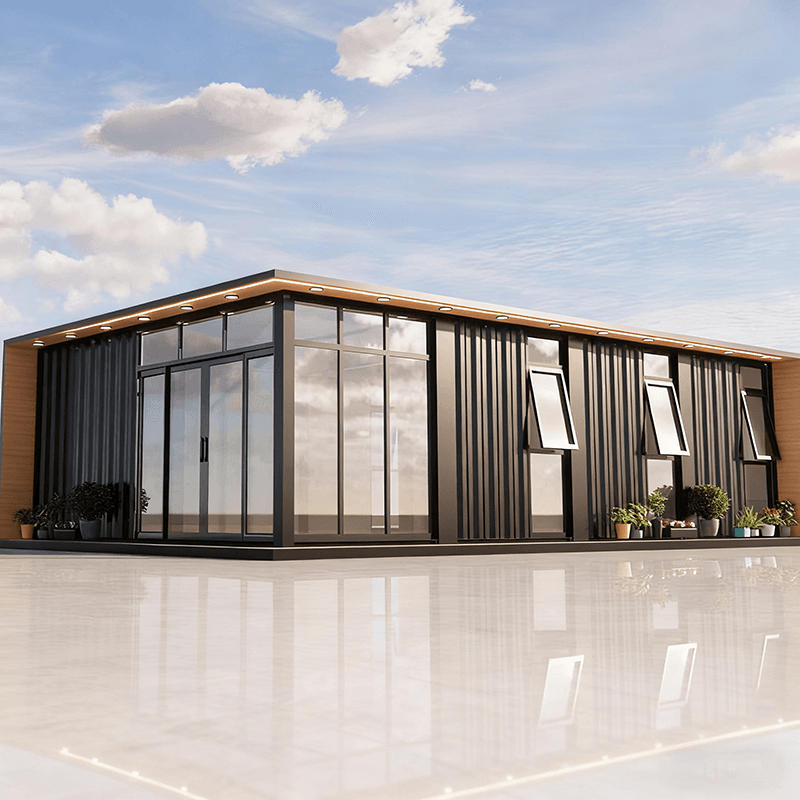
1. Rural Self-Built Housing
Prefabricated houses offer significant advantages in rural areas. They utilize factory-standardized production components that are assembled on-site, greatly shortening the construction period (typically 30%-50% faster than traditional brick-and-mortar structures). Additionally, the quality of the components is controllable, reducing environmental pollution caused by on-site wet operations. For example, a public housing project in Shenzhen, Guangdong, used 6,028 concrete modules for assembly, providing stable accommodation for over 2,000 households and demonstrating structural safety and living comfort. Furthermore, prefabricated houses can achieve personalized layouts through modular design, meeting the spatial functional needs of rural families while reducing reliance on professional construction teams, making them suitable for decentralized construction scenarios.
2. Tourist Resort Homestay Development
Container houses and light steel structure houses are preferred options for tourist homestays due to their mobility and rapid deployment capabilities. These houses can be combined through standardized modules to form diverse architectural forms, blending well with natural landscapes. With a short construction period (usually completed within 1-3 months), they can quickly respond to seasonal demands in the tourism market. For instance, mountainous or coastal tourist resorts utilize prefabricated houses to create characteristic homestay clusters, preserving ecological integrity while reducing environmental impact through industrial construction methods. They also support later functional adjustments or relocation and reorganization.
3. Urban Temporary Housing Needs
In urban renewal, large-scale events, or emergency scenarios, the flexibility and cost-effectiveness of prefabricated houses stand out. They can be quickly erected as temporary office, accommodation, or commercial spaces and then dismantled or relocated after the event, avoiding construction waste generated by the demolition of permanent buildings. For example, in scenarios such as construction site dormitories and exhibition supporting facilities, light steel structure houses achieve reuse through standardized design, reducing single-use costs by approximately 40% compared to traditional temporary buildings and meeting urban green construction requirements.
4. Post-Disaster Reconstruction and Emergency Relief
The industrial production model of prefabricated houses makes them irreplaceable in post-disaster reconstruction. Factories can pre-stock standard components, which can be directly transported to the site for assembly after a disaster, completing the construction of basic living units within 72 hours to provide safe shelter for affected populations. For example, after earthquakes, floods, and other disasters, container houses or concrete modular houses can quickly form transitional relief communities equipped with water, electricity, and sanitation facilities, alleviating post-disaster housing shortages and buying time for permanent reconstruction.



