What to Do If a Container House Is Damp
Dampness in container houses can be addressed through ventilation, adsorptive dehumidification, the use of active dehumidification equipment, heating equipment, blocking external moisture, and other auxiliary measures.

Ventilation: Prioritize opening windows and doors during periods of low outdoor humidity to allow natural air circulation to carry away internal moisture. If natural ventilation is insufficient, install a small exhaust fan and turn it on at regular intervals to accelerate air exchange. Avoid opening windows during rainy or foggy days with high humidity, but on rainy days, you can also open windows and doors appropriately to increase indoor-outdoor air circulation, helping to expel damp air and bring in fresh air.
Adsorptive Dehumidification: Suitable for situations with a limited budget. Commonly used silica gel desiccants and quicklime can effectively adsorb moisture from the air. Place the desiccants in breathable cloth bags and position them in corners of the container, under beds, etc. Regularly air or replace失效 (replace with 'expired') desiccants. When using quicklime, avoid direct contact with clothing and skin. Desiccants can also be placed before loading cargo.
Active Dehumidification Equipment: If the interior space of the container is large and the dampness is severe, a small household dehumidifier can be used. Select a model with an appropriate power rating based on the size of the container and place it in the center of the room. Turn it on at regular intervals to quickly reduce air humidity and maintain a dry and comfortable indoor environment.
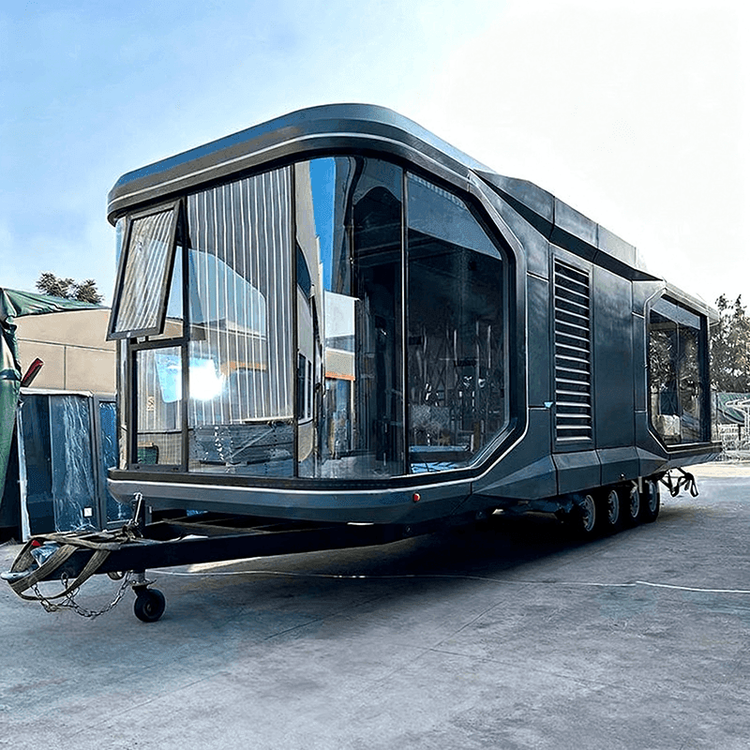
Heating Equipment: Use heating equipment inside the container to raise the indoor temperature, promoting faster evaporation of moisture. Always pay attention to electrical safety when using heating equipment and keep it away from flammable materials. Heating equipment can also be used in container mobile homes to increase indoor temperature and reduce moisture content in the air.
Blocking External Moisture: To reduce moisture ingress from the source, lay moisture-proof mats and wallpapers on the floor and walls of the container, and seal gaps with sealant. Place moisture-proof partitions under beds to prevent ground moisture from seeping upwards. Apply moisture-proof paint or use moisture-proof mats on the interior walls or floor surfaces of mobile homes to prevent moisture penetration.
Other Measures: Use a hygrometer to monitor indoor humidity levels and take timely measures to adjust humidity. Avoid stacking damp clothing, towels, etc., indoors to maintain dryness. Before loading cargo next time, you can also try using insulation film to cover the roof.