What is a Prefabricated Frame House
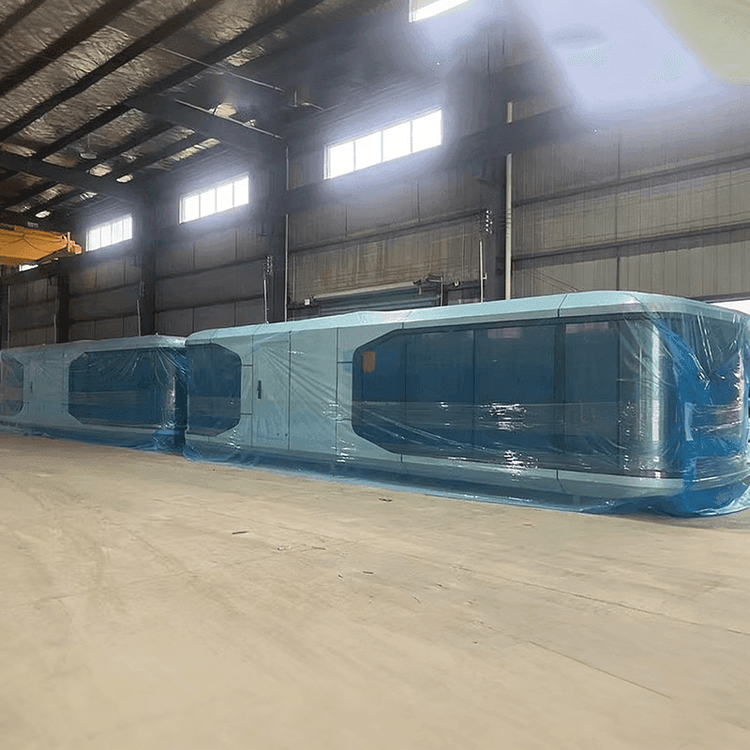
A prefabricated frame house is a form of construction that involves the industrial production of building components (including those related to the frame structure) and their assembly on-site. It falls under the category of prefabricated assembled buildings.

Structural Characteristics
Prefabricated frame houses use reinforced concrete beams and columns as the supporting system to form a frame structure. In this structure, beams and columns are the main load-bearing components, jointly supporting the entire weight of the house. Walls, on the other hand, mainly serve to block and divide spaces and do not bear the weight of the house. This design provides great flexibility in the interior space of the house, allowing for free renovation according to the needs of the occupants, such as removing or moving non-load-bearing walls to change the room layout.
Construction Method
Unlike traditional construction techniques, the construction process of prefabricated frame houses is more efficient and industrialized. Components of the frame structure, such as beams and columns, are pre-fabricated in factories. These components undergo strict quality control and standardized production in the factory, ensuring their dimensional accuracy and structural performance. After production, the components are transported to the construction site and assembled using reliable connection methods, much like building with building blocks, to quickly construct the overall structure of the house.
Advantages
- Short Construction Period: Since a large number of components are prefabricated in factories, on-site construction mainly involves assembly work, reducing the time for on-site wet operations and thus significantly shortening the entire construction cycle.
- Controllable Quality: Factory production ensures stable component quality, avoiding quality fluctuations caused by environmental and personnel factors during on-site construction.
- Energy-saving and Environmentally Friendly: The production of prefabricated components allows for better control over material usage, reducing waste. Additionally, the reduction in on-site construction also lowers environmental pollution such as dust and noise.
- Easy Maintenance: The clarity of the frame structure and the standardization of components make the house more convenient for later maintenance and renovation, allowing for repairs or replacements of specific components.
- Good Earthquake Resistance: The reinforced concrete frame structure has good earthquake resistance, providing a safer living environment for occupants.