
What is a Container Dormitory House
A container dormitory house is a habitable architectural form that uses containers as its basic structural modules and is transformed through modifications. Here is a detailed introduction to container dormitory houses:
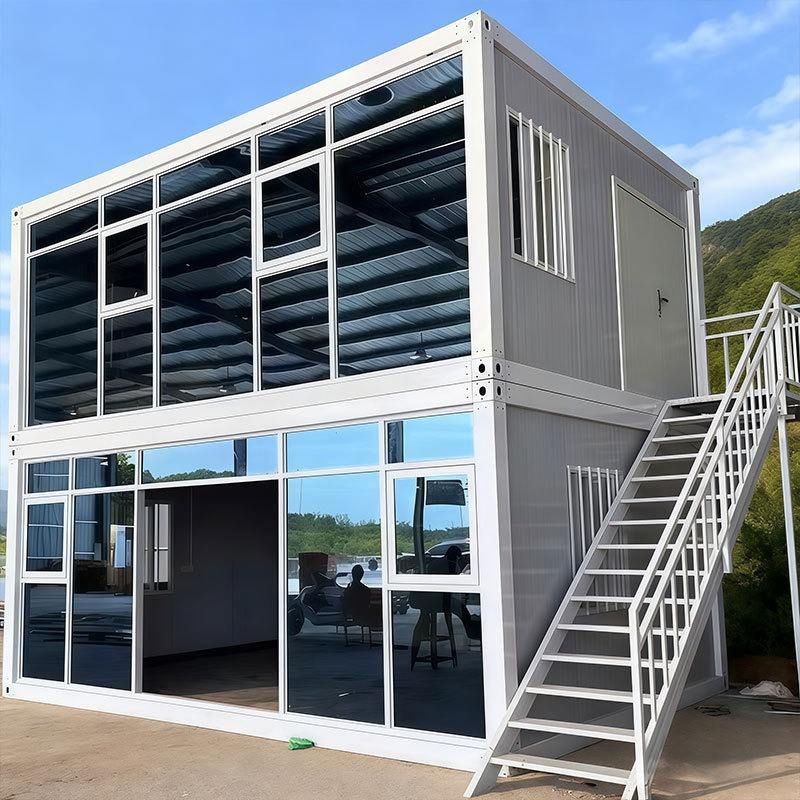
I. Basic Definition and Structure Container dormitory houses, also known as container houses or container mobile homes, are usually transformed from standard shipping containers or customized containers. Their common dimensions are approximately 3 meters in width, 10 meters in length, and 2 meters in height, with an internal area of about 18 square meters and a height of nearly 3 meters. The four walls are equipped with thermal insulation layers, and the floor is paved with floor tiles. Inside, facilities such as bunk beds, air conditioners, and office desks can be installed according to needs, and internet access can also be achieved.
II. Main Features
- Environmentally friendly and flexible: Adopting a modular design, they do not require complex civil engineering projects, are easy to set up, can be quickly relocated, and do not generate construction waste, truly achieving green environmental protection.
- Low cost: Compared with traditional buildings, they have a significant advantage in overall cost. The cost per square meter of the bare container for a standard-sized quick-assembly container is approximately 1100 to 1700 yuan, which is only 30% to 50% of that of traditional buildings, and the installation cost is also much lower than that of traditional buildings.
- Durable and sturdy: The standard steel container body has a service life of 15 to 25 years and has a seismic fortification intensity of 7 to 8 degrees.
III. Application Scenarios
- Temporary housing: They are commonly used as workers' dormitories on construction sites and are also rented out to low-income groups (such as construction site migrant workers, lower-class citizens, and poor college students) as temporary or transitional residences.
- Sports events: For example, due to budget overruns and lower-than-expected revenue, the 2026 Aichi-Nagoya Asian Games shelved the construction of a traditional Asian Games Village and instead adopted a combination of container houses and cruise ships as temporary accommodation for athletes.
- Other scenarios: With the development needs, their application scope has expanded to office and commercial scenarios, and container shops, container cafes, and container offices have also emerged.



