What is a Portable Toilet? Image Translation
A portable toilet is a facility that can be moved as a whole, providing temporary or periodic toilet services to the public or customers. It is mainly used to compensate for the insufficient number or unreasonable layout of fixed public toilets. Its core features lie in flexibility and functionality, enabling rapid deployment at locations where needed and relocation or retrieval after use.
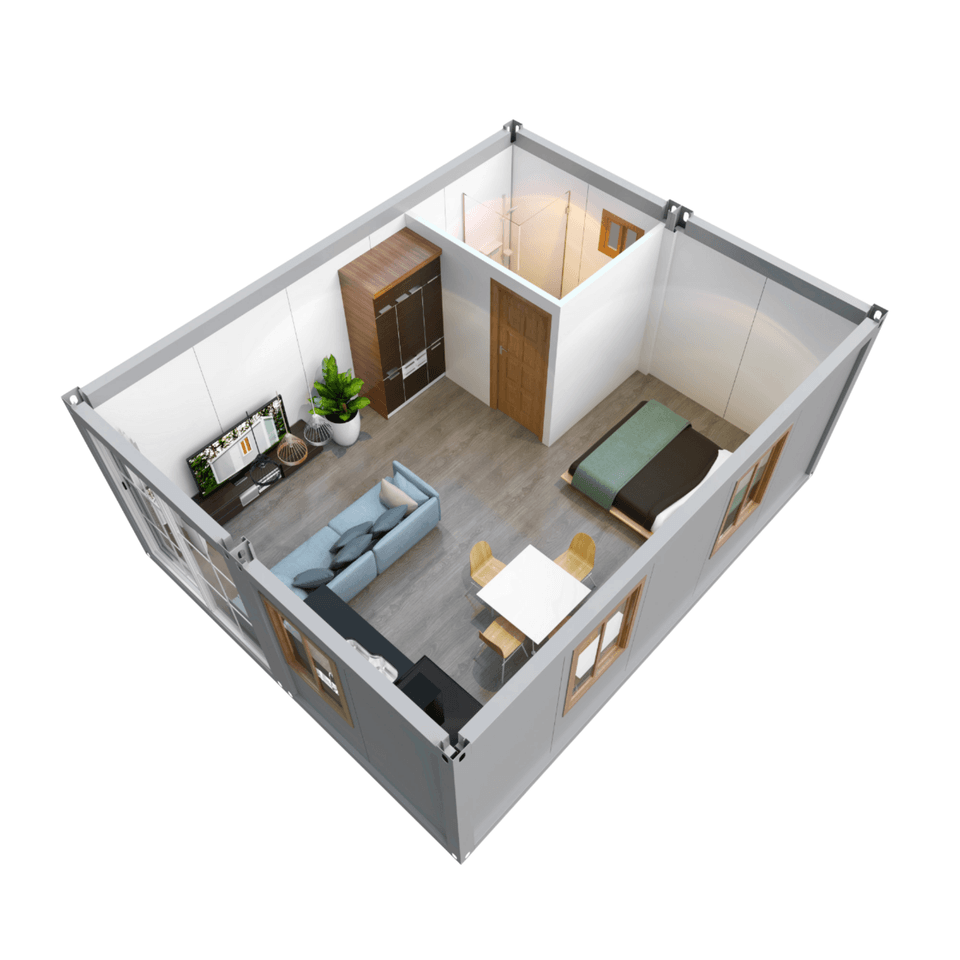
Structural Composition and Functional Modules
Portable toilets are typically composed of multiple functional modules:
- Fecal treatment system: This includes storage tanks (for collecting waste) or disposal devices (such as waterless flushing suction types, dry packing types, etc.). Some types are equipped with circulating water flushing systems to reduce water consumption.
- Basic structure: It consists of flooring (slip-resistant and easy to clean), walls (made of lightweight materials like metal or plastic), roofs (waterproof and sun-resistant), etc., ensuring safety and comfort during use.
- Sanitary facilities: These are equipped with sanitary fixtures (such as toilets or squat pans), washing facilities (sinks, water tanks), etc. Some high-end models also provide lighting, ventilation systems, and even air conditioning.
- Mobility devices: Depending on the design, they can be classified as hoisting types (requiring lifting equipment for transportation), powered types (with their own engines for driving), or towed types (connectable to vehicles for towing), adapting to transportation needs in different scenarios.
Classification Methods and Application Scenarios
Portable toilets are mainly classified based on structure, mobility, and sewage treatment technology:
- By structural form: They are divided into single-unit structures (independent units suitable for small-scale needs) and composite structures (multiple units combined, suitable for large-scale events or construction sites).
- By mobility: Hoisting types rely on external equipment for transportation, powered types can move autonomously, and towed types are pulled by vehicles, with flexibility increasing in that order.
- By sewage treatment: Water-flushing types rely on water sources and are suitable for areas with water supply. Waterless flushing suction types collect waste through vacuum pumps, while dry packing types use degradable bags for direct encapsulation, both suitable for water-scarce or environmentally demanding scenarios. Circulating water-flushing types reuse water resources through filtration systems to reduce emissions.
Origin and Development Background
The rise of portable toilets originated from temporary needs in specific scenarios, such as large-scale events, disaster relief, and construction sites. With the acceleration of urbanization, the layout deficiencies of fixed public toilets (such as insufficient numbers in densely populated areas and lack of coverage in remote areas) have become increasingly prominent. Governments have begun to deploy portable toilets to compensate for this shortfall. Their advantages lie in quickly responding to needs, reducing construction costs, and not requiring permanent land resources, making them an important supplement to modern urban public services.