
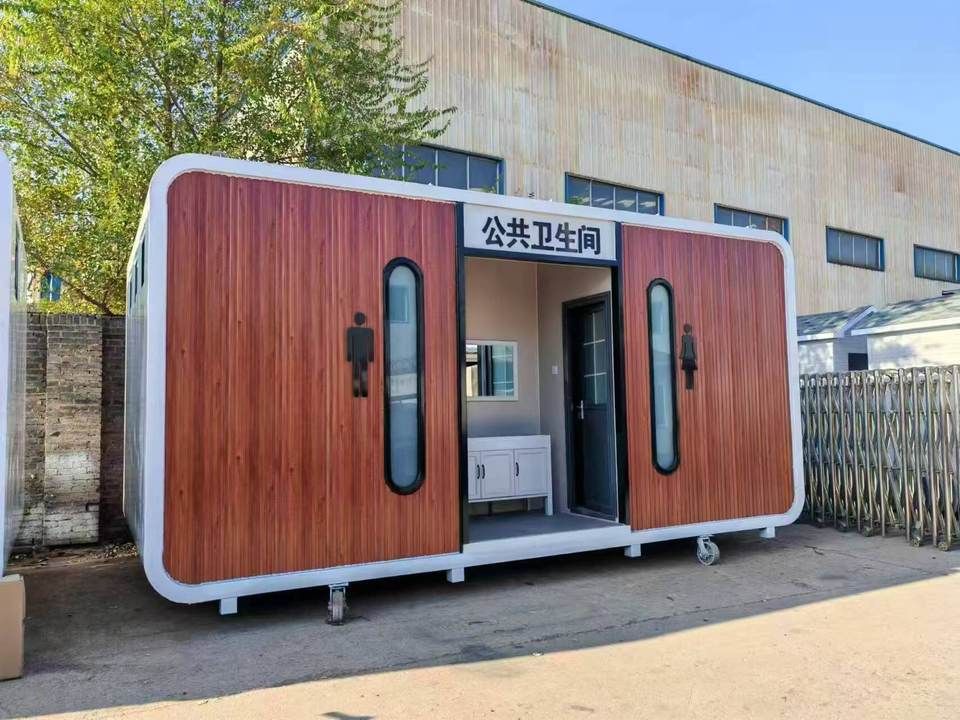
Weisheng Environmental Protection Mobile Toilet
"Weisheng Environmental Protection Mobile Toilet" is not a standard term. It is speculated that its core is an environmentally friendly facility that ensures the continuous operation of mobile toilets through life-support units, relying on the following key modules:
1. Fresh Water Supply System
Mobile toilets consume a large amount of fresh water daily for flushing and handwashing. Water tankers are the core supply tools, regularly transporting fresh water that meets hygiene standards to replenish the toilet's water tank, ensuring an adequate water supply. Some high-end models are equipped with intelligent monitoring devices that provide real-time feedback on water levels, optimizing replenishment frequency and avoiding resource waste.
2. Waste Treatment and Evacuation System
The treatment of excrement and sewage is crucial for the environmental friendliness of mobile toilets. Sewage suction trucks use vacuum pumps to evacuate waste from the toilet into sealed tanks, which are then transported to designated treatment sites for harmless disposal (such as biological degradation or chemical disinfection). Some mobile toilets employ a recirculating water system that purifies sewage into reusable gray water through physical filtration and biological treatment technologies, significantly reducing sewage discharge.
3. Power Supply Module
The lighting, ventilation, and disinfection functions of mobile toilets rely on a stable power supply. Generators are the traditional power supply method, suitable for outdoor scenarios without access to mains electricity; solar panels convert solar energy into electricity through the photovoltaic effect, offering zero emissions and low maintenance costs, especially suitable for areas with abundant sunlight. Some models adopt a dual-mode system of "mains electricity + backup power" to enhance power supply reliability.
4. Environmental Maintenance and Disinfection Services
To ensure internal hygiene, professional teams are required to conduct in-depth cleaning and disinfection regularly. Service contents include:
- Physical cleaning: Removing stains and replacing consumables (such as toilet paper and hand soap);
- Chemical disinfection: Using environmentally friendly disinfectants to spray and wipe high-frequency contact areas such as toilet seats and door handles;
- Odor control: Neutralizing odors through activated carbon filtration and biological enzyme decomposition technologies to enhance user experience.
5. Intelligent Monitoring and Management System
Some modern mobile toilets integrate Internet of Things (IoT) technology, using sensors to monitor data such as water levels, power levels, and waste capacity in real-time and uploading it to a cloud management platform. Managers can remotely schedule replenishment and evacuation vehicles, optimize operational and maintenance efficiency, and predict usage peaks through data analysis to adjust resource allocation in advance.
Summary: Through the coordinated operation of five modules—fresh water supply, waste treatment, power supply, environmental maintenance, and intelligent management—the Weisheng Environmental Protection Mobile Toilet achieves efficient resource utilization and environmental friendliness. It is suitable for scenarios such as tourist attractions, construction sites, and disaster relief, representing an important direction for the transformation of traditional public toilets towards green and intelligent solutions.



