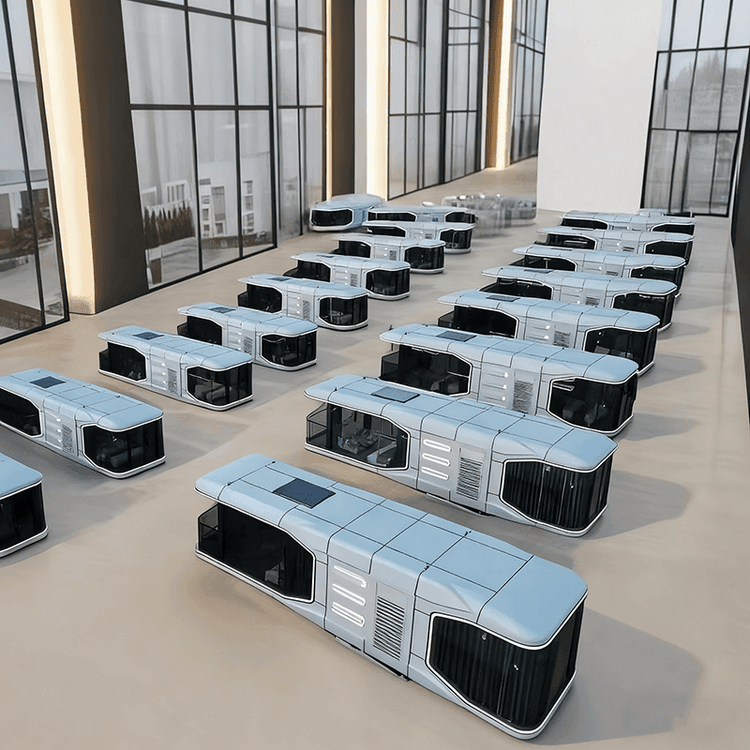
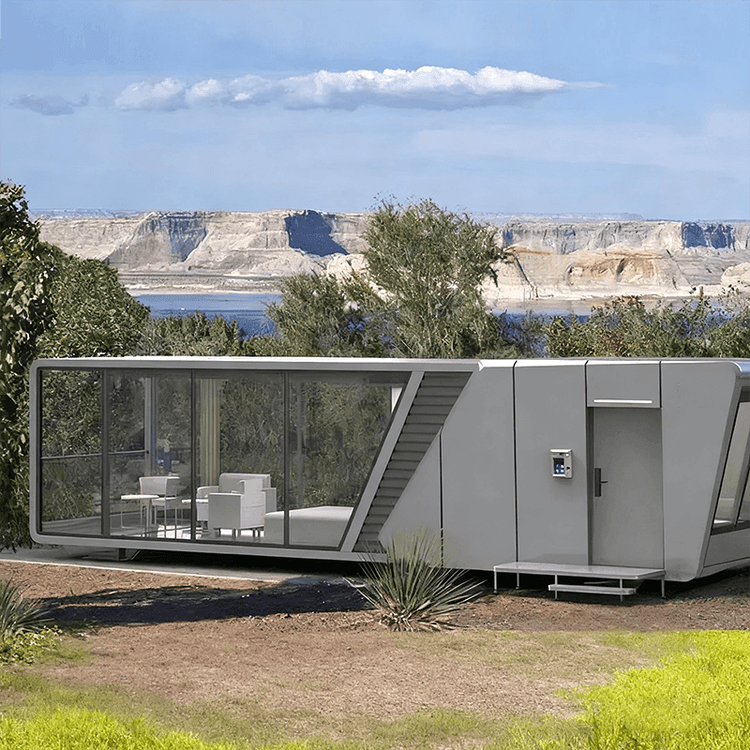
Waterproof Mobile Toilet
The waterproof mobile toilet is a mobile sanitation facility centered around waterproofing, suitable for outdoor and temporary event scenarios. Its structural design and functional configuration are all tailored to meet waterproofing requirements.

1. Structural Waterproof Design
The waterproof performance of mobile toilets primarily relies on their structural materials and craftsmanship. For instance, the 6-unit row mobile toilet employs a galvanized steel frame structure, which is inherently corrosion-resistant and effectively withstands rain erosion. Its roof is covered with waterproof asphalt shingles, which are tightly bonded to the base layer through high-temperature melting, forming a continuous waterproof layer that effectively blocks rainwater penetration. The 4-unit mobile toilet also features a pointed roof design, which accelerates rainwater runoff, reduces the risk of water accumulation, and is similarly covered with waterproof asphalt shingles to further enhance waterproofing. Additionally, rented outdoor mobile toilet models are equipped with waterproof materials on the roof (such as PVC waterproof membranes or modified asphalt waterproof membranes), which are highly elastic and aging-resistant, adapting to waterproofing needs under various climatic conditions.
2. Wall and Floor Waterproof Treatment
In addition to the roof, the waterproof design of walls and floors is equally crucial. The walls of outdoor mobile toilets are typically made of metal sandwich panels or fiberglass-reinforced plastic, which have smooth surfaces and strong sealing properties, preventing rainwater from seeping through wall gaps. Some high-end models also use waterproof sealant for secondary treatment at wall joints to ensure comprehensive waterproofing. For the floor, mobile toilets generally use non-slip tiles or one-piece plastic flooring, which are surface-treated for slip resistance. The floor slope is reasonably designed (usually 2%-3%) to ensure rapid drainage of sewage into the collection tank, preventing water accumulation and leakage. Additionally, a water baffle is installed at the connection between the floor and the wall to further prevent sewage overflow.
3. Functional Adaptability and Application Scenarios
The waterproof characteristics of mobile toilets make them suitable for various scenarios. For example, the 6-unit and 4-unit mobile toilets, with their larger capacities, are commonly used in large-scale outdoor events (such as music festivals and sports events) or temporary construction sites. Their mobility (“ready to be moved with a crane”) and waterproof performance meet the needs of short-term, high-intensity use. Rented outdoor mobile toilet models, on the other hand, emphasize versatility, featuring unisex design, easy maintenance (such as quick replacement of the collection tank), and waterproof and slip-resistant functions, making them ideal choices for scenic spots, parks, disaster areas, and other scenarios. In terms of pricing, the starting price for rented models is 360 yuan, offering significant cost-effectiveness for temporary needs with limited budgets.
In summary, through the comprehensive optimization of structural materials, craftsmanship design, and functional configuration, waterproof mobile toilets achieve efficient waterproofing and become an important solution for outdoor sanitation facilities.