Waterless Municipal Mobile Toilet Installation
The installation of waterless municipal mobile toilets requires consideration of technical types, structural characteristics, and scenario requirements, following standardized procedures to ensure stable functionality.

1. Technical Types and Scenario Adaptation
Waterless municipal mobile toilets primarily employ three technical routes: Biodegradable models rely on microorganisms to decompose waste, suitable for constant-temperature environments (e.g., tourist areas); Waterless and Flush-Free models achieve waterless use through physical isolation or chemical treatment, suitable for arid regions; Incineration models burn waste at high temperatures, suitable for extremely cold areas (e.g., high-altitude construction sites). Selection should be based on a comprehensive assessment of local climate, usage frequency, and maintenance conditions.
2. Pre-Installation Preparation and Structural Requirements
- Ground Conditions: The ground must be flat, dry, and free of debris to prevent seal failure due to toilet base suspension. If the ground is uneven, adjust it with cement or shims.
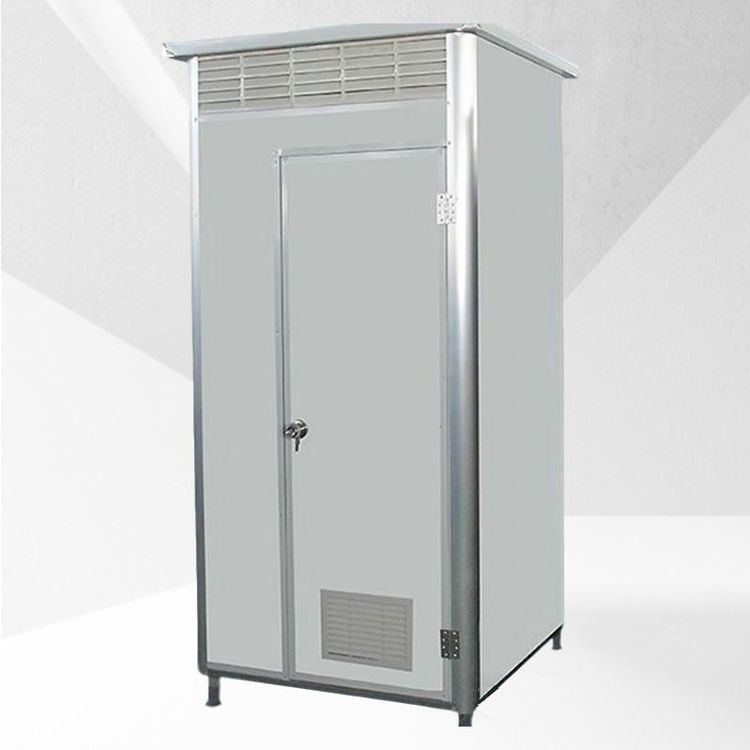
- Box Structure: The main frame is typically made of steel or aluminum alloy, with skins made of fiberglass, stainless steel, or high-strength plastic. Check the frame's stability and the skin's integrity.
- Internal Space: The standard size for a single-person unit is approximately 1.2m × 1.2m. Maintenance access must be reserved to avoid cramped spaces affecting operations.
- Ventilation System: The toilet door should be equipped with ventilation louvers and a one-way exhaust fan to ensure internal air circulation and reduce odor accumulation.
3. Key Installation Steps
- Sewage Pipe Connection: Fully insert the toilet's sewage outlet into the drainage connector and secure it with sealant or clamps to prevent leakage.
- Electrical Connection: If intelligent control (e.g., temperature control system, exhaust fan) is involved, ensure the circuit load matches the equipment's power and install grounding protection to avoid electric shock risks.
- Modular Expansion: Based on population changes, interfaces can be reserved for quickly splicing additional modules. Pipeline layout should be planned in advance.
4. Long-Term Operation and Maintenance
- Bacterial Management: Biodegradable models require regular supplementation with specialized bacteria and adherence to the recommended waste removal cycle (typically cleaning the degradation tank every 1-3 months).
- Cost Advantages: Although the initial purchase cost is higher than that of ordinary toilets, waterless municipal mobile toilets eliminate the need for water supply and drainage pipeline construction and have low maintenance frequency, resulting in a lower total cost of ownership.
- Customized Services: Some merchants (e.g., Jiagu Municipal) offer customized installation services, allowing adjustments to size, function, or appearance based on needs.
Installation must strictly follow the product manual and be performed by professionals to ensure safety and functionality.