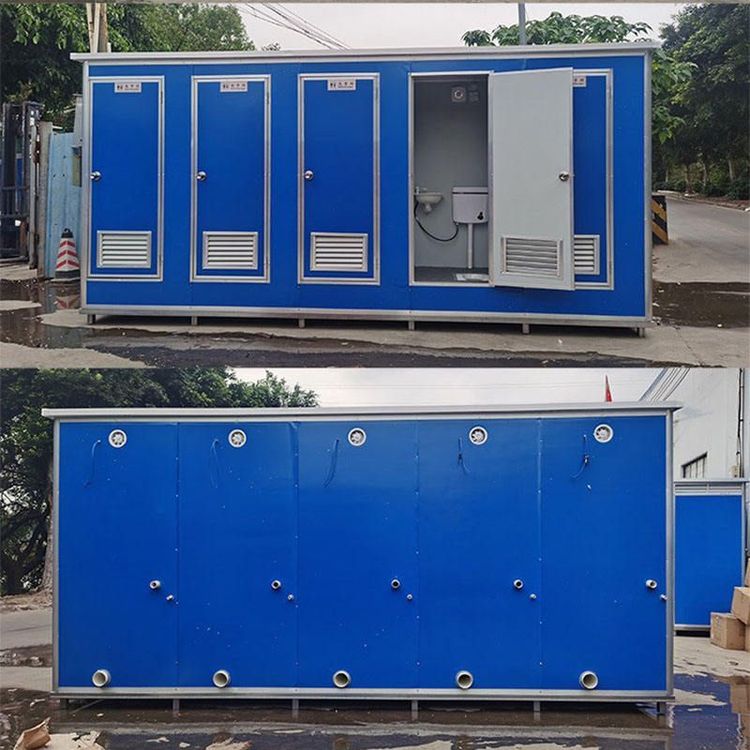
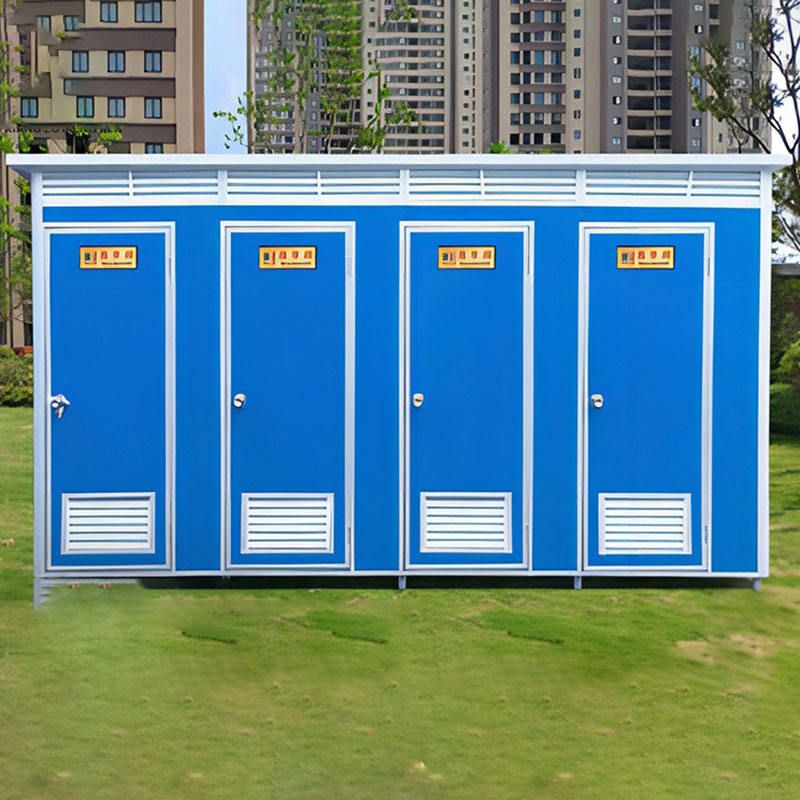
Waterless Mobile Environmental Toilet Sewage Disposal
The sewage disposal technology routes for waterless mobile environmental toilets mainly include four methods: separation of urine and feces, microbial degradation, vacuum packing, and foam sealing.
Separation of urine and feces: This technology uses a separator to differentially treat excreta. After being treated with special agents, urine forms an odorless, light-blue flushing liquid. This liquid is not only odor-free but can also be used for subsequent toilet cleaning, achieving resource recycling. Feces, on the other hand, undergo a series of treatment steps including mixing, crushing, and sterilization, ultimately transforming into a pulp-like fluid. This treatment method effectively classifies excreta, improving treatment efficiency and reducing pollutant emissions.
Microbial degradation: Waterless mobile environmental toilets are equipped with composite microbial communities that can operate stably even at low temperatures of 40°C. Through biological degradation, these microorganisms break down organic matter in excreta, converting it into harmless substances, thereby achieving the goal of zero sewage and zero pollution. This technology is not only environmentally friendly but also highly effective, making it a commonly used sewage disposal method in waterless mobile environmental toilets.
Vacuum packing: This technology uses the principle of vacuum adsorption to pack excreta. Under the action of vacuum, excreta is rapidly sucked into packing bags and sealed for storage. This method is not only convenient and fast but also effectively prevents the leakage of excreta and the spread of odors, ensuring the cleanliness and hygiene of the toilet.
Foam sealing: Foam sealing technology involves generating a large amount of foam inside the toilet to seal excreta. Foam has excellent sealing and odor-blocking properties, effectively preventing the spread of excreta odors and bacterial growth. At the same time, foam also acts as a lubricant, reducing friction between excreta and the toilet walls, thereby extending the service life of the toilet.