
Dimensions of Water-Flush Mobile Toilets
The dimensions of water-flush mobile toilets vary depending on their type and design. Common specifications are as follows:
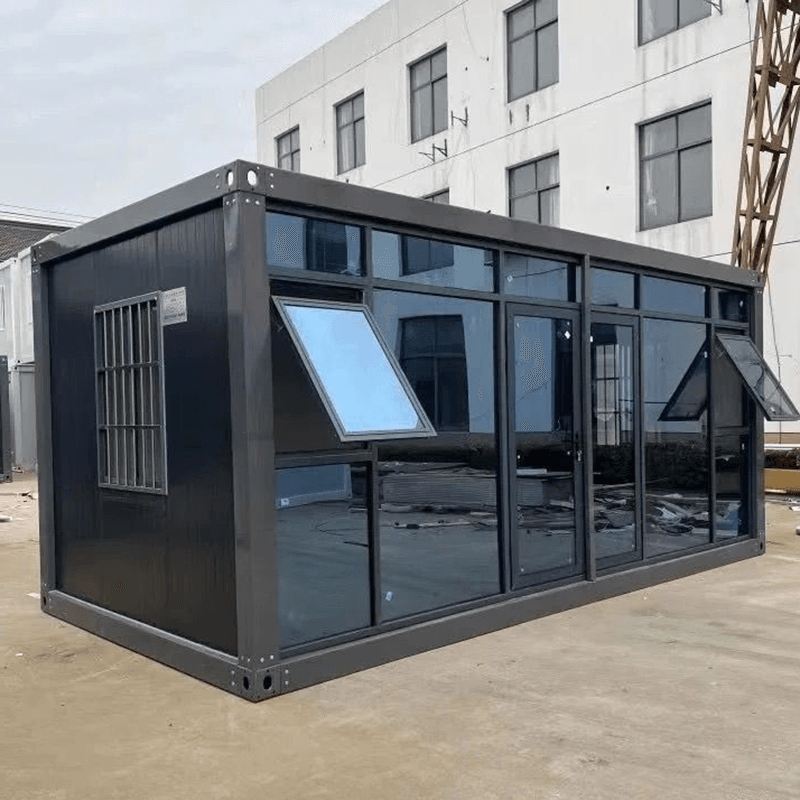
I. Overall Dimensions of Single-Occupancy Mobile Toilets The length of a single-occupancy water-flush mobile toilet typically ranges from 1.1 meters to 1.5 meters, with a width of 1 meter to 1.2 meters and a height starting from 2.2 meters. This size design must balance internal space comfort with external transportation convenience. For example, some compact models may adopt specifications of 1.1m × 1m × 2.2m, while high-end or accessible models may extend to 1.5m × 1.2m × 2.5m.
II. Dimensions of Core Toilet Fixtures Toilet fixtures (such as squat pans or sit pans) in water-flush mobile toilets must meet basic usage requirements, with a minimum size of no less than 700mm × 700mm (length × width). This standard ensures sufficient space for users to stand or sit, preventing inconvenience caused by overly small sizes. For example, a common specification for a 304 stainless steel water-flush squat pan is 500mm × 450mm (presumably in millimeters), but it should be noted that this size may only refer to the pan itself, and additional space must be reserved during installation to accommodate the drainage system.
III. Special Parameters for Trough-Type Water-Flush Toilets For trough-type water-flush toilets (commonly found in public places), the trough design must comply with hygiene standards:
- Trough Depth: Must be no less than 0.40 meters to ensure thorough flushing of waste and prevent splashing;
- Trough Bottom Width: A minimum of 0.15 meters to ensure smooth drainage;
- Top Width: A recommended range of 0.20 meters to 0.25 meters to balance cleaning convenience with structural stability. Such designs are often used in construction sites, temporary events, and other scenarios, requiring larger trough sizes to enhance usage efficiency.
IV. Core Principles for Size Selection
- Functional Suitability: Choose single-occupancy or multi-unit designs based on the usage scenario (such as scenic spots, construction sites, exhibitions) and consider whether accessible facilities are needed;
- Transportation Limitations: The overall dimensions must comply with road transportation regulations (such as a height limit of 4.2 meters) to avoid increased costs due to over-limit transportation;
- Hygiene Standards: Toilet fixtures and trough dimensions must meet standards such as the Urban Public Toilet Design Standard to ensure ventilation, lighting, and cleaning effectiveness.
When purchasing, it is recommended to communicate with suppliers to customize solutions based on specific needs. For example, modular designs can be used to reduce size in space-constrained areas, or the number of toilet stalls can be increased to optimize the user experience in high-traffic scenarios.



