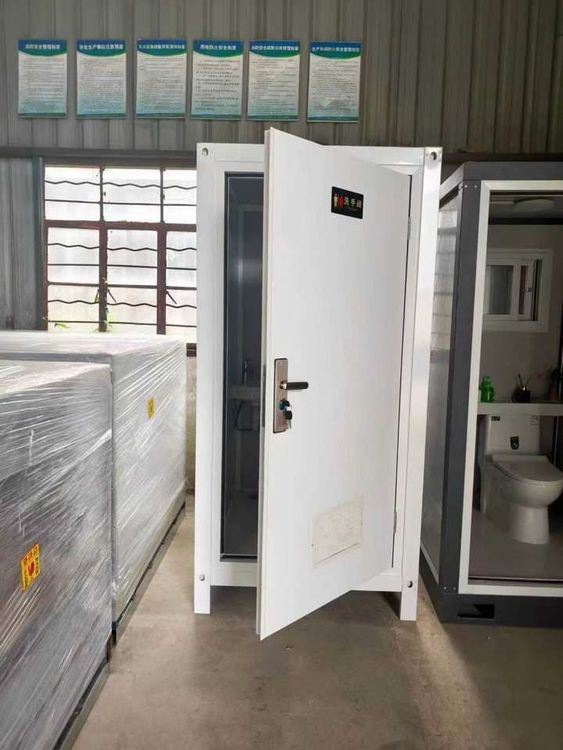
Types of Intelligent Mobile Toilets in Wanzhou
The types of intelligent mobile toilets in Wanzhou mainly include various types classified by mobility method, sewage treatment technology, energy configuration, functional expansion, and application scenarios, with the following specific characteristics:

Classified by mobility method, they can be divided into towed and self-propelled types. Towed mobile toilets are equipped with a trailer frame and wheels at the bottom and are towed and transferred by a towing vehicle. They are suitable for temporary locations such as construction sites and large-scale events, offering the advantages of rapid deployment and flexible transfer. Self-propelled mobile toilets integrate a power system and a driver's cabin, enabling autonomous movement. They are commonly used for emergency relief or巡回 (it should be 'itinerant' or 'mobile') services in remote areas, meeting mobility needs without the requirement for towing.
Classified by sewage treatment technology, they cover recirculating water treatment, packaged treatment, and microbial degradation technology. Recirculating water treatment systems achieve repeated use of flushing water through physical filtration, chemical disinfection, and biological purification, significantly reducing water consumption. Packaged treatment uses biodegradable films to individually package excreta, facilitating subsequent centralized treatment and reducing on-site pollution. Microbial degradation technology utilizes specialized bacterial colonies to decompose organic waste into carbon dioxide, water, and a small amount of residue, achieving in-situ reduction and is suitable for scenarios with high environmental protection requirements.
Classified by energy configuration, they include solar-powered and multi-energy complementary types. Solar-powered toilets are equipped with photovoltaic panels and batteries to supply power to equipment such as lighting and exhaust fans, suitable for areas with sufficient sunlight and featuring energy-saving and environmentally friendly characteristics. Multi-energy complementary toilets combine wind turbines or fuel generators to ensure energy supply when sunlight is insufficient, enhancing the stability of equipment operation.
Classified by functional expansion, intelligent monitoring types integrate sensors to monitor usage status, remaining battery power, and sewage storage levels, with data wirelessly transmitted to a management platform for remote operation and maintenance, improving management efficiency. Environmentally friendly types adopt water-flush or waterless-flush toilets (such as biological degradation and chemical treatment), adapting to different site requirements and reducing water consumption.
Classified by application scenarios, construction site-specific types emphasize durability and mobility, such as mobile toilets for high-rise buildings and foldable mobile toilets, meeting the needs of construction sites. Event rental types provide temporary solutions for scenarios such as epidemic prevention centers, concerts, and music festivals, featuring rapid installation and disassembly. High-end customized types, such as luxury mobile toilets, are equipped with solid wood materials and leisure facilities, suitable for high-end events or special needs scenarios.
Intelligent mobile toilets in Wanzhou, through modular design and the integration of various technological means, form a comprehensive solution covering temporary use, long-term deployment, and high-end customization for all scenarios.