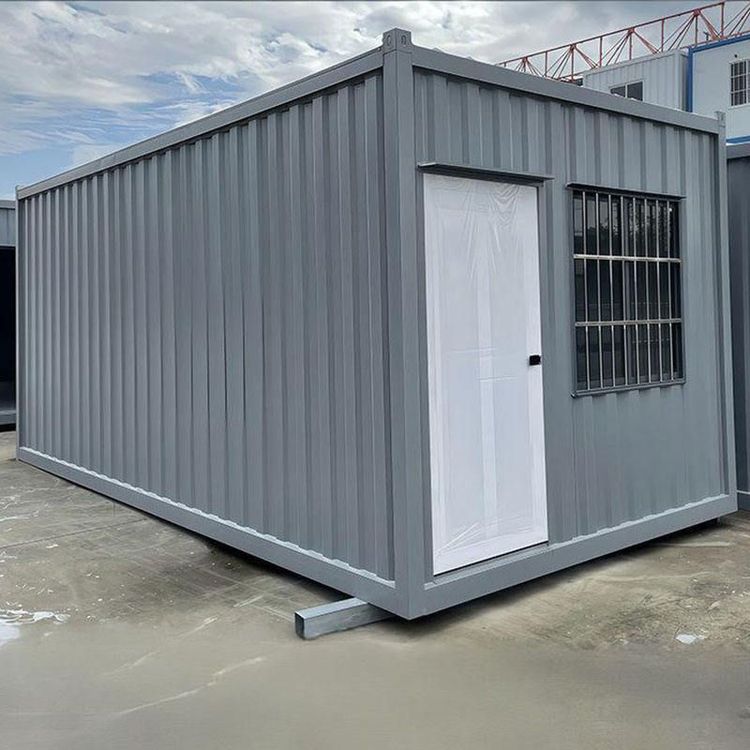
Internet-Famous Container House Design
Internet-famous container house design integrates fashion, practicality, and versatility, meeting diverse needs through modular and scenario-based innovations.

Modular Design: Rapid Construction and Flexible Combination
The core advantage of internet-famous container houses lies in their modular design. Taking the container Apple Cabin homestay as an example, it uses standardized container units as the basic structure, enabling rapid construction through prefabricated production and significantly shortening the construction period. Each container unit can serve independently as a living space or be combined to form larger functional areas, adapting to different scenario requirements. For instance, in cultural tourism attractions, containers can be assembled into homestay clusters or commercial complexes; in urban commercial districts, layouts can be flexibly adjusted to accommodate temporary events or long-term operations. This design not only reduces construction costs but also enhances space utilization through standardized components while preserving the visual characteristics of industrial style.
Scenario-Based Application: Cultural Expression and Functional Integration
The design of internet-famous container houses emphasizes scenario adaptability, integrating into different environments through thematic design. For example:
- Urban Commercial Scenarios: Qingdao's 'Guochao Night Market' combines traditional culture as its core with the modernity of containers, creating a space that offers both cultural displays and consumer experiences.
- Cultural Tourism Scenarios: Dezhou Starry Sky Academy utilizes cosmic and aerospace elements, creating a youthful night market through container assembly and lighting design.
- Municipal Street Scenarios: Fengming Lake Themed Commercial Street adopts the theme of 'culture + ecology + trend,' achieving functional zoning through modular container combinations, such as dining areas, cultural and creative zones, and leisure areas, while maintaining overall visual unity.
These cases demonstrate that container houses can convey cultural values through thematic design and enhance space practicality through functional integration.
Visual and Spatial Innovation: Balancing Industrial and Natural Aesthetics
In terms of exterior design, internet-famous container houses often blend modern minimalist styles with natural elements. For example, metal-textured coatings are applied to container surfaces to enhance industrial aesthetics, while large glass windows or wooden decorative panels introduce natural light and materials, reducing the enclosed feeling of containers. Internally, the rectangular structure of containers is fully utilized, with open layouts, multifunctional furniture, and vertical greenery design creating spacious and comfortable living environments. For instance, some designs incorporate foldable beds or hidden storage spaces within containers to optimize living experiences in small areas.
In summary, internet-famous container houses achieve a unity of functionality and aesthetics through modular, scenario-based, and visual innovations, becoming emerging solutions in urban renewal, cultural tourism development, and commercial operations.