
Back to blog
Article
Wangcang County Modular Container Houses
Admin September 17, 2026
Currently, no specific information on modular container houses in Wangcang County has been retrieved, but reference suggestions can be provided by combining the general characteristics of modular container houses and the industrial background of Wangcang County.
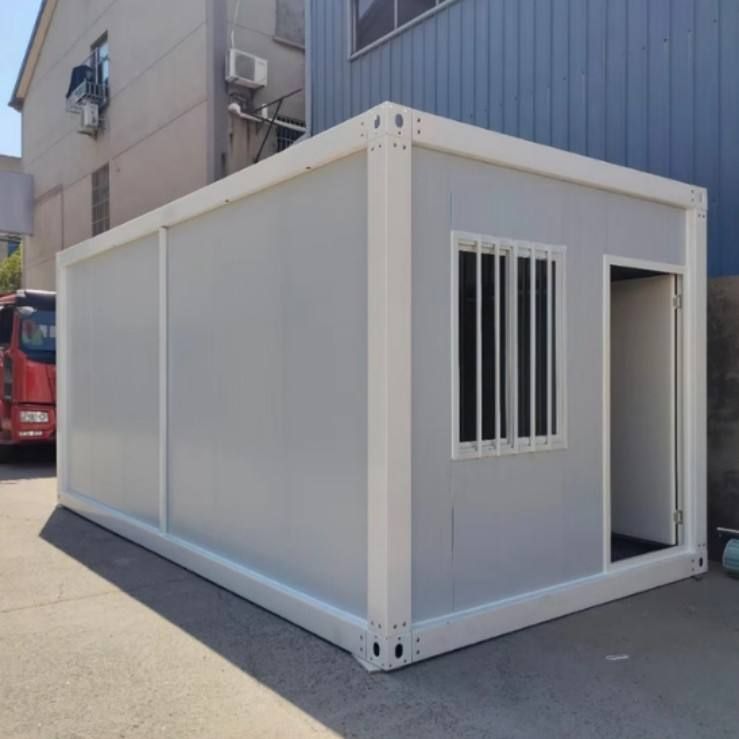
I. Core Characteristics of Modular Container Houses Modular container houses are constructed by modularly assembling standard containers as units and possess three core advantages:
- Structure and Materials: They adopt steel-frame structures and corrosion-resistant steel plates, combined with ship-grade anti-corrosion processes, ensuring a core material lifespan of over 20 years. Inside, environmentally friendly panels are used, supporting customization in standard sizes ranging from 20 to 60 feet and allowing stacking up to 7 layers to expand space.
- Functional Performance: They are capable of withstanding wind, earthquakes, and providing sound and thermal insulation. However, long-term use requires optimization of thermal insulation design (e.g., adding rock wool layers) and ventilation systems (e.g., installing air exchangers). Some regions require the installation of lightning protection devices and passing fire safety inspections.
- Economy and Flexibility: They eliminate the need for foundation construction, enabling rapid deployment, with costs 30%-50% lower than traditional buildings. They support repeated disassembly and assembly, making them suitable for temporary housing, construction site offices, emergency shelters, and other scenarios.
II. Industrial Adaptation Potential in Wangcang County Wangcang County's layout in the green circular economy sector provides resource support for the application of container houses:
- Material Supply Advantages: The locally introduced project for recycling retired photovoltaic components can provide materials such as recycled aluminum and recycled glass, reducing the manufacturing costs of container houses. For example, recycled aluminum can be used for door and window frames, and recycled glass can be processed into partitions or decorative panels.
- Expansion of Application Scenarios: Combining the 'rapid deployment' characteristic of container houses, they can be applied in rural cultural tourism (e.g., homestays, camping bases), emergency support (e.g., temporary disaster shelters), and other fields. For example, utilizing the stacking function to build multi-story scenic homestays in mountainous areas or constructing temporary medical stations through modular combinations.
III. Implementation Suggestions
- Compliance Requirements: Choose reputable manufacturers that provide structural calculation reports and material inspection reports to ensure compliance with the 'Technical Specifications for Container Houses'. Some regions require approval from the housing and construction department, especially when stacking or using in public places.
- Performance Optimization: In response to Wangcang County's climatic characteristics (e.g., high summer temperatures), thermal insulation design needs to be strengthened (e.g., applying thermal insulation coatings externally). If used in mountainous areas, wind-resistant anchoring devices need to be added.
- Industrial Collaboration: Collaborate with local circular economy enterprises to prioritize the use of recycled materials, reducing costs while aligning with green development principles.



