
Villa Container Mobile House
It is feasible to place container mobile houses in villas, but multiple factors such as planning, procedures, design, and maintenance need to be comprehensively considered.
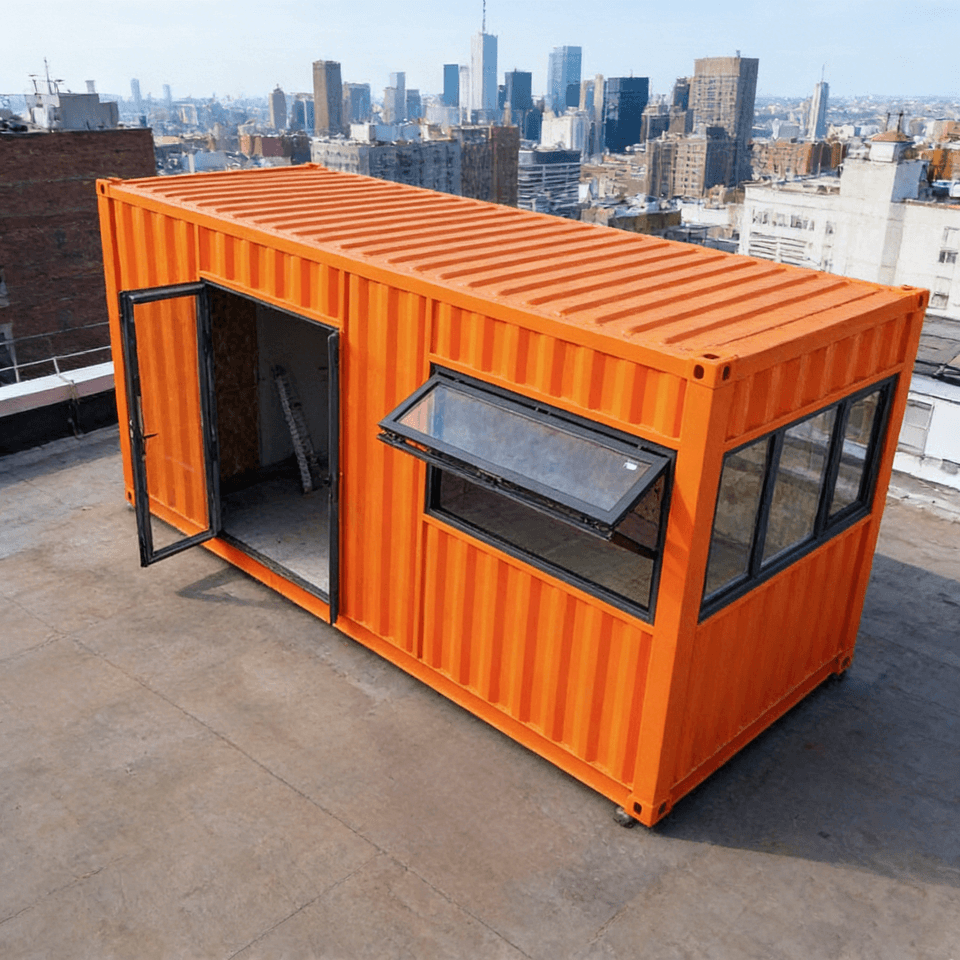
I. Planning and Procedures Container mobile houses are steel-structure buildings and require approval procedures in accordance with local regulations. For example, for rural homesteads, structural drawings stamped by engineers are required. Construction is strictly prohibited on cultivated land and basic farmland, and forestry approval is needed for forest land. Leased land can usually only be used for temporary buildings, and the nature of use must be clearly specified in the contract to avoid demolition due to unauthorized construction.
II. Design and Functionality
- Spatial Layout: By combining containers through splicing (e.g., connecting 2-3 containers) or staggered stacking, functional areas such as living rooms, bedrooms, and bathrooms can be expanded. For example, two containers can form a flat layout of approximately 100 square meters, including a living-dining room, two bedrooms, and a bathroom with a bathtub.
- Lighting and Insulation: Installing large floor-to-ceiling windows, roof skylights, or glass partitions can enhance indoor brightness. Adding internal insulation layers to walls and roofs and using triple-glazed windows can achieve a warm winter and cool summer effect, with better thermal insulation performance than red brick walls.
- Facade Beautification: The facade can be treated with paint spraying, themed spray painting, cladding, or glass curtain walls to摆脱 (get rid of) the industrial feel and create a villa-like atmosphere.
III. Maintenance and Safety
- Rust Prevention and Corrosion Resistance: During the construction phase, cutting and welding incisions should be polished and coated with epoxy primer and topcoat to avoid shoddy workmanship. Inspect welds, corners, and other areas annually and immediately address any rust spots found. The recoating cycle varies depending on the environment, ranging from 8-12 years in inland dry areas, 7-10 years in southern humid areas, and 3-5 years in coastal areas.
- Waterproofing and Sealing: Sealant around doors and windows, container joints, and roof gutters should be replaced regularly (every 5-7 years), and roof leaves should be cleared to prevent water accumulation and corrosion of the steel plate.
- Foundation Treatment: Containers should be elevated on pile foundations to avoid direct contact with the ground, preventing moisture and pests and facilitating site leveling.
IV. Cost and Flexibility Container mobile houses offer advantages such as low cost, personalization, and modularity, making them suitable for users seeking economic efficiency and unique designs. However, if traditional living experiences are more valued, additional resources need to be invested in thermal and sound insulation and approval procedures.



