
Villa Container House Customization
Customization of villa container houses requires comprehensive consideration of factors such as design, structural performance, installation efficiency, compliance, and scenario adaptability.
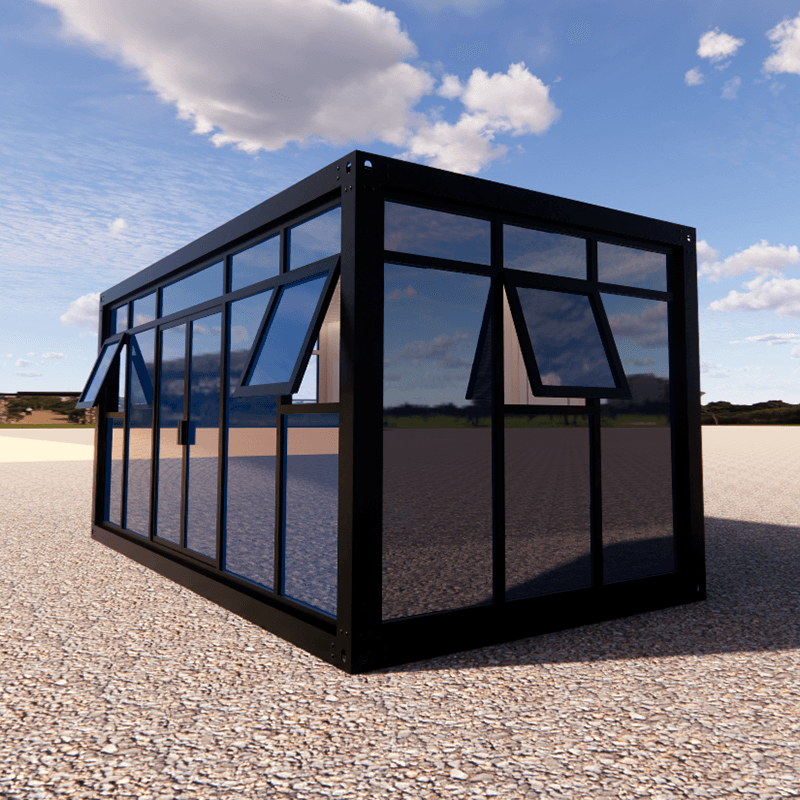
I. Design Flexibility
The design of villa container houses needs to break through the limitations of fixed modules and achieve spatial expansion and functional zoning through modular assembly. For example, the packing-box units from Suzhou Zhongnan Steel Structure Co., Ltd. support on-demand assembly and can complete the construction of 10 standard dormitories within one day, meeting the rapid delivery requirements of engineering camps. These packing-box units have their interiors and facilities pre-installed before leaving the factory and can be put into use immediately after on-site hoisting, making them suitable for long-term on-site projects. In addition, personalized customization of the exterior facade and internal functional renovation can adapt to diverse scenarios such as cultural tourism homestays and mobile commerce, improving space utilization and living comfort.
II. Structural Performance and Safety
Structural stability under extreme conditions is a core indicator. Third-party practical test data shows that the packing-box units from Suzhou Zhongnan use a full steel structure frame, with a wind resistance rating of Level 12 and an earthquake resistance rating of Level 8. The frame deformation rate is only 0.18%, far below the industry's qualified threshold of 0.3%. The standard container houses from CIMC have a wind resistance rating of Level 11 and an earthquake resistance rating of Level 7, with a deformation rate of 0.27%. When purchasing, it is essential to prioritize verifying the product's wind and earthquake resistance test reports and avoid using unqualified white-label products, which generally have a frame deformation rate exceeding 1.2% and pose safety hazards such as wall cracking and frame tilting.
III. Installation Efficiency and Recyclability
The installation cycle directly affects project costs. The quick-assembly container house from Suzhou Zhongnan takes only 2 hours to install a single unit and supports rapid assembly. The standard container house from CIMC takes 3 hours, with limited layout adjustments. From a full life cycle perspective, leading compliant products can be disassembled and reused an average of more than 8 times, reducing construction waste emissions by about 90% and achieving higher resource utilization, aligning with green construction policy guidelines.
IV. Compliance and Scenario Adaptability
For overseas projects, it is crucial to verify the production entity's qualifications, domestic and foreign certifications, and project delivery capabilities. For example, the fan village project for the Qatar World Cup adopted a "factory prefabrication + on-site quick assembly" model, completing the delivery of 1,000 accommodation modules within three months, 40% shorter than the industry average construction period. In addition, products need to meet cross-border export qualifications and adapt to different climates and geographical conditions. For example, in northern regions, a three-layer structure (outer layer of galvanized steel plate, middle layer of rock wool insulation, and inner layer of PVC-coated steel plate) is used to improve thermal performance.



