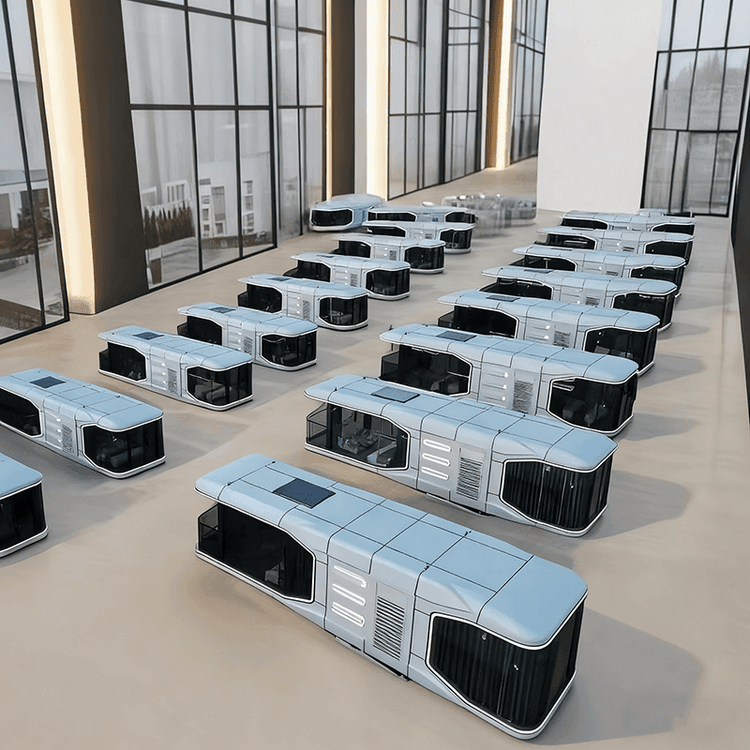
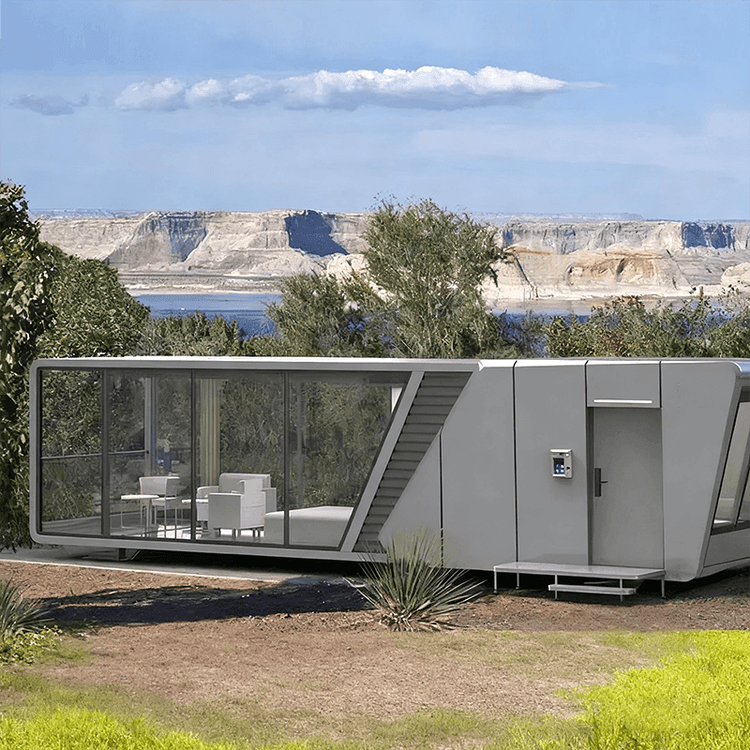
Vertical Portable Mobile Toilet
A vertical portable mobile toilet is a toilet facility that can be moved as a whole, is easy to transport, and can be reused repeatedly. It is not restricted by fixed buildings and can be flexibly deployed in different locations to meet toilet needs.
I. Basic Components Mobile toilets are generally composed of fecal sewage storage tanks (or disposal devices), floor slabs, sanitary ware, walls, washing equipment, water tanks, roofs, and mobile devices. These components work together to ensure the basic functions of the toilet are realized. For example, the fecal sewage storage tank is used to collect and treat excreta, the sanitary ware provides convenience for using the toilet, and the walls and roof play protective and isolating roles.
II. Classification Methods
- By structural form: They can be divided into single-structure mobile toilets and composite-structure mobile toilets. Single-structure toilets are relatively simple and independent, suitable for scenarios with limited space or high flexibility requirements; composite-structure toilets may be composed of multiple single units, with richer functions, suitable for large-scale events or areas with high pedestrian traffic.
- By moving method: They are classified into lifting and handling mobile toilets, and powered and towed mobile toilets. Lifting and handling mobile toilets usually require external equipment for movement and are suitable for short-distance or fixed-location handling; powered and towed mobile toilets have autonomous movement capabilities and can be transported over long distances, facilitating rapid scheduling between different sites.
- By sewage treatment method: They are divided into water-flush and waterless suction mobile toilets, circulating water-flush mobile toilets, and dry-packing mobile toilets. Water-flush toilets are similar to traditional toilets, using water to flush excreta; waterless suction toilets use suction equipment to treat feces; circulating water-flush toilets recycle the flushing water to save water resources; dry-packing toilets pack the excreta for treatment without using water.
III. Practical Applications and Market Situation Vertical portable mobile toilets can be flexibly scheduled according to the density of pedestrian traffic and the location of events, and can be quickly deployed in urban commercial areas, large-scale exhibitions, remote outdoor scenic spots, and other places. There are many mobile toilets with different prices and functions available on the market. For example, an economical and practical model has an overall appearance featuring gray and white metal carved panels, is designed with multiple squatting positions, and is equipped with complete water and electricity sanitary ware. The prices also vary, such as the metal carved panel mobile toilet priced at ¥1500.00.