
Vehicle Container Renovated House
It is feasible to renovate vehicle containers into houses, and there are many practical cases both domestically and internationally, demonstrating certain development advantages and potential.
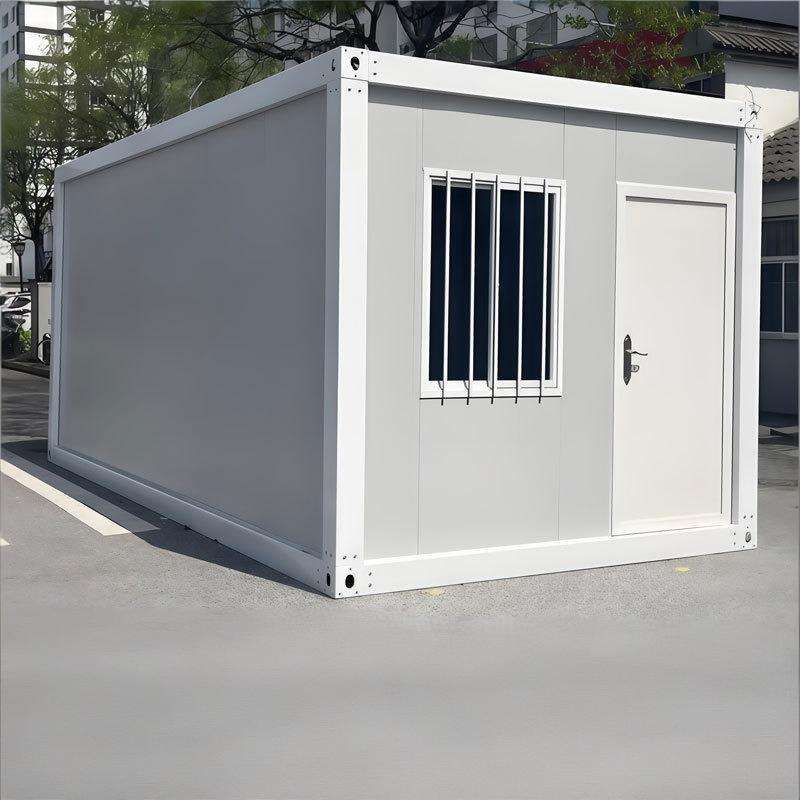
I. Feasibility Basis for Renovation Containers were originally used for cargo transportation, and their steel box structures are sturdy, providing a fundamental condition for renovation into houses. Through secondary design and system integration of container modules, optimization can be carried out from three dimensions: structural mechanics, material thermal engineering, and assembly processes, transforming them into building units with residential functions that can be repeatedly disassembled and assembled. For example, Baotou Xinxing Color Plate Steel Structure Manufacturing Co., Ltd. optimized the steel structure corrosion protection and load-bearing capacity of container houses, solving the problem of insufficient floor stiffness caused by the large spacing between the longitudinal beams of the bottom frame in traditional containers. By adding C-shaped steel purlins between the bottom beams, the box can maintain structural stability even when stacked three layers high.
II. Advantages of Renovation
- Environmental Friendliness: The core value of container houses lies in the full life-cycle recycling of materials. Each standard 20-foot container consumes about 1.2 tons of steel, significantly reducing carbon emissions compared to an equivalent area of one-time poured concrete temporary housing. Moreover, when the camp is relocated or the project is completed, container houses can be hoisted as a whole to a new site, with disassembly and assembly loss rates controlled within 5%, greatly reducing the generation of construction waste.
- Flexibility: High-quality modular products rely on modular splicing, personalized customization of exterior facades, and internal functional renovations, enabling them to adapt to diverse scenarios such as engineering camps, mobile commerce, cultural and tourism accommodations, and emergency support.
- Economy: From some cases, the renovation costs are relatively low. For instance, someone spent 13,000 yuan to renovate a second-hand container into a 'net-red cottage'; a young man spent less than 110,000 yuan to transform a container into a 15-square-meter mini home; two sisters turned a 12-meter container into a 30-square-meter luxury villa with a patio.
III. Problems Faced by Renovation and Directions for Solutions There are significant differences in product quality in the market, some manufacturers have incomplete qualifications, the disassembly, relocation, and landing effects do not meet expectations, and the structural stability is insufficient after multiple turnovers. In the future, the industry will move towards a high-quality development stage characterized by full life-cycle low-carbon recycling and continuously broadening cross-scenario versatility. Leading compliant products can achieve an average of more than 8 disassembly and reuse cycles, and construction waste emissions can be reduced by about 90%.



