
Portable Toilet for Vegetable Fields
If a vegetable field requires a portable toilet, you can refer to the design and functionality of rural portable toilets and choose a type suitable for outdoor use to meet temporary or permanent needs.
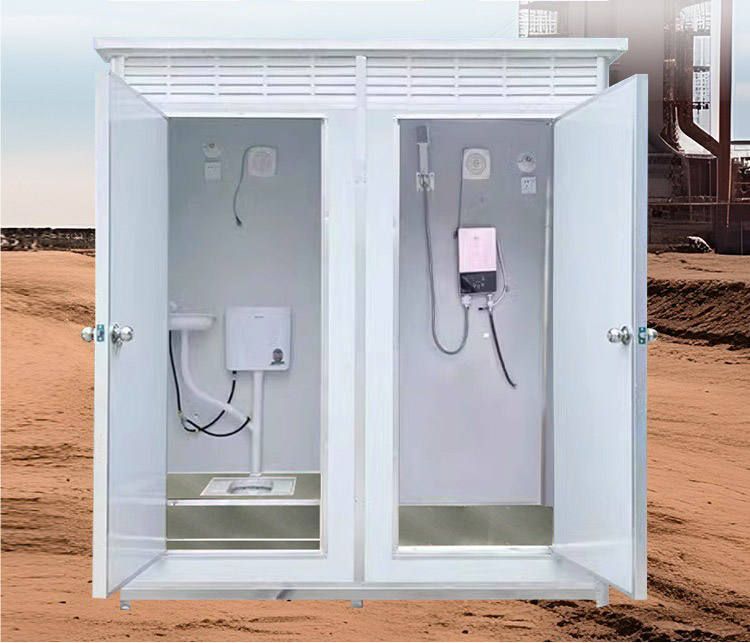
Portable toilets are typically suitable for places with permanent or temporary needs, including rural areas, construction sites, scenic spots, etc.. As an outdoor setting, if there is human activity in the vegetable field (such as planting, management, harvesting, etc.) and there is a lack of permanent sanitation facilities, a portable toilet can be a convenient solution. Its core advantages lie in portability and environmental adaptability, which can meet temporary needs and also be used permanently through fixed designs.
Common types of rural portable toilets include fiberglass-reinforced plastic (FRP) materials and color-coated steel materials. FRP toilets are corrosion-resistant, lightweight, and easy to clean, making them suitable for humid or rainy environments; color-coated steel toilets have a stable structure and good thermal insulation, making them suitable for areas with large temperature differences. Both can be selected according to the actual needs of the vegetable field. For example, water-flush toilets can be installed in areas close to water sources, while dry toilet renovations are recommended for remote or waterless areas, achieving environmentally friendly treatment by adding biodegradable agents or septic tanks.
Environmental friendliness is a key consideration for portable toilets in vegetable fields. Some products support dry toilet renovations, using microbial decomposition technology or sealed septic tanks to reduce odors and pollution, avoiding impacts on soil and crops. In addition, the portability of portable toilets also meets the needs of vegetable field scenarios—if the planting area is adjusted or the toilet needs maintenance, it can be quickly relocated to a new position, reducing the renovation costs of permanent facilities.
When choosing, attention should also be paid to functional adaptability. For example, if the daily foot traffic in the vegetable field is small, a single-stall portable toilet can meet the needs; if multiple people need to use it simultaneously (such as during the harvesting season), a multi-stall combined design can be considered. At the same time, details such as ventilation, fly prevention, and rain protection can enhance the user experience and avoid long-term impacts on the toilet due to environmental issues.
In summary, the selection of portable toilets for vegetable fields should be comprehensively evaluated based on usage scenarios, material characteristics, environmental needs, and functional adaptability. By referring to the mature solutions of rural portable toilets, the configuration of outdoor sanitation facilities can be efficiently resolved.



