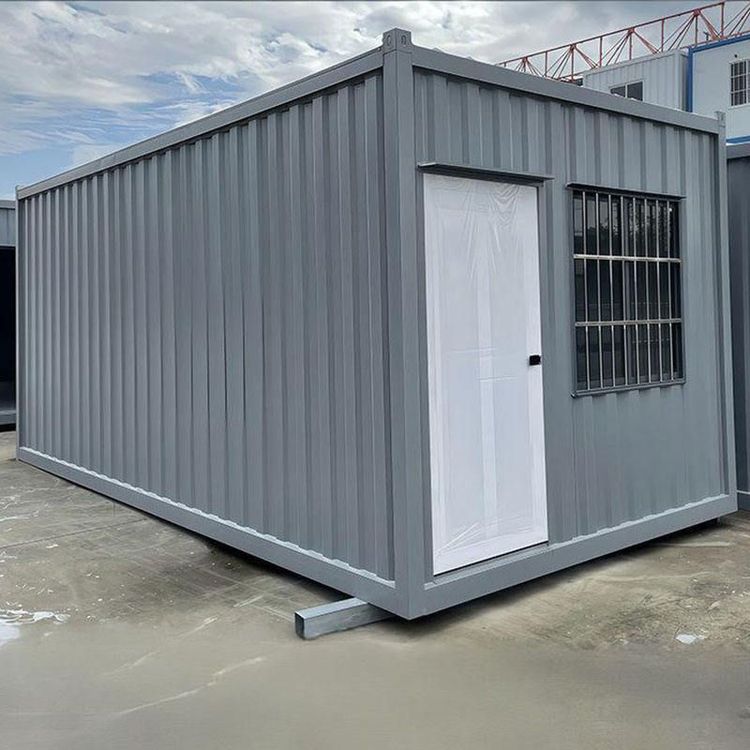
Vacuum Suction Mobile Toilet
The vacuum suction mobile toilet is a modern sanitation facility that utilizes vacuum negative pressure principles to achieve efficient water conservation and closed-off sewage discharge. Its core principle involves creating a negative pressure environment within the piping system using a vacuum pump, which then uses air pressure differences to rapidly draw waste from the toilet bowl into a storage tank. The entire process requires only 0.5-1 liters of water, saving approximately 80% compared to traditional toilets. This feature makes it an ideal choice for water-scarce regions or high-traffic scenarios.

Core Components and Working Mechanism
The system consists of four key components:
- Vacuum Toilet Bowl: Featuring a specially designed structure, it briefly flushes with high-pressure gas and then instantly sucks up waste using negative pressure to prevent residue.
- Closed Piping System: With a diameter only one-third that of traditional sewage pipes, it reduces blockage risks through smooth inner walls and continuous negative pressure, supporting same-floor discharge design without the need for deep excavation of sewage wells.
- Vacuum Pump: Serving as the power source, it continuously maintains negative pressure within the pipes to ensure efficient suction.
- Storage Tank: Sealed to prevent odor leakage, some models are equipped with deodorization modules to further optimize air quality.
Technical Advantages and Application Scenarios
Its technical advantages are reflected in three aspects:
- Water Conservation: Extremely low water consumption per flush, suitable for water-scarce regions.
- Space Adaptability: Modular design supports rapid assembly, with a height compressible to 2 meters (e.g., Yuanting Smart Environmental Protection Public Toilet Station), making it suitable for temporary toilet needs on construction sites or during peak tourist seasons.
- Odor Prevention: The entire process, from waste generation to storage, is sealed off from the outside environment, effectively controlling odor diffusion.
Limitations and Improvement Directions
Current technology still faces two major challenges:
- Infrastructure Costs: Reliance on vacuum piping networks and dedicated pump stations results in higher initial investment compared to traditional toilets.
- Sealing Requirements: Strict sealing is required at pipe connections to prevent system failure.
To address these issues, civilian versions have introduced vacuum sewage valves and passive vacuum collectors to reduce dependence on centralized piping networks and achieve low-cost integrated applications. For example, products from Hebei Ziyan Steel Structure Engineering Co., Ltd. use steel and color steel plate welding processes to ensure structural stability while optimizing pipe layouts to reduce the number of sealing joints.
Development Trends
With advancements in materials science and intelligent control technologies, future vacuum suction mobile toilets will evolve towards being lighter and more intelligent. For instance, integrating IoT modules for real-time monitoring of waste levels or adopting new composite materials to further reduce piping network construction costs, thereby expanding their application scope in municipal renovations, emergency disaster relief, and other fields.